ginkgo
Ginkgo L.
A genus overview; characteristics vary between its species.
Ginkgo is a genus with a long fossil history and only one living species, Ginkgo biloba. Fossils resembling modern ginkgoes extend back nearly two hundred million years. Today its recognizable fan-shaped foliage belongs to a deciduous tree widely planted in temperate cities, parks and gardens. Flora of North America: GinkgoNC State Extension: Ginkgo biloba
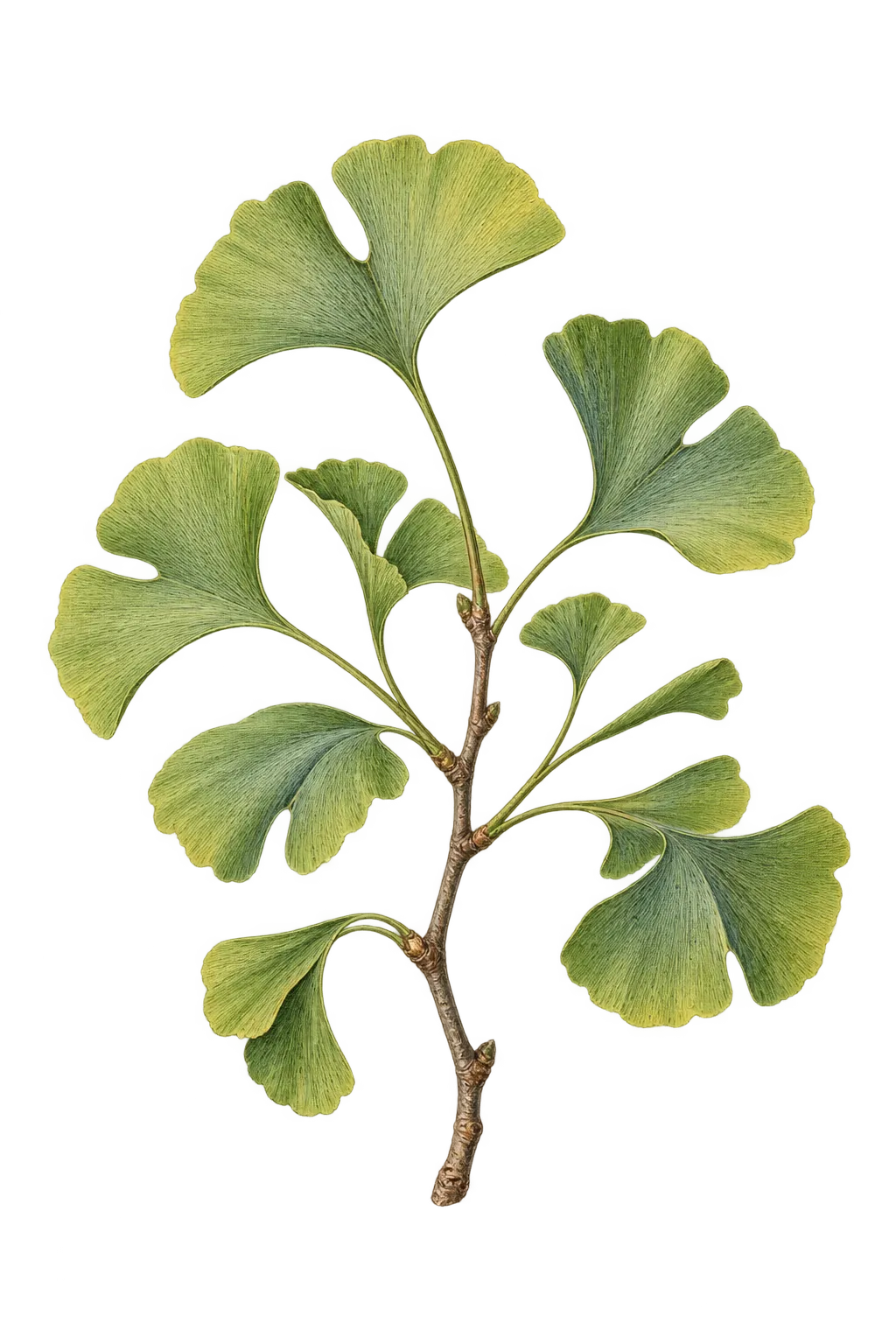
Botanical name
Flora of North America recognizes Ginkgo L. with one living species, Ginkgo biloba. This genus-level profile explicitly describes its surviving member. Flora of North America: Ginkgo
Recognizing the plant
The leaves have repeatedly forking veins rather than one central midrib with branching side veins. Their broad upper edges can be entire or divided by a notch. Long shoots extend the branches, while short, knobby spur shoots carry clustered leaves and reproductive structures. Male and female structures occur on separate trees. Pollen is produced in small cones; female trees bear exposed ovules on stalks. The resulting seeds have fleshy yellow-orange outer coats, but these are not fruits: ginkgo is a gymnosperm and does not make flowers. Flora of North America: Ginkgo bilobaNC State Extension: Ginkgo biloba
Seasonality across the genus
North Carolina horticultural conditions
The foliage turns golden yellow in autumn before falling. NC State Extension: Ginkgo biloba
Native range
The surviving species is native to China. Long cultivation has complicated attempts to distinguish ancient plantings from wild populations; beyond China, its familiar presence is largely the result of planting. Flora of North America: Ginkgo bilobaNC State Extension: Ginkgo biloba
Botanical sources
- Flora of North America: Ginkgo
- Flora of North America: Ginkgo biloba
- NC State Extension: Ginkgo biloba
Reviewed 2026-10-11. Seasonal development varies with location and growing conditions.