Hawai'i blue-eyed grass
Sisyrinchium acre H.Mann
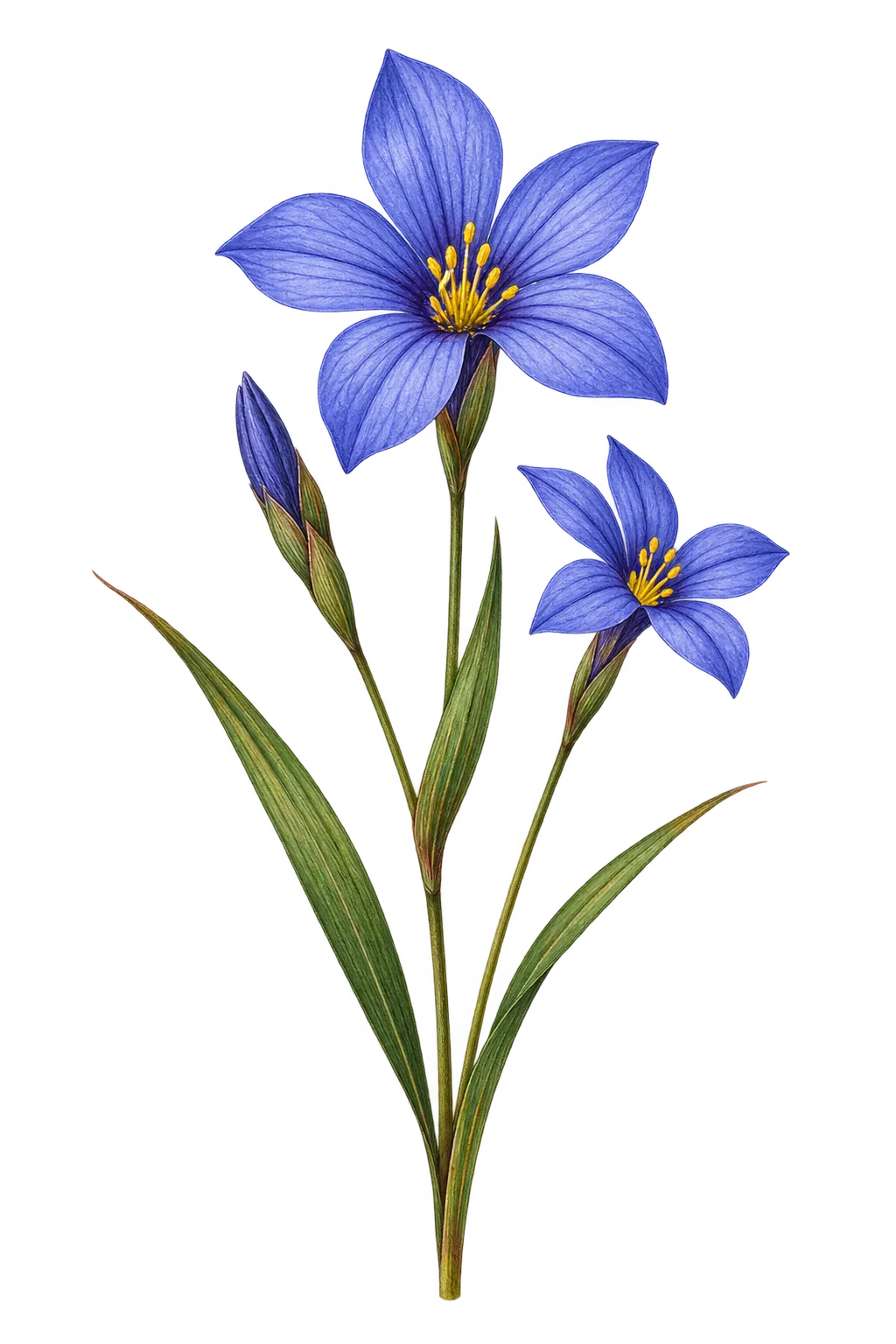
Despite the English name Hawaiʻi blue-eyed grass, this small island endemic has yellow flowers. It is an iris relative rather than a true grass. When flowers are absent, the bluish-green colour and flat leaves held upright in one plane help distinguish it from grasses sharing its habitat. Hawaiʻi Cooperative Studies Unit: Rare Plant Handbook, Sisyrinchium acre
Botanical name
Kew accepts Sisyrinchium acre H.Mann in Iridaceae, matching the catalog’s species identity. Kew POWO: Sisyrinchium acre
Recognizing the plant
The plant stands about fifteen to thirty centimetres tall. Narrow, smooth leaves arise at the base, and small groups of flowers are framed by two leaflike bracts. Each flower spreads six yellow tepals around three stamens and a three-branched style. The nodding fruit is a three-parted capsule containing tiny black seeds less than a millimetre across. Hawaiʻi Cooperative Studies Unit: Rare Plant Handbook, Sisyrinchium acre
Seasonal development
Hawaiʻi Volcanoes National Park
The park handbook reports summer flowers and fruits, based on specimens in the park herbarium. Hawaiʻi Cooperative Studies Unit: Rare Plant Handbook, Sisyrinchium acre
Native range
It is endemic to East Maui and Hawaiʻi. The park handbook places it mainly between about 1,550 and 2,950 metres, with some lower records. Habitats include subalpine dry shrubland and bog margins; in Hawaiʻi Volcanoes National Park it occurs among scattered ʻōhiʻa lehua trees and native shrubs. Kew POWO: Sisyrinchium acreHawaiʻi Cooperative Studies Unit: Rare Plant Handbook, Sisyrinchium acre
Botanical sources
Reviewed 2026-10-11. Seasonal development varies with location and growing conditions.