heather
Calluna Salisb.
A genus overview; characteristics vary between its species.
Calluna contains a single accepted species, Calluna vulgaris, the familiar heather. Its name comes from a Greek word associated with brushing or cleaning, recalling the use of its branches as brooms. The shrub’s many small leaves and crowded flowering shoots create the fine texture associated with heather-covered ground. Kew POWO: CallunaNew Zealand Plant Conservation Network: Calluna vulgaris
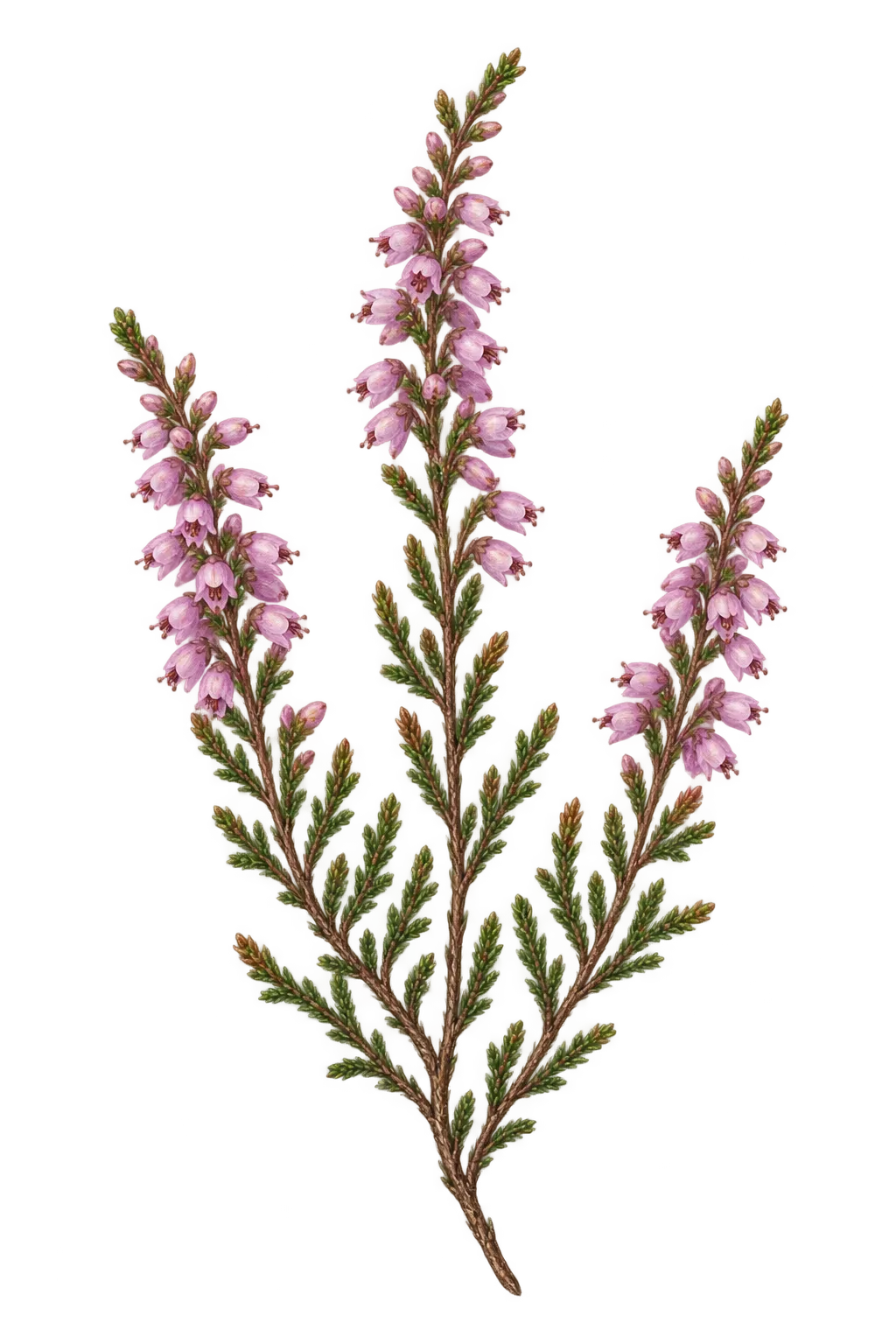
Botanical name
Calluna Salisb. is accepted as a genus with one species, Calluna vulgaris. Genus rank is preserved in this account. Kew POWO: Calluna
Recognizing the plant
The small leaves overlap densely along non-flowering branches and are often only a few millimetres long. Young stems are hairy, becoming smoother with age. Narrow flowering clusters carry pink or mauve-pink sepals around a paler, shorter corolla. Small leafy bracts beneath each flower resemble an extra calyx. The dry fruits are rounded, densely hairy capsules, containing tiny seeds with a net-like surface. In the New Zealand flora, leaves measure about 1.5 to 3.5 millimetres long and the sepals two to four millimetres. New Zealand Plant Conservation Network: Calluna vulgaris
Native range
Kew gives the genus a native range from the Azores through Europe into Central Asia. The same heather is introduced in New Zealand. Kew POWO: CallunaNew Zealand Plant Conservation Network: Calluna vulgaris
Botanical sources
Reviewed 2026-10-11. Seasonal development varies with location and growing conditions.