hedgenettle
Stachys L.
A genus overview; characteristics vary between its species.
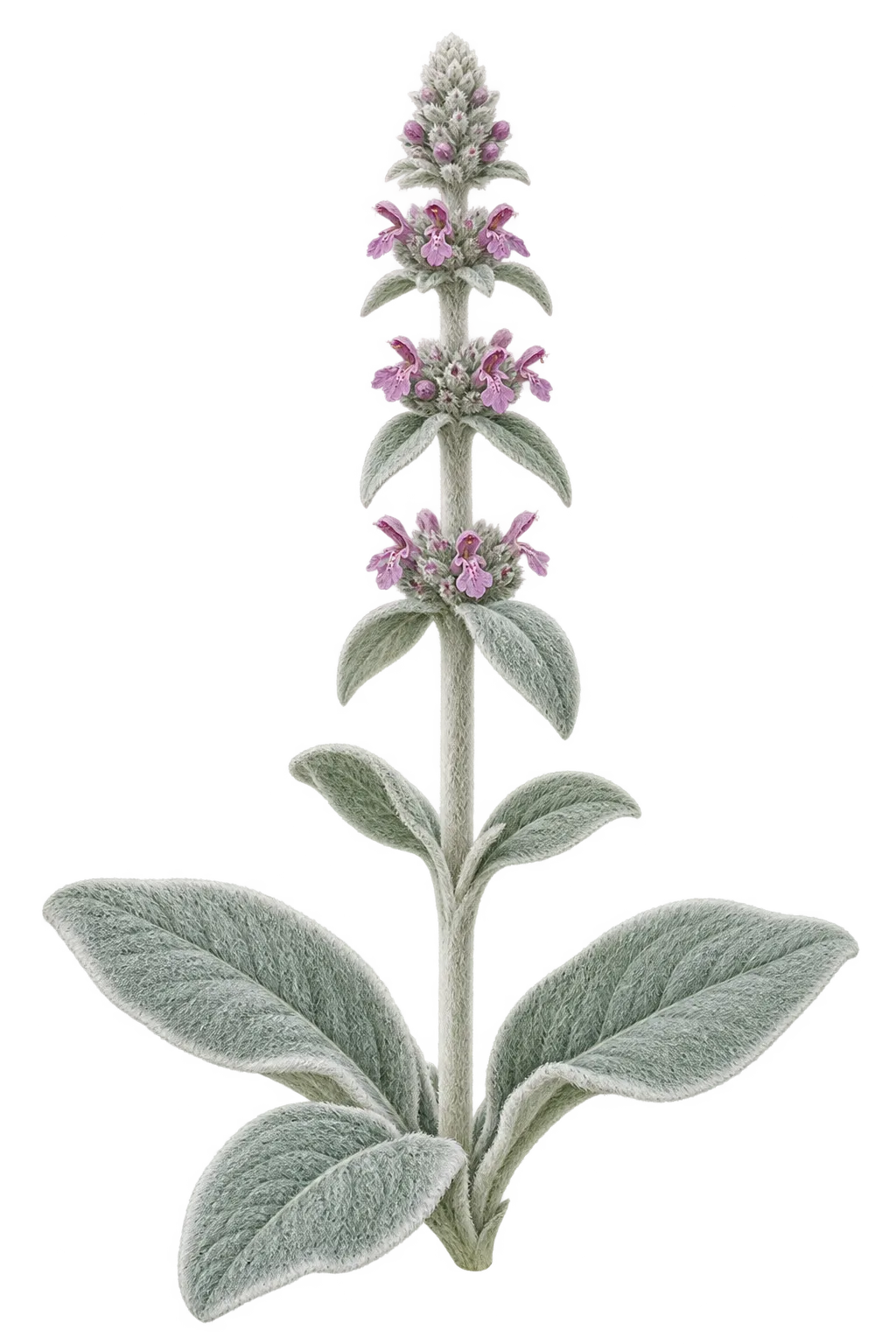
Hedgenettles include perennial and annual herbs, with a few small woody forms. Their leaves are usually toothed, and the plants may carry simple or branched hairs. Several species are grown as ornamentals, while Stachys affinis is cultivated for its underground tubers. Kew: Stachys, Lamiaceae Key Genus Fact Sheets and regional floras
Botanical name
Stachys L. is an accepted genus in Lamiaceae. The genus-level target is retained, with Stachys germanica used as a named example of seasonal and insect relationships. Kew: Stachys, Lamiaceae Key Genus Fact Sheets and regional floras
Recognizing the plant
Flowers gather in whorl-like groups, often forming spikes toward the stem tips. Each has a tubular, five-toothed calyx and a two-lipped corolla. The lower lip has three lobes, with a larger middle lobe. Flower colours across the genus include red, purple, yellow and white. Four stamens lie near the upper lip. Flora of China 17:178: Stachys
Seasonality across the genus
Britain; Stachys germanica example
In Britain, downy woundwort, Stachys germanica, flowers from July, sometimes continuing into autumn. Kew Species Profiles: Stachys germanica
Native range
Stachys has a nearly worldwide native distribution. The Mediterranean region and Türkiye form an important centre of diversity. Species occupy varied habitats, including annual members of dry southwestern and Central Asian landscapes. Kew: Stachys, Lamiaceae Key Genus Fact Sheets and regional floras
Ecological relationships
For British S. germanica, Kew reports the highest seed set where bumblebees are numerous and active. Kew Species Profiles: Stachys germanica
Botanical sources
- Kew: Stachys, Lamiaceae Key Genus Fact Sheets and regional floras
- Flora of China 17:178: Stachys
- Kew Species Profiles: Stachys germanica
Reviewed 2026-10-11. Seasonal development varies with location and growing conditions.