hookedspur violet
Viola adunca Sm.
Hookedspur violet grows from slender rhizomes, forming a low perennial with blue to deep-violet flowers. The Washington flora describes plants ranging from almost stemless tufts to short leafy stems. Its leaves vary from heart-shaped to narrower, egg-shaped or lance-shaped outlines, with rounded teeth along their margins. Burke Herbarium, University of Washington: Viola adunca
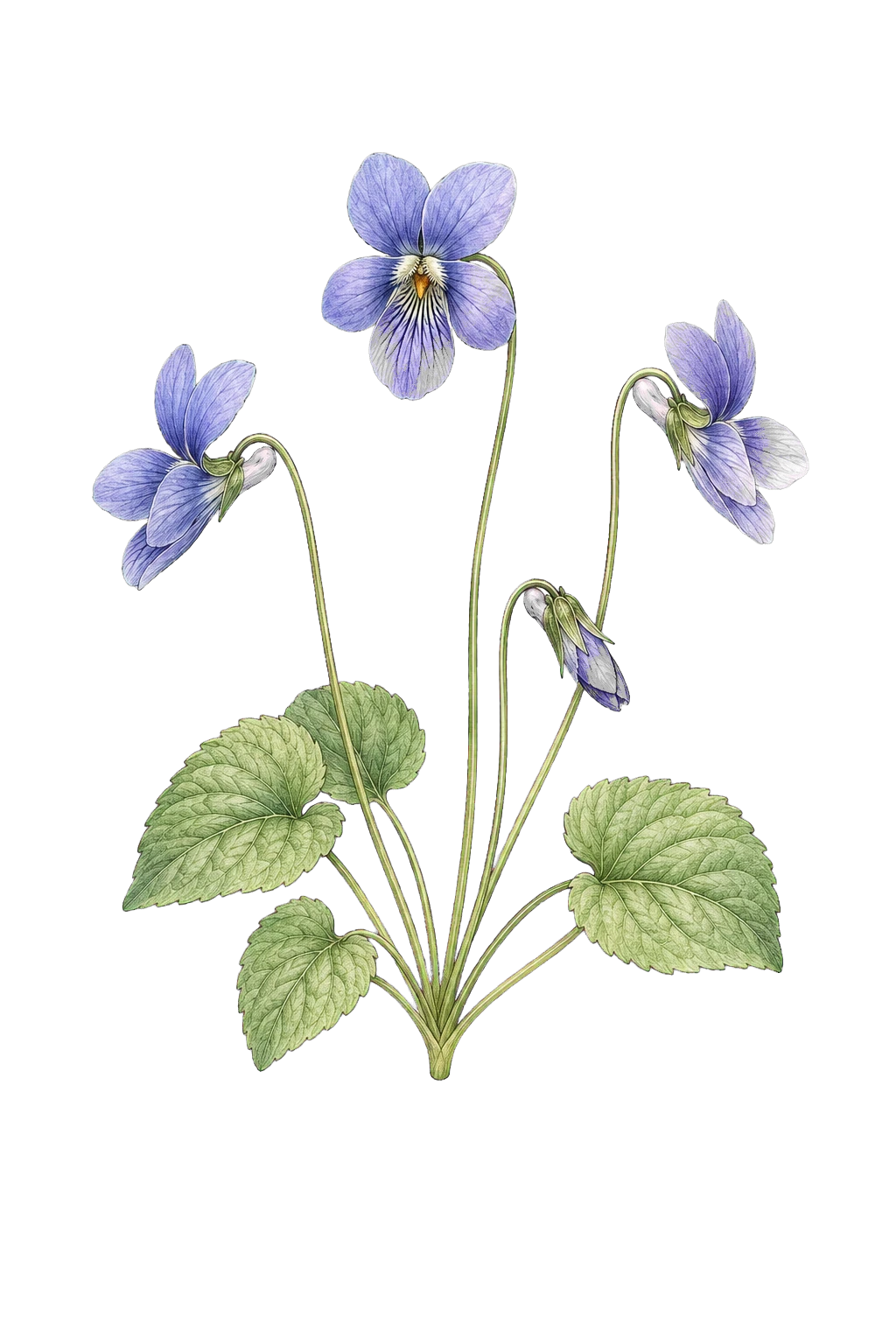
Botanical name
Viola adunca Sm. is accepted by Kew in Violaceae, matching the catalog’s species identity. Kew POWO: Viola adunca
Recognizing the plant
The three lower petals have pale bases marked by purple lines. White hairs form a beard on the two side petals, while the lowest petal extends backward into a slender spur more than half as long as the petal itself. Leaves occur both at the base and along the stems, and their hairiness varies. Burke Herbarium, University of Washington: Viola adunca
Bloom window
Washington State
The regional flora records flowers from April through August. Burke Herbarium, University of Washington: Viola adunca
Native range
Kew records a broad North American range extending from subarctic regions south into northern Mexico. In Washington it occurs on both sides of the Cascade Range, in dry to moist meadows and open woods from lowlands into the subalpine zone. Kew POWO: Viola aduncaBurke Herbarium, University of Washington: Viola adunca
Ecological relationships
In Oregon’s coastal grasslands, its leaves feed Oregon silverspot butterfly caterpillars, linking the violet directly to this butterfly’s life cycle. US Fish and Wildlife Service: Protecting Oregon’s rare butterflies and their host plants
Botanical sources
- Kew POWO: Viola adunca
- Burke Herbarium, University of Washington: Viola adunca
- US Fish and Wildlife Service: Protecting Oregon’s rare butterflies and their host plants
Reviewed 2026-10-11. Seasonal development varies with location and growing conditions.