hyacinth
Hyacinthus Tourn. ex L.
A genus overview; characteristics vary between its species.
Hyacinthus is a small genus in the asparagus family. Kew recognises three species: H. orientalis, H. litwinowii and H. transcaspicus. Familiar cultivated hyacinths include many named forms of H. orientalis, such as ‘Delft Blue’ and ‘Carnegie’, illustrating the horticultural diversity within this compact botanical group. Kew POWO: HyacinthusRoyal Horticultural Society: Hyacinth genus guide
Botanical name
Kew accepts Hyacinthus Tourn. ex L.; the catalog’s Hyacinthus L. is the shorter author citation for the same genus. Kew POWO: HyacinthusFlora of New Zealand: Hyacinthus
Recognizing the plant
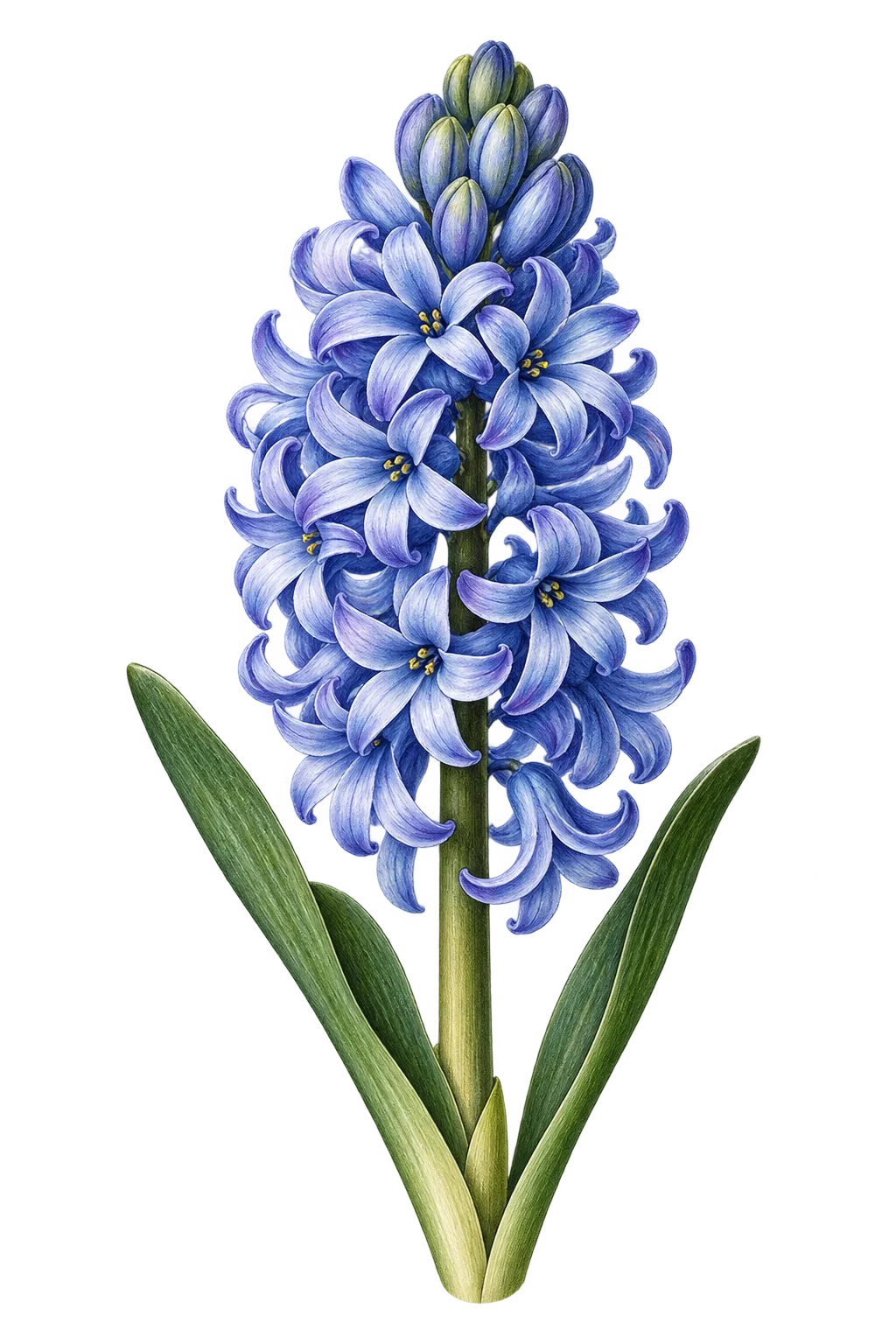
These are bulbous perennials with glossy, broad, strap-shaped leaves. Their scented flowers are bell-shaped, with tips that curl back, and are carried in upright clusters that may be loose or dense. Garden selections often have stout stems packed with waxy tubular blooms, surrounded by thick green leaves. The cultivated colour range includes white, pink, blue, purple, red, yellow and pale orange. Royal Horticultural Society: Hyacinthus genus profileRoyal Horticultural Society: Hyacinth genus guide
Seasonality across the genus
British cultivation
The Royal Horticultural Society describes spring flowering outdoors; specially prepared bulbs can flower indoors around the turn of the year. Royal Horticultural Society: Hyacinth genus guide
Native range
The genus is native from southern Türkiye toward northern Israel and southern Turkmenistan. Kew’s distribution also includes Iran, Iraq and the Lebanon-Syria region, while garden escapes have become established well beyond that native area. Kew POWO: Hyacinthus
Botanical sources
- Kew POWO: Hyacinthus
- Flora of New Zealand: Hyacinthus
- Royal Horticultural Society: Hyacinthus genus profile
- Royal Horticultural Society: Hyacinth genus guide
Reviewed 2026-10-11. Seasonal development varies with location and growing conditions.