Lapland rosebay
Rhododendron lapponicum (L.) Wahlenb.
Lapland rosebay brings the woody structure of a shrub down almost to ground level. In the Canadian Arctic flora, plants commonly stand only five to ten centimeters tall, though sheltered sites can support much taller, upright growth. Exposed shoots may instead trail close to the ground. Canadian Museum of Nature: Flora of the Canadian Arctic Archipelago, Rhododendron lapponicum
Botanical name
Kew accepts Rhododendron lapponicum. Morphology follows Arctic Canadian populations; the regional flora includes R. parvifolium in its broader concept. Kew Plants of the World Online: Rhododendron lapponicumCanadian Museum of Nature: Flora of the Canadian Arctic Archipelago, Rhododendron lapponicum
Recognizing the plant
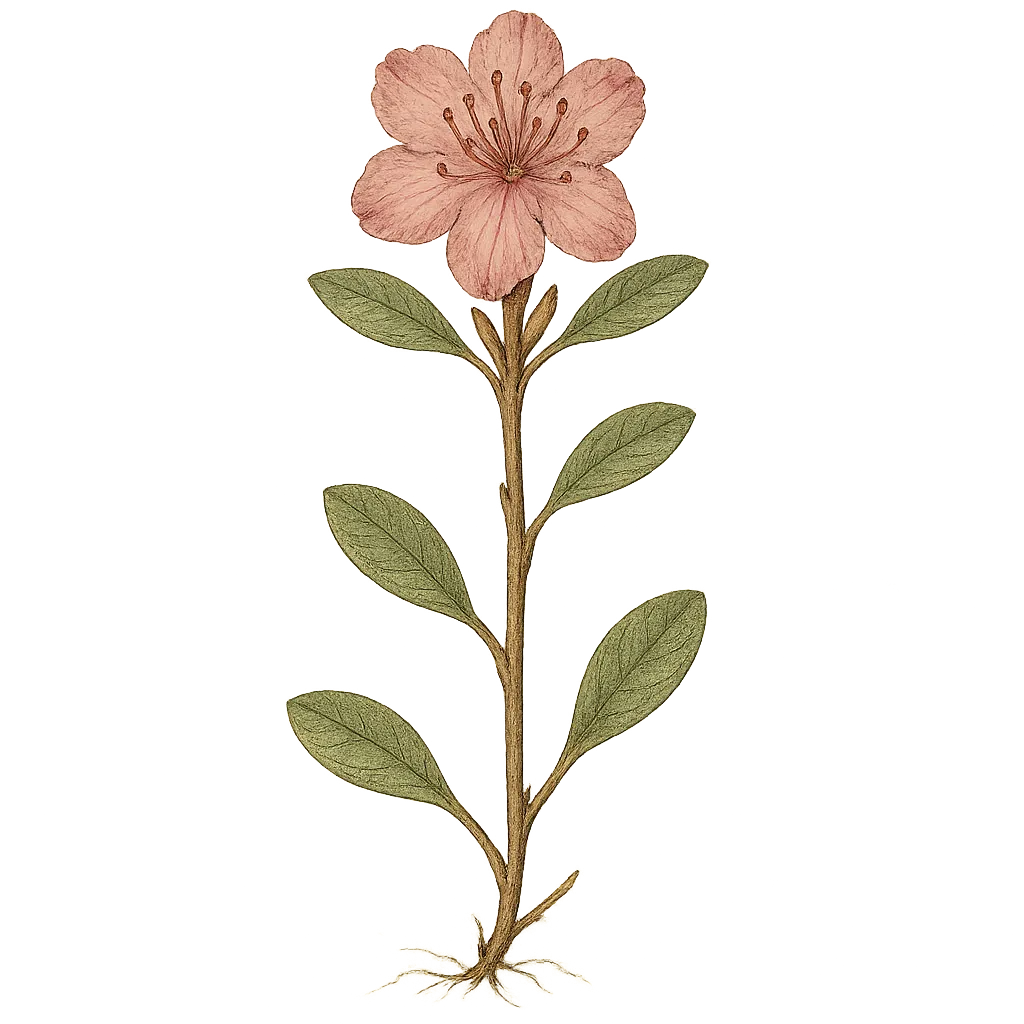
Its persistent leaves alternate along the stems on very short stalks. Blades are elliptical to narrow and widest toward the tip, generally 4–12 mm long, with smooth margins. A few fragrant flowers gather together, their joined petals opening into five purple lobes that fade toward pink. The anthers release pollen through pores at their tips. Small, conical capsules follow, opening at the top to release numerous tiny seeds. Canadian Museum of Nature: Flora of the Canadian Arctic Archipelago, Rhododendron lapponicum
Native range
Kew places the species across subarctic regions and south into the north-central and northeastern United States. In Arctic Canada it inhabits dry tundra, slopes, ridges and meadows, often on rocky or gravelly ground with little accumulated organic matter. Kew Plants of the World Online: Rhododendron lapponicumCanadian Museum of Nature: Flora of the Canadian Arctic Archipelago, Rhododendron lapponicum
Botanical sources
- Kew Plants of the World Online: Rhododendron lapponicum
- Canadian Museum of Nature: Flora of the Canadian Arctic Archipelago, Rhododendron lapponicum
Reviewed 2026-10-11. Seasonal development varies with location and growing conditions.