lovegrass
Eragrostis Wolf
A genus overview; characteristics vary between its species.
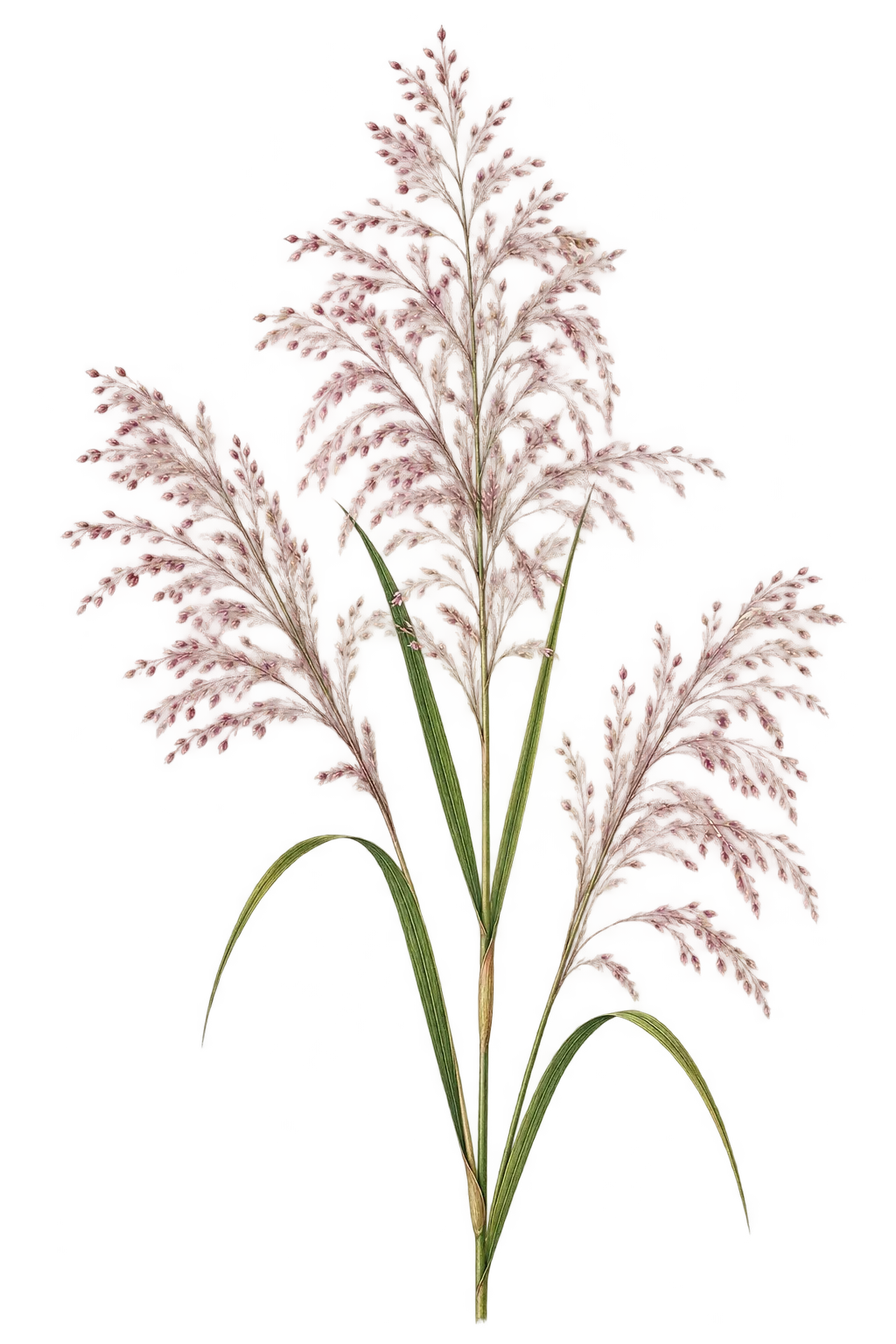
Lovegrasses belong to Eragrostis, a large genus in the grass family. Its members include both annuals and perennials, commonly growing in tufts. Their flowering displays range from airy, open branching sprays to much tighter clusters. This architectural variety accompanies differences in leaf form, with blades that may lie flat or roll inward. Royal Botanic Gardens Sydney: Eragrostis
Botanical name
Kew accepts Eragrostis Wolf as a grass genus; Wolf is the standard author form for the catalog’s von Wolf. Kew POWO: Eragrostis
Recognizing the plant
A close look at a spikelet reveals several to many overlapping florets, each wrapped in small protective parts. The outer floret bract, called the lemma, usually has three veins, while the inner palea has two keels. Two unequal glumes sit at the spikelet’s base. At the junction of blade and sheath, the ligule is commonly a fringe of tiny hairs, although some species have a membrane instead. These small structures are important in identifying lovegrasses. Royal Botanic Gardens Sydney: Eragrostis
Native range
The genus is cosmopolitan, with species native across Africa, Asia, Europe, the Americas and Australasia. The New South Wales flora notes its strongest representation in tropical and subtropical regions, and records both native and introduced members in every Australian state. Kew POWO: EragrostisRoyal Botanic Gardens Sydney: Eragrostis
Botanical sources
Reviewed 2026-10-11. Seasonal development varies with location and growing conditions.