lungwort
Pulmonaria L.
A genus overview; characteristics vary between its species.
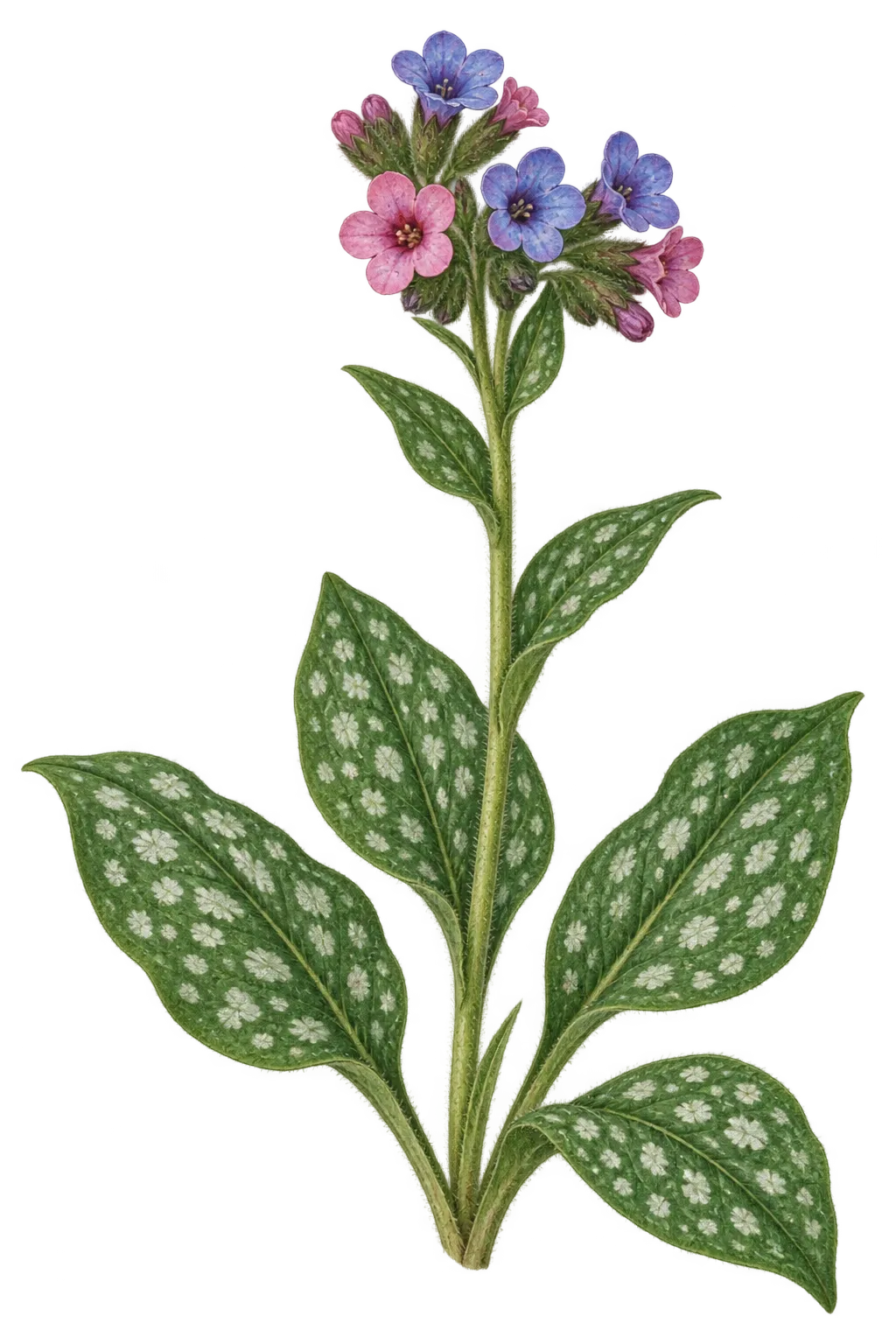
Lungworts are low, clump-forming perennials that spread gradually through rhizomes. Their summer foliage may be green, silver-spotted, broadly blotched or nearly silver, depending on the species or cultivated selection. Leaves range from softly hairy to distinctly bristly, and from oval to long and narrow. Leaf shape, hair type and spotting are important distinctions among species. Chicago Botanic Garden Plant Evaluation Notes 17: An Appraisal of Pulmonaria for the Garden
Botanical name
Kew accepts Pulmonaria L. as a genus in Boraginaceae. The database target remains the whole genus, encompassing multiple lungwort species rather than being narrowed to Pulmonaria officinalis. Kew Plants of the World Online: Pulmonaria L.
Recognizing the plant
The genus has large, stalked basal leaves and terminal clusters of flowers accompanied by bracts. The flower tube opens into five spreading lobes, with stamens held inside. Beneath it sits a five-lobed calyx that enlarges around the developing fruit. Mature nutlets are smooth, shiny and egg-shaped, with a sharply ridged inner side. Flora of China: Pulmonaria
Seasonality across the genus
Chicago region, Illinois, United States; cultivated trial plants
At Chicago Botanic Garden, different lungworts began flowering from late March to mid-May. Many flowered for a month or longer, with peak displays often in the first two weeks. Chicago Botanic Garden Plant Evaluation Notes 17: An Appraisal of Pulmonaria for the Garden
Native range
The genus is native from Europe across Siberia to northern China. Introduced populations occur in northeastern North America and the Russian Far East’s Primorye region. Kew Plants of the World Online: Pulmonaria L.
Botanical sources
- Kew Plants of the World Online: Pulmonaria L.
- Flora of China: Pulmonaria
- Chicago Botanic Garden Plant Evaluation Notes 17: An Appraisal of Pulmonaria for the Garden
Reviewed 2026-10-11. Seasonal development varies with location and growing conditions.