marigold
Calendula L.
A genus overview; characteristics vary between its species.
Calendula is a daisy-family genus of annual and perennial herbs. Its flower heads may stand singly at the ends of stems or form loose clusters. One or two rows of green bracts surround each head, with thin, papery margins contrasting against their leafy central portions. Kew POWO: CalendulaRoyal Botanic Gardens Sydney PlantNET: Calendula
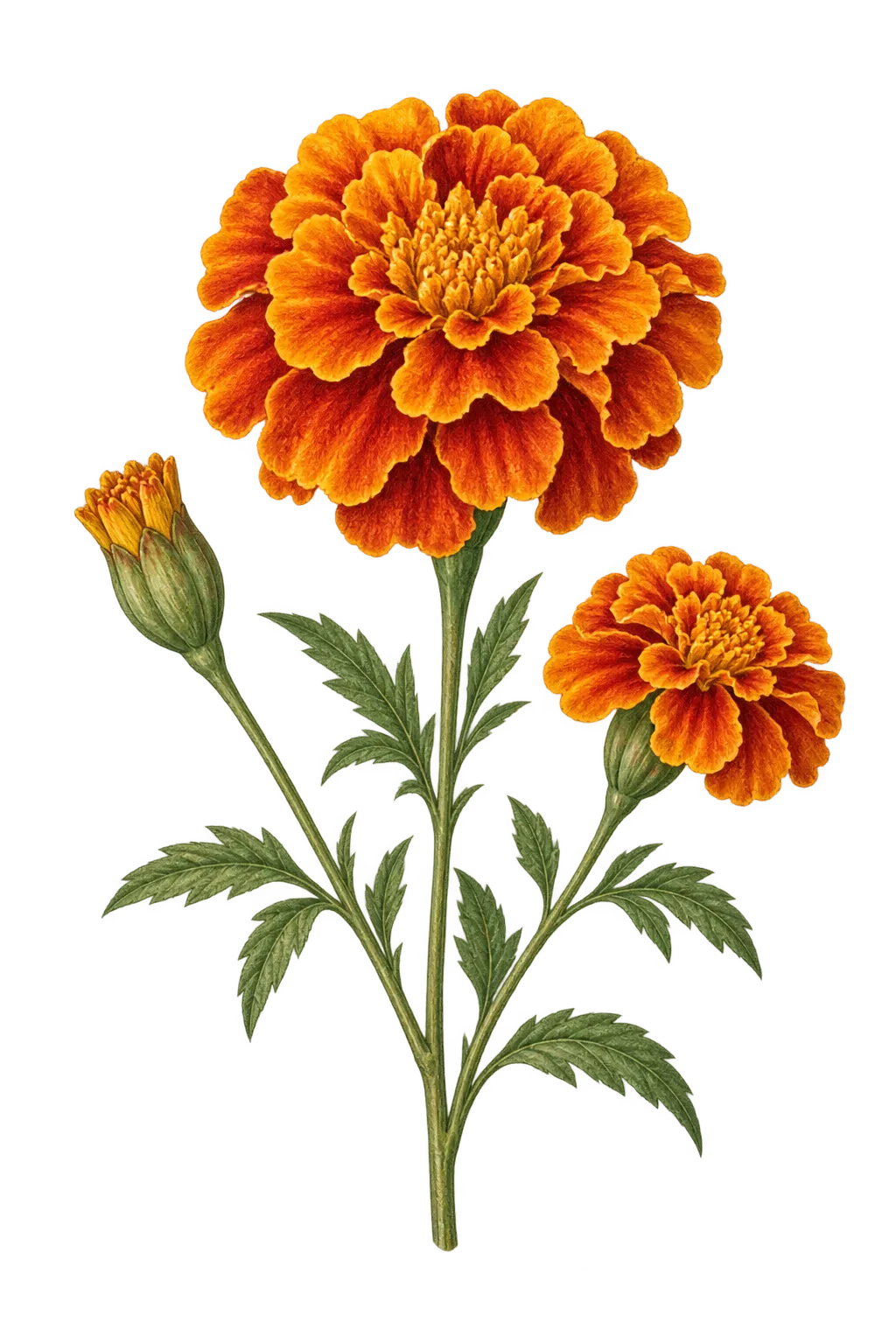
Botanical name
Calendula L. is an accepted genus in Asteraceae. No pot-marigold species is inferred from the catalog common name. Kew POWO: Calendula
Recognizing the plant
Its fruits can curve into distinctly different shapes within the same flower head. Some are winged, some ridged or spiny-backed, and those nearer the centre are often more tightly curved. They lack the feathery pappus familiar from many other daisies. The flowering head itself is a gathering of small flowers: female ray florets around the edge and tubular florets toward the centre. Leaves alternate along stems that may carry ordinary hairs, glandular hairs, or both. Leaf margins vary from unbroken to deeply divided. Within each head, the innermost tubular florets function as male flowers. Royal Botanic Gardens Sydney PlantNET: Calendula
Native range
Kew records a broad native range embracing Europe, the Mediterranean and North Africa, extending into western Asia and the western Himalaya, with Atlantic island populations as well. Kew POWO: Calendula
Botanical sources
Reviewed 2026-10-11. Seasonal development varies with location and growing conditions.