may hawthorn
Crataegus aestivalis (Walter) Torr. & A.Gray
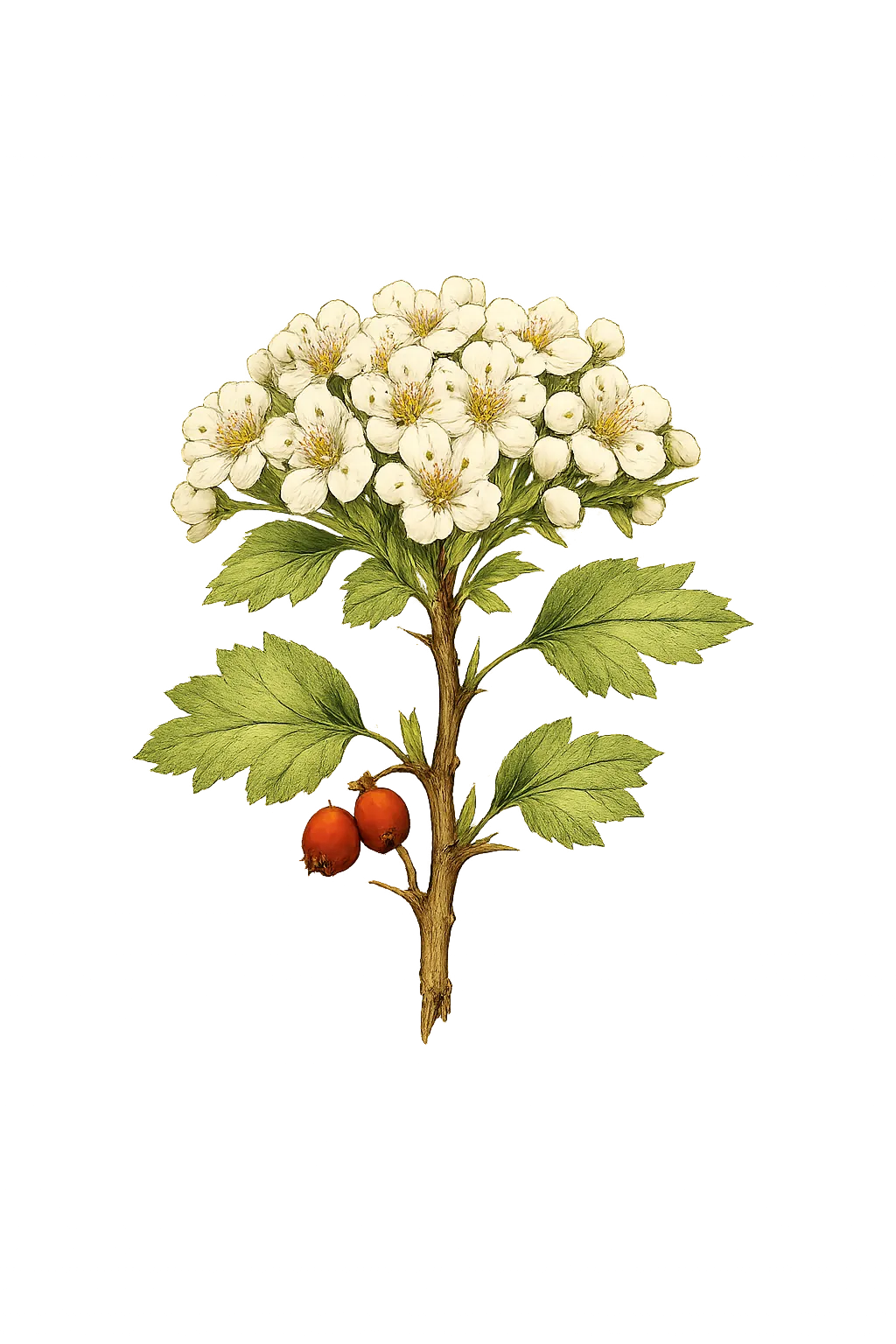
May hawthorn belongs to the seasonally wet landscapes of the southeastern United States. Its reproductive year starts early: flowers can appear while many other woody plants are still moving toward spring. The later, rounded fruits are pomes, the same broad fruit type as apples, although here they are much smaller. The common name mayhaw connects the plant with that early fruiting season. Flora of North America: Crataegus aestivalis
Botanical name
Kew accepts Crataegus aestivalis (Walter) Torr. & A.Gray in Rosaceae; spacing of the supplied author abbreviation is normalized. Kew POWO: Crataegus aestivalis
Recognizing the plant
Flora of North America describes flower clusters with two to four blossoms. Individual flowers are about twelve to thirty millimetres across, with pink anthers and usually four or five styles. The shiny fruits measure roughly eight to twenty millimetres and are generally red, sometimes yellow. Four or five hard seed-containing stones lie within the flesh, a useful detail when comparing related hawthorns. Flora of North America: Crataegus aestivalis
Bloom window
Southeastern United States
The regional flora records flowering in February–March, later northward, and fruiting in May–July. Flora of North America: Crataegus aestivalis
Native range
This species is native to the southeastern coastal plain, especially northern Florida and southern Georgia, extending north toward coastal North Carolina and west into Mississippi. It occurs in depressions, ditches, sinkholes and stream margins subject to seasonal inundation. Kew POWO: Crataegus aestivalisFlora of North America: Crataegus aestivalis
Botanical sources
Reviewed 2026-10-11. Seasonal development varies with location and growing conditions.