monstera
Monstera Adans.
A genus overview; characteristics vary between its species.
Monstera plants begin life on the ground and climb trees or rocks. As the oldest stem sections die, long feeder roots can retain contact with the soil. This mobile pattern of growth has led botanists to describe them as nomadic vines. Their changing foliage reflects the transition from a young climbing shoot to a mature flowering plant. Cedeño-Fonseca, Hay and Blanco: Revision of Monstera in Costa Rica
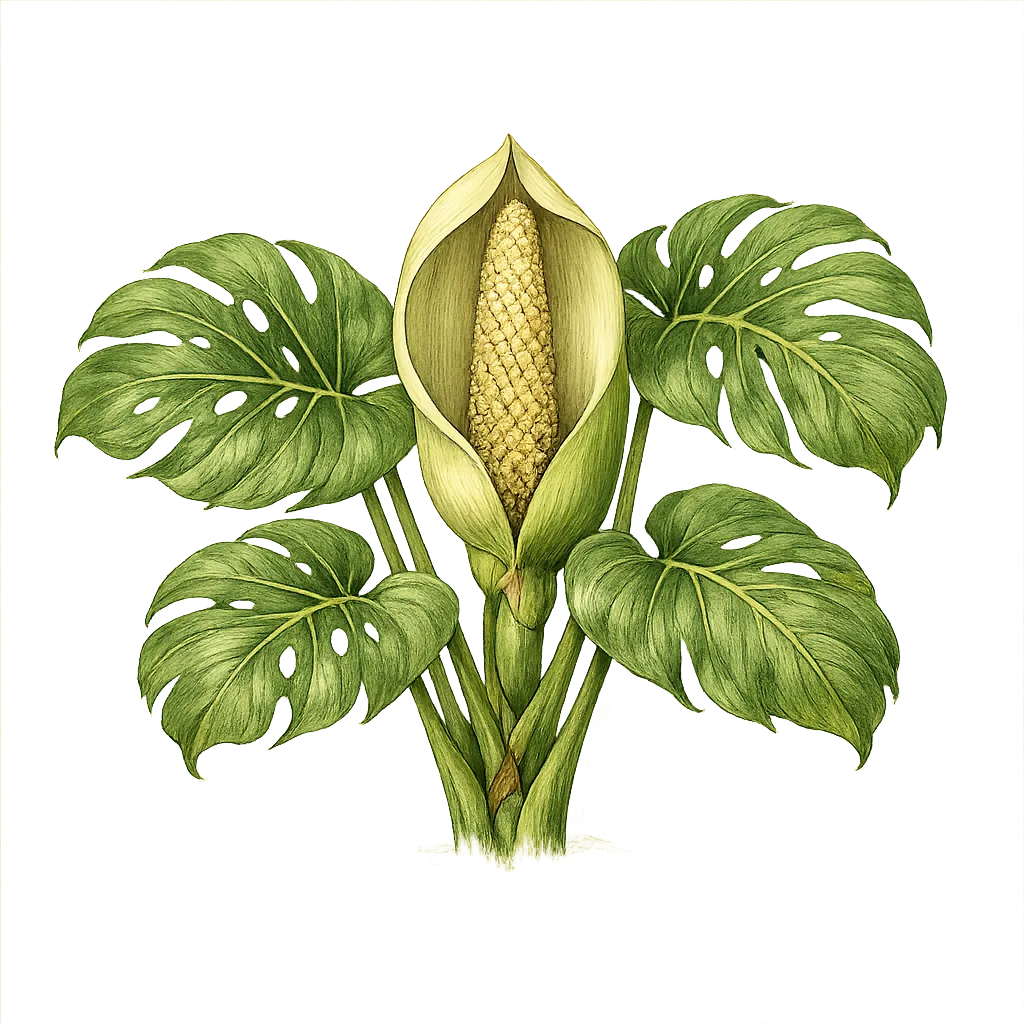
Botanical name
Monstera is an accepted genus in Araceae. This account covers the genus rather than assigning every species the deeply divided leaves of Monstera deliciosa. Kew: Monstera
Recognizing the plant
Leaves occur in two ranks, with a joint near the top of each stalk. Mature blades may remain entire, develop deep lobes, or contain enclosed holes. Some species begin with overlapping juvenile leaves pressed flat against bark, then abruptly produce long-stalked adult leaves; others change more gradually. The inflorescence consists of a flower-bearing spadix accompanied by a spathe. Most flowers are bisexual and lack a perianth. The female phase precedes pollen release, and the spathe is shed relatively quickly. At fruit maturity, outer fruit caps loosen to expose the pulp and seeds. Cedeño-Fonseca, Hay and Blanco: Revision of Monstera in Costa Rica
Native range
The genus is native from Mexico through tropical America. Costa Rican species occupy forests from low elevations into mountains. Kew: MonsteraCedeño-Fonseca, Hay and Blanco: Revision of Monstera in Costa Rica
Botanical sources
Reviewed 2026-10-11. Seasonal development varies with location and growing conditions.