mountainmint
Pycnanthemum Michx.
A genus overview; characteristics vary between its species.
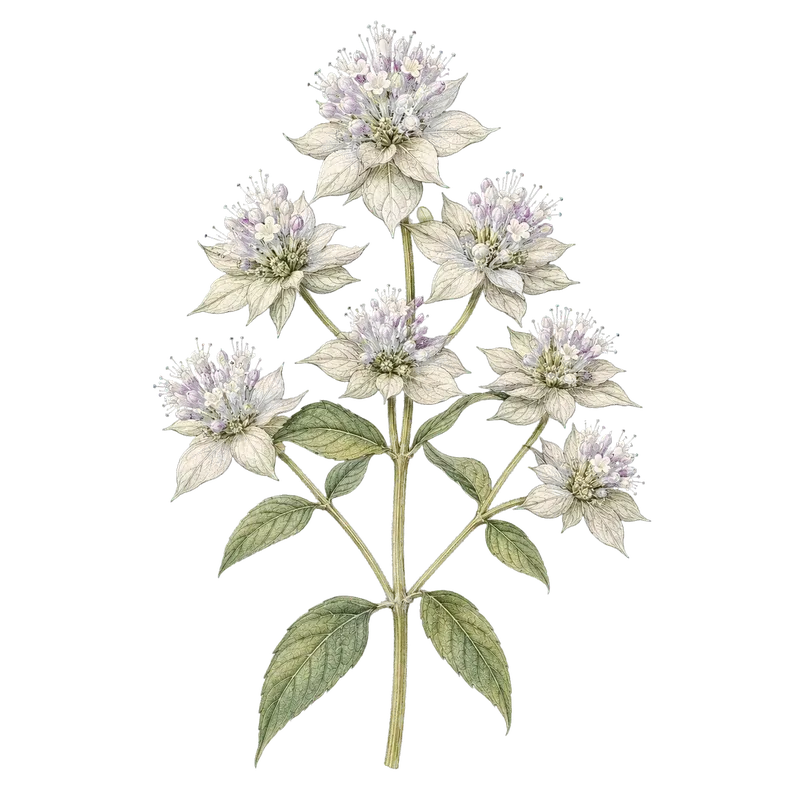
Mountain mints are strongly aromatic perennial herbs that spread through underground rhizomes. Their stems carry many small flowers together in crowded heads or looser groups, concentrated at the tips and in the upper leaf axils. Kew: Pycnanthemum, Lamiaceae Key Genus Fact Sheets
Botanical name
Pycnanthemum is an accepted genus in Lamiaceae. This profile retains the genus-level identification; Pycnanthemum muticum below is a named example. Kew: Pycnanthemum, Lamiaceae Key Genus Fact Sheets
Recognizing the plant
Leaves range from broad and egg-shaped to narrow and almost linear, with edges that may be smooth or toothed. The usually white to lavender flowers often have purple spots. Each corolla has two lips, the lower divided into three lobes, and the small fruits are nutlets. Kew: Pycnanthemum, Lamiaceae Key Genus Fact Sheets
Seasonality across the genus
Pennsylvania horticultural guidance
Penn State describes mountain-mint flowering from July through September in its Pennsylvania gardening guidance. Penn State Extension: Mountain Mint, A Pollinator Powerhouse
Native range
The genus is native to North America, chiefly southeastern Canada and the eastern and central United States, with a separate Californian representative. Diversity is greatest in the southeastern United States. Most species inhabit naturally open ground, disturbed places, or woodland edges. Kew: Pycnanthemum, Lamiaceae Key Genus Fact Sheets
Ecological relationships
In Penn State trials during 2012–2015, clustered mountain mint, P. muticum, attracted exceptionally diverse visitors, including bees, butterflies, wasps, hoverflies, and tachinid flies. Penn State Extension: Mountain Mint, A Pollinator Powerhouse
Botanical sources
- Kew: Pycnanthemum, Lamiaceae Key Genus Fact Sheets
- Penn State Extension: Mountain Mint, A Pollinator Powerhouse
Reviewed 2026-10-11. Seasonal development varies with location and growing conditions.