nerine
Nerine Herb.
A genus overview; characteristics vary between its species.
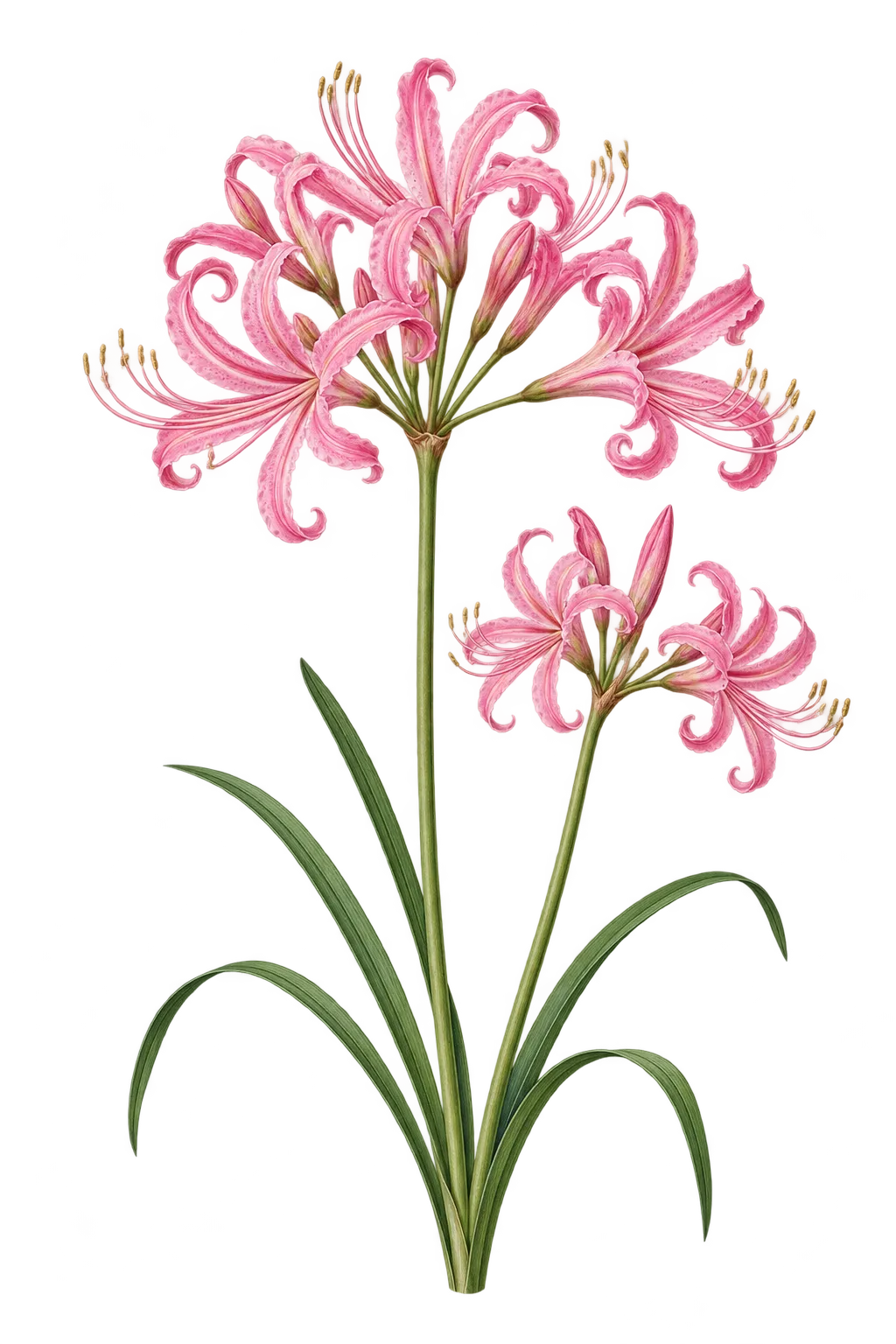
Nerines lift clusters of flowers above bulbs and narrow leaves. Their umbels can carry only a few flowers or many, each supported on its own stalk. The flowering stem begins with two protective, lance-shaped bracts. Depending on the species, leaves emerge with the flowers or follow them. Kew Plants of the World Online and Flora Zambesiaca: Nerine
Botanical name
Nerine Herb. is an accepted genus of Amaryllidaceae. This is a genus-level profile rather than a selection of one garden species. Kew Plants of the World Online and Flora Zambesiaca: Nerine
Recognizing the plant
Flora Zambesiaca describes funnel-shaped flowers with narrow, often crinkled segments and conspicuous stamens. The fruit is a deeply three-lobed capsule. Each chamber holds one or a few rounded, reddish-green seeds, which can begin germinating while still attached. Leaf blades range from very narrow to strap-shaped. Kew Plants of the World Online and Flora Zambesiaca: Nerine
Seasonality across the genus
Southern Africa; cultivated displays at Kirstenbosch
At Kirstenbosch, several nerines flower in early autumn, including displays in April. Cultivated species fall into winter-growing, summer-growing and evergreen groups, so one seasonal cycle does not describe the entire genus. SANBI PlantZAfrica: Nerine sarniensisSANBI Kirstenbosch: Seasons
Native range
The genus is native to southern Africa, extending north to Zimbabwe. Habitats differ between species: Nerine sarniensis inhabits rocky Western Cape mountain slopes, while Nerine pancratioides occupies damp grassland, marshes and streamside sites in the summer-rainfall region. Kew Plants of the World Online and Flora Zambesiaca: NerineSANBI PlantZAfrica: Nerine sarniensisFlowering Plants of Africa 61 (2009): Nerine pancratioides
Botanical sources
- Kew Plants of the World Online and Flora Zambesiaca: Nerine
- SANBI PlantZAfrica: Nerine sarniensis
- Flowering Plants of Africa 61 (2009): Nerine pancratioides
- SANBI Kirstenbosch: Seasons
Reviewed 2026-10-11. Seasonal development varies with location and growing conditions.