nosegaytree
Plumeria alba L.
White frangipani combines heavy, blunt branches with delicate-looking fragrant flowers. Leaves gather near the branch tips, leaving much of the framework exposed. Mature cultivated trees can reach about 7.6 m and develop a rounded or vase-shaped crown. Injured tissues release white sap, which can irritate skin. Singapore NParks: Plumeria albaUniversity of Florida IFAS, Gilman and Watson: Plumeria alba, ENH649/ST490 (2014)
Botanical name
Plumeria alba L. is accepted in Apocynaceae. This is the Caribbean species, not a collective name for every white-flowered garden plumeria. Kew Plants of the World Online: Plumeria alba
Recognizing the plant
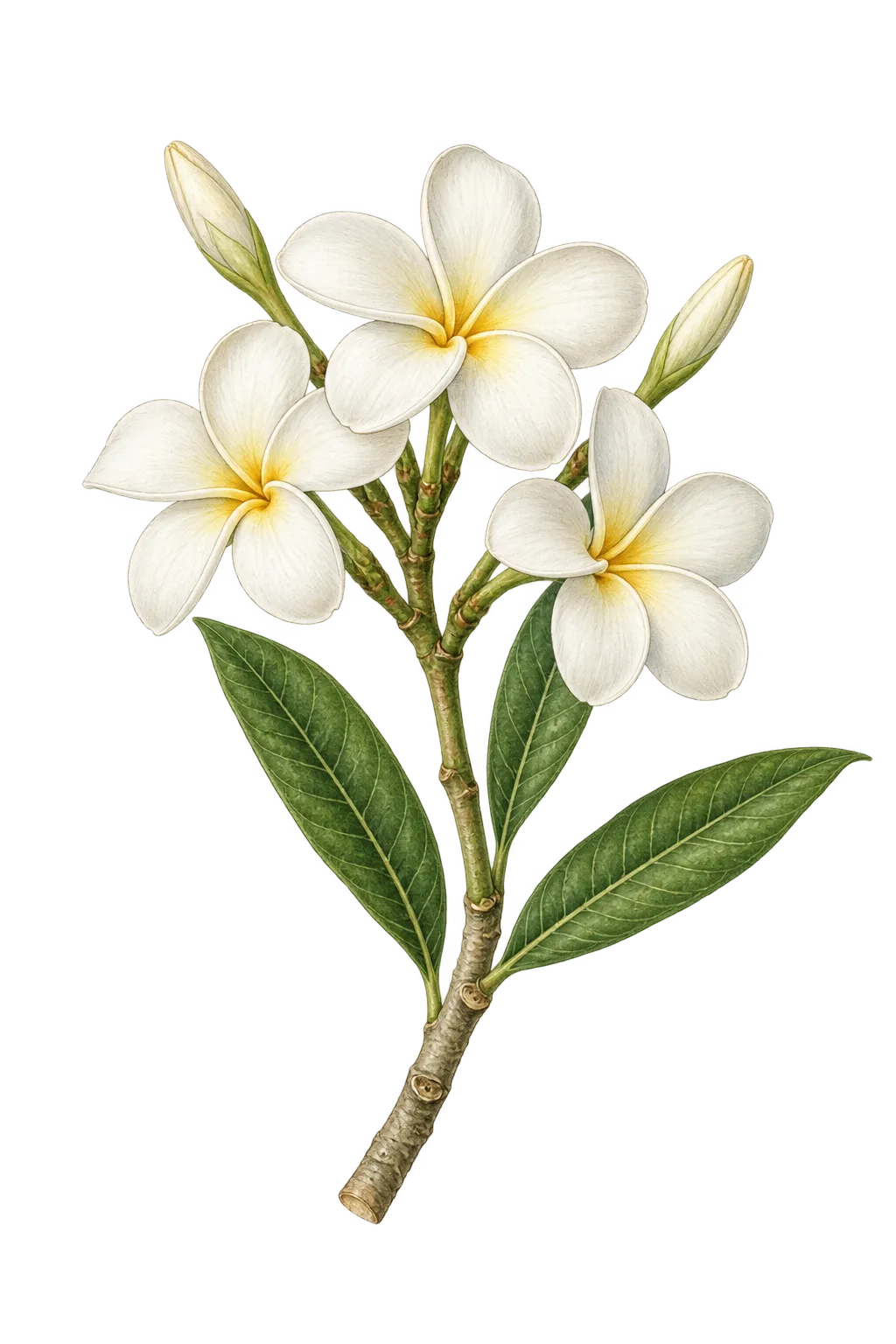
The leaves are narrow, lance-shaped, green and leathery. Flowers are white around a small yellow center and have a sweet scent. Their overlapping segments create a gently spiraling outline. Long, dry fruits contrast with the soft floral display. The branches are thick but relatively brittle, an important structural feature of the tree. Singapore NParks: Plumeria albaUniversity of Florida IFAS, Gilman and Watson: Plumeria alba, ENH649/ST490 (2014)
Bloom window
Singapore and Florida cultivation
Singapore’s National Parks Board records flowers throughout the year in cultivation, while the University of Florida account gives June–November for Florida. Singapore NParks: Plumeria albaUniversity of Florida IFAS, Gilman and Watson: Plumeria alba, ENH649/ST490 (2014)
Native range
The species is native to the Caribbean from Puerto Rico through the Leeward and Windward Islands. It is cultivated far beyond that range, including tropical Asian gardens. Kew records introduced populations in Assam, Bangladesh, Sumatra and Trinidad and Tobago. Kew Plants of the World Online: Plumeria albaSingapore NParks: Plumeria alba
Ecological relationships
University of Florida entomologists list Plumeria alba as a larval food plant of the tetrio sphinx, Pseudosphinx tetrio. University of Florida IFAS: Tetrio Sphinx, Pseudosphinx tetrio
Botanical sources
- Kew Plants of the World Online: Plumeria alba
- Singapore NParks: Plumeria alba
- University of Florida IFAS, Gilman and Watson: Plumeria alba, ENH649/ST490 (2014)
- University of Florida IFAS: Tetrio Sphinx, Pseudosphinx tetrio
Reviewed 2026-10-11. Seasonal development varies with location and growing conditions.