pear
Pyrus L.
A genus overview; characteristics vary between its species.
Pears belong to a genus of trees and shrubs that are usually deciduous, although a few retain some foliage. Some have spiny branches. Their fleshy fruits are pomes, with a firm inner core and pulp containing the hard stone cells responsible for a characteristically gritty texture. Flora of China 9:173: Pyrus
Botanical name
Pyrus L. is an accepted genus in Rosaceae. The common pear, Pyrus communis, is used below only as an explicitly named horticultural example. Kew Plants of the World Online: Pyrus
Recognizing the plant
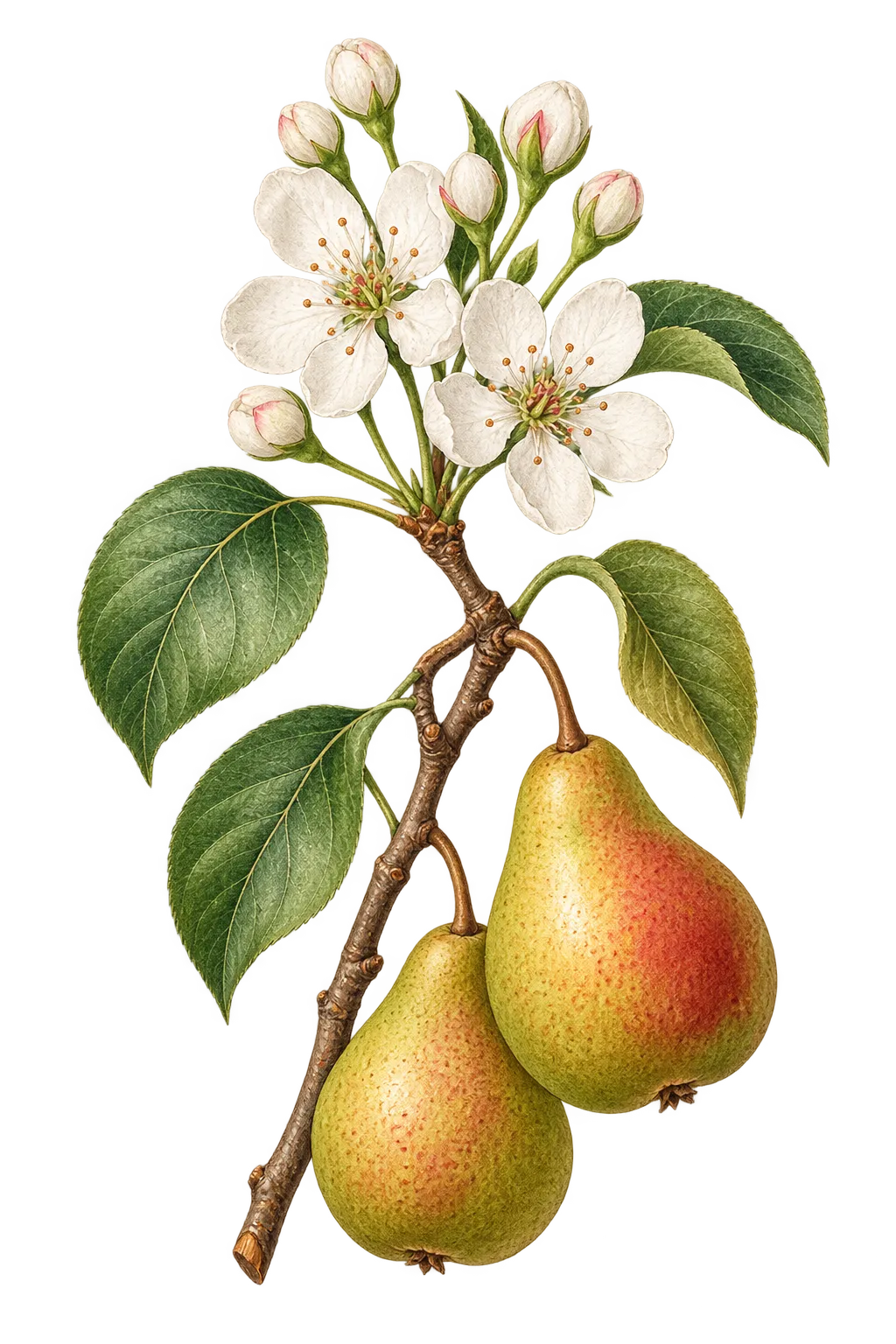
The simple leaves alternate along the branches and usually have toothed or smooth margins. Flowers open before or alongside the leaves in clusters. Five petals are generally white, occasionally pink, surrounding numerous stamens whose anthers are commonly dark red or purple. The fruit contains two to five seed chambers. Flora of China 9:173: Pyrus
Seasonality across the genus
North Carolina; Pyrus communis example
For common pear, Pyrus communis, North Carolina Extension records spring flowers and fruit displayed or harvested in summer and autumn. North Carolina Extension Gardener Plant Toolbox: Pyrus communis
Native range
The genus is native across temperate Eurasia into Indochina and also in northwestern Africa. Its native distribution includes parts of Europe, the Middle East, Central and eastern Asia, and the Himalayas. Kew Plants of the World Online: Pyrus
Ecological relationships
Common pear flowers attract bees and butterflies; this documented example concerns P. communis. North Carolina Extension Gardener Plant Toolbox: Pyrus communis
Botanical sources
- Kew Plants of the World Online: Pyrus
- Flora of China 9:173: Pyrus
- North Carolina Extension Gardener Plant Toolbox: Pyrus communis
Reviewed 2026-10-11. Seasonal development varies with location and growing conditions.