Peking cotoneaster
Cotoneaster acutifolius Turcz.
Peking cotoneaster is a deciduous shrub whose young growth changes texture. New branchlets can be softly hairy before becoming smoother. Their reddish-brown surfaces support short-stalked leaves, with veins raised on the undersides and impressed on the upper surfaces. Flora of China: Cotoneaster acutifolius
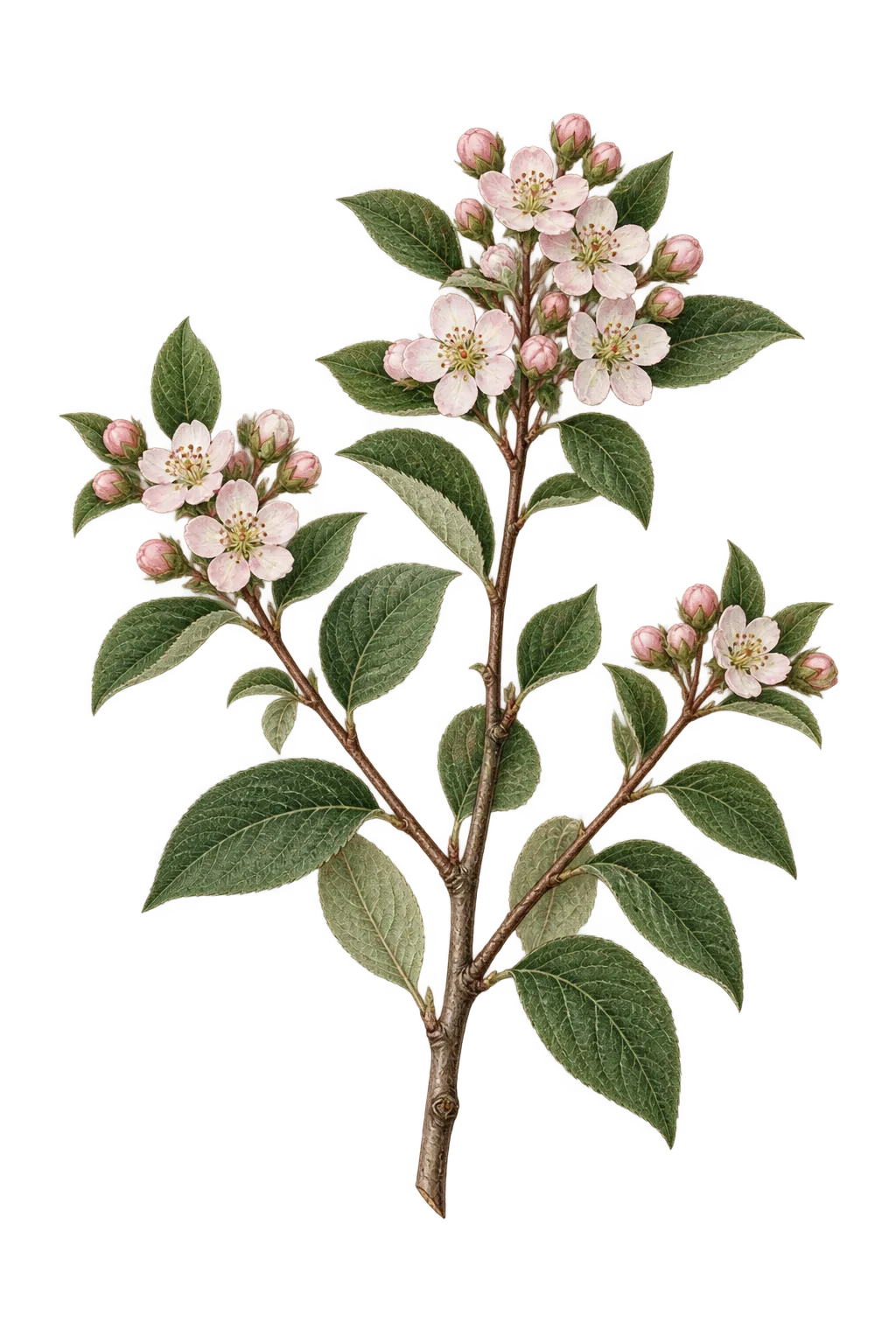
Botanical name
Kew accepts Cotoneaster acutifolius Turcz. and includes Cotoneaster lucidus within its synonymy. Kew POWO: Cotoneaster acutifolius
Recognizing the plant
Flora of China describes shrubs two to four metres tall, with pointed oval to oblong leaves. Small clusters carry two to five white flowers tinged with red, their petals held erect. Later fruits are black and roughly rounded to egg-shaped, usually six to eight millimetres across. Leaf and floral-cup hairiness varies. Flora of China: Cotoneaster acutifolius
Seasonal development
China
In China, the flora records flowers in May and June and fruits in August and September, a regional sequence from pale bloom to dark late-season fruit. Flora of China: Cotoneaster acutifolius
Native range
Kew places the native range from southern Siberia into China, including Mongolia. The Chinese flora records it on slopes and foothills, in forests and their margins, thickets and mountain valleys, showing the breadth of settings within that eastern Asian range. Kew POWO: Cotoneaster acutifoliusFlora of China: Cotoneaster acutifolius
Botanical sources
Reviewed 2026-10-11. Seasonal development varies with location and growing conditions.