phacelia
Phacelia Juss.
A genus overview; characteristics vary between its species.
Phacelias are often recognized by their curling flower clusters, the feature behind the common name scorpionweed. The genus includes annual, biennial and perennial herbs, so a small seasonal wildflower and a longer-lived plant may share the same basic floral structure. Stems and leaves are commonly hairy and can also bear glands. Royal Botanic Gardens Victoria: PhaceliaMissouri Department of Conservation: Phacelia
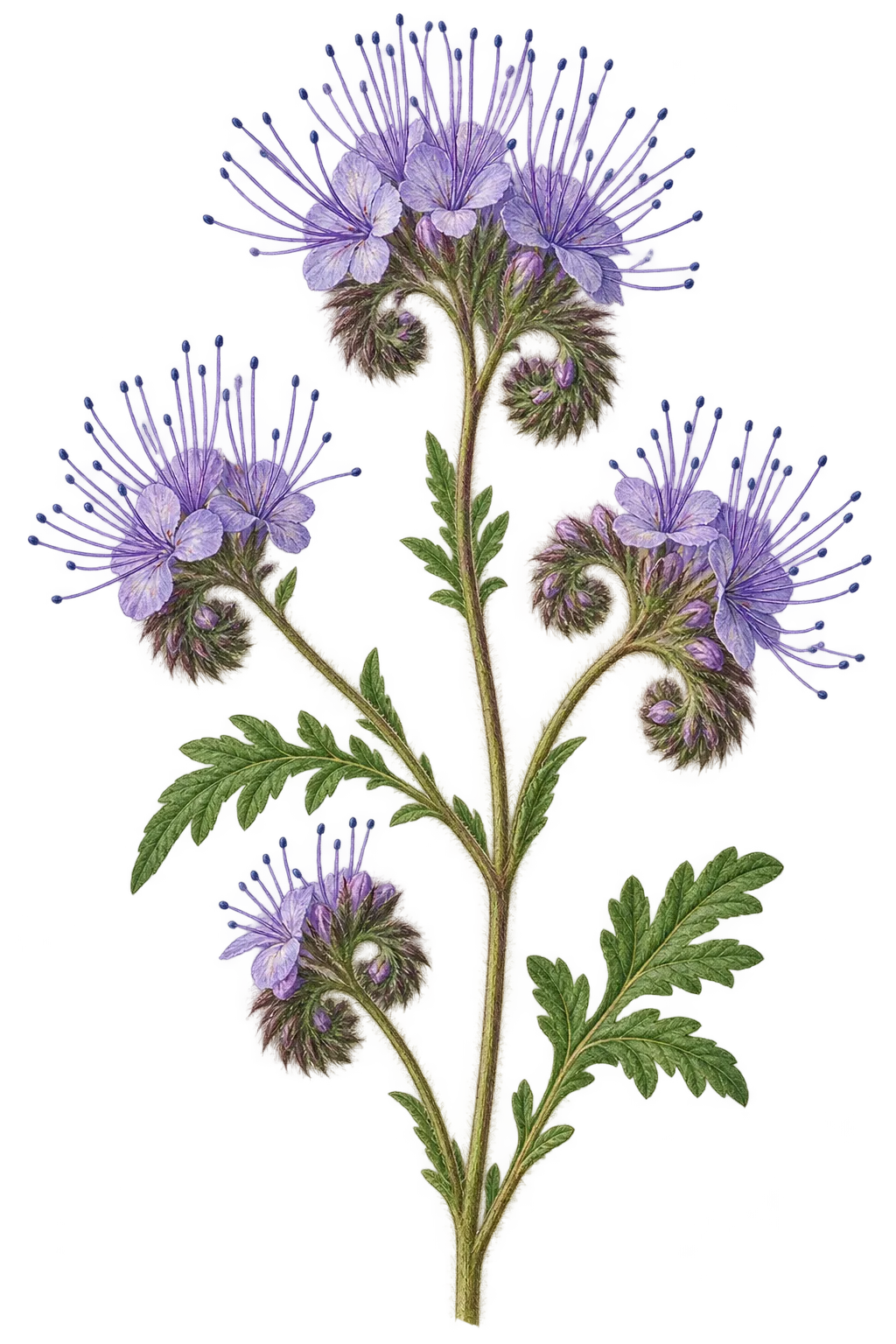
Botanical name
Phacelia is an accepted genus, placed in Boraginaceae by Kew and several regional floras; other treatments recognize Hydrophyllaceae separately. Kew: Phacelia
Recognizing the plant
Leaves are mostly alternate, but their outlines vary from simple blades to deeply divided or compound foliage. The flower clusters may be simple or branched. Five sepals surround a corolla that can be tubular, bell-shaped or broadly spreading, usually in blue, violet, purple or white. The stamens may remain within the flower or project beyond it. Paired scales often occur near the bases of their filaments. A divided style rises from the ovary, which matures into a rounded or oval capsule containing a few to many seeds. Royal Botanic Gardens Victoria: Phacelia
Native range
The genus is native to the Americas, with its greatest concentration in western North America and Mexico. Its South American range extends from Peru toward the continent’s south. Kew: PhaceliaRoyal Botanic Gardens Victoria: Phacelia
Ecological relationships
In Ohio, phacelias provide pollen resources for specialist bees including Andrena phaceliae and Hoplitis simplex. Ohio State University: Guide to Specialist Bees of Ohio
Botanical sources
- Kew: Phacelia
- Royal Botanic Gardens Victoria: Phacelia
- Missouri Department of Conservation: Phacelia
- Ohio State University: Guide to Specialist Bees of Ohio
Reviewed 2026-10-11. Seasonal development varies with location and growing conditions.