phlox
Phlox ×glutinosa Buckley
Buckley’s original phlox was a small, conspicuously sticky plant with bright scarlet flowers. He described it in 1843 as a species, but Kew now treats its name as a natural hybrid between Phlox divaricata and Phlox pilosa. The historical plant usually sent up a single, unbranched stem from its root, reaching about a foot high. Kew Plants of the World Online: Phlox ×glutinosaBuckley (1843), American Journal of Science and Arts 45: Phlox glutinosa
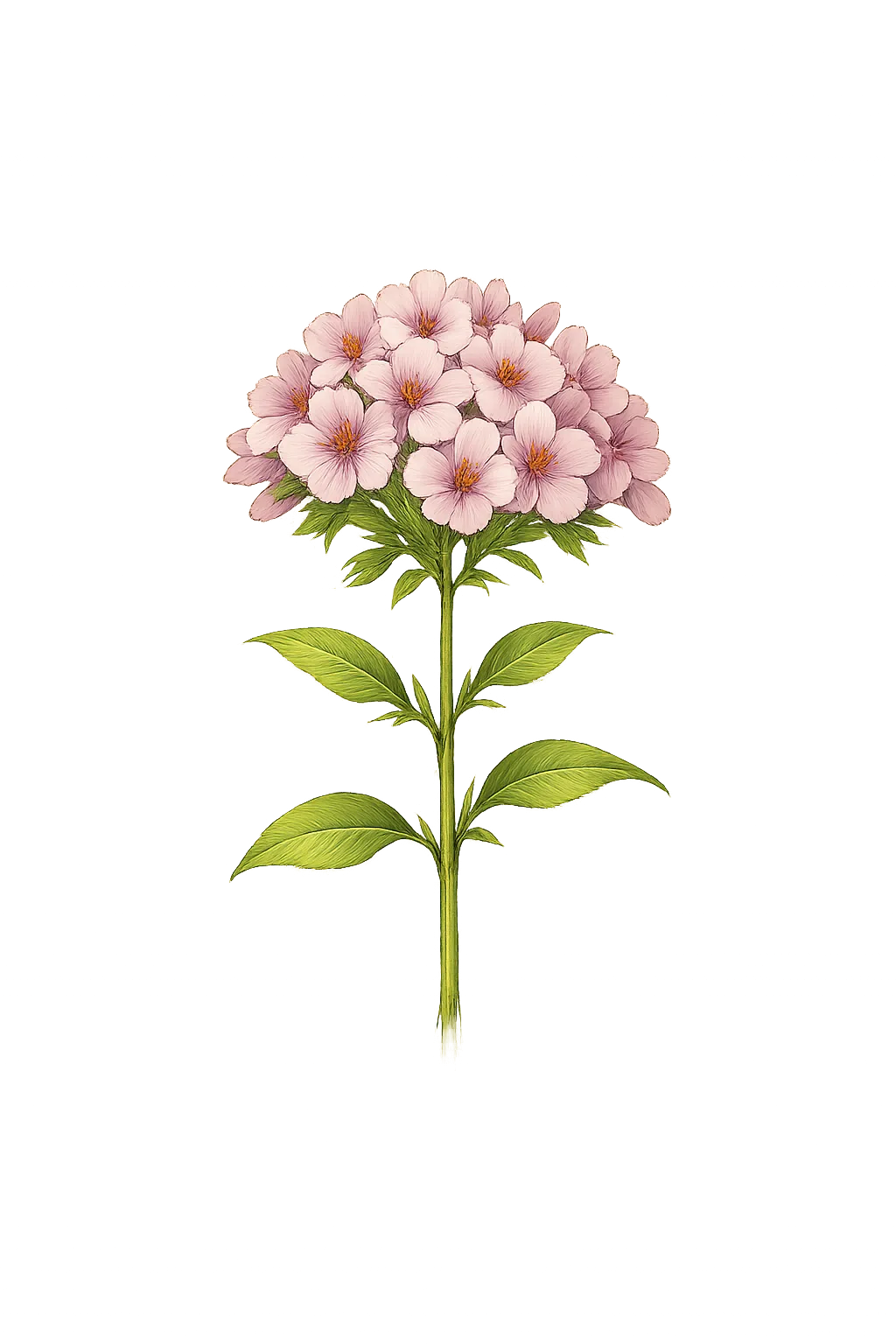
Botanical name
Kew accepts Phlox ×glutinosa Buckley as the hybrid Phlox divaricata × Phlox pilosa. The original name was published as a species in 1843. Kew Plants of the World Online: Phlox ×glutinosaBuckley (1843), American Journal of Science and Arts 45: Phlox glutinosa
Recognizing the plant
In the original diagnosis, hairs covered the plant and gave it a sticky surface. The leaves were oblong to lance-shaped and ended in short points. Beneath each flower, the calyx divided into long, slender, bristle-like segments. The corolla tube extended to twice the length of the calyx. These details describe Buckley’s material rather than every possible hybrid individual or garden selection. Buckley (1843), American Journal of Science and Arts 45: Phlox glutinosa
Bloom window
Original Alabama collection
The original Alabama account records flowering in May, a historical local observation rather than a complete flowering calendar. Buckley (1843), American Journal of Science and Arts 45: Phlox glutinosa
Native range
Buckley collected his plants in pine woodland in Wilcox County, Alabama. Current Kew treatment places the hybrid in the southeastern United States and specifically lists Arkansas in its distribution. Kew Plants of the World Online: Phlox ×glutinosaBuckley (1843), American Journal of Science and Arts 45: Phlox glutinosa
Botanical sources
- Kew Plants of the World Online: Phlox ×glutinosa
- Buckley (1843), American Journal of Science and Arts 45: Phlox glutinosa
Reviewed 2026-10-11. Seasonal development varies with location and growing conditions.