pimpernel willowherb
Epilobium anagallidifolium Lam.
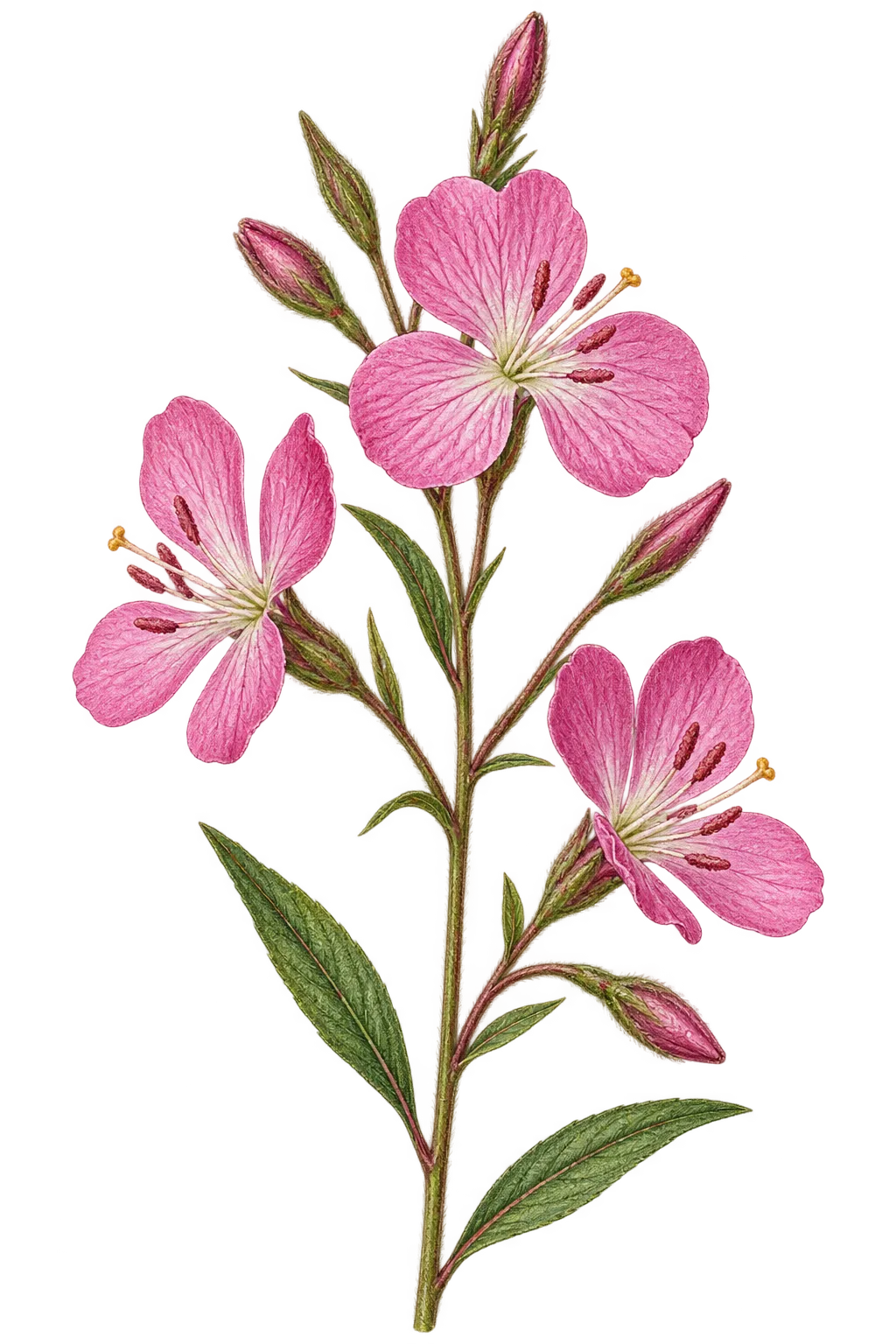
Pimpernel willowherb stays close to the ground, forming small clumps or mats linked by short, leafy runners. Several stems may rise from one plant, often with a curved or S-shaped outline. Their tips can nod before becoming upright, and the flowering stems are usually only 3–20 cm tall. University of Washington Burke Herbarium: Epilobium anagallidifolium
Botanical name
Epilobium anagallidifolium Lam. is accepted in Onagraceae. The profile retains this species rather than substituting a larger willowherb with similar pink flowers. Kew Plants of the World Online: Epilobium anagallidifolium
Recognizing the plant
The leaves are opposite below the flowering portion but become alternate toward the top. Lower blades are spoon-shaped or oblong, while upper ones are narrower; their margins may carry a few small teeth. The pink to rose-purple petals are notched and only a few millimetres long. A club-shaped stigma sits at the flower’s center. Slender, sometimes red-purple capsules follow. They contain tiny brown seeds equipped with persistent pale hair tufts. University of Washington Burke Herbarium: Epilobium anagallidifolium
Bloom window
Washington, United States
Washington’s Burke Herbarium account records flowering from June through August. University of Washington Burke Herbarium: Epilobium anagallidifolium
Native range
The species is native across subarctic and temperate parts of the Northern Hemisphere. In western North America it extends from Alaska to California and east into the Rocky Mountains. Mountain populations occupy damp gravel, seeps, stream margins and subalpine or alpine meadows and slopes. Kew Plants of the World Online: Epilobium anagallidifoliumUniversity of Washington Burke Herbarium: Epilobium anagallidifolium
Botanical sources
- Kew Plants of the World Online: Epilobium anagallidifolium
- University of Washington Burke Herbarium: Epilobium anagallidifolium
Reviewed 2026-10-11. Seasonal development varies with location and growing conditions.