poppy
Papaver L.
A genus overview; characteristics vary between its species.
Papaver includes annual, biennial and perennial herbs whose showy flowers stand on long stalks. Leaves may be gathered near the ground or arranged along leafy stems, and their blades range from relatively simple to deeply divided. Many familiar poppies hold their flower buds in a nodding position. Flora of North America, volume 3: Papaver
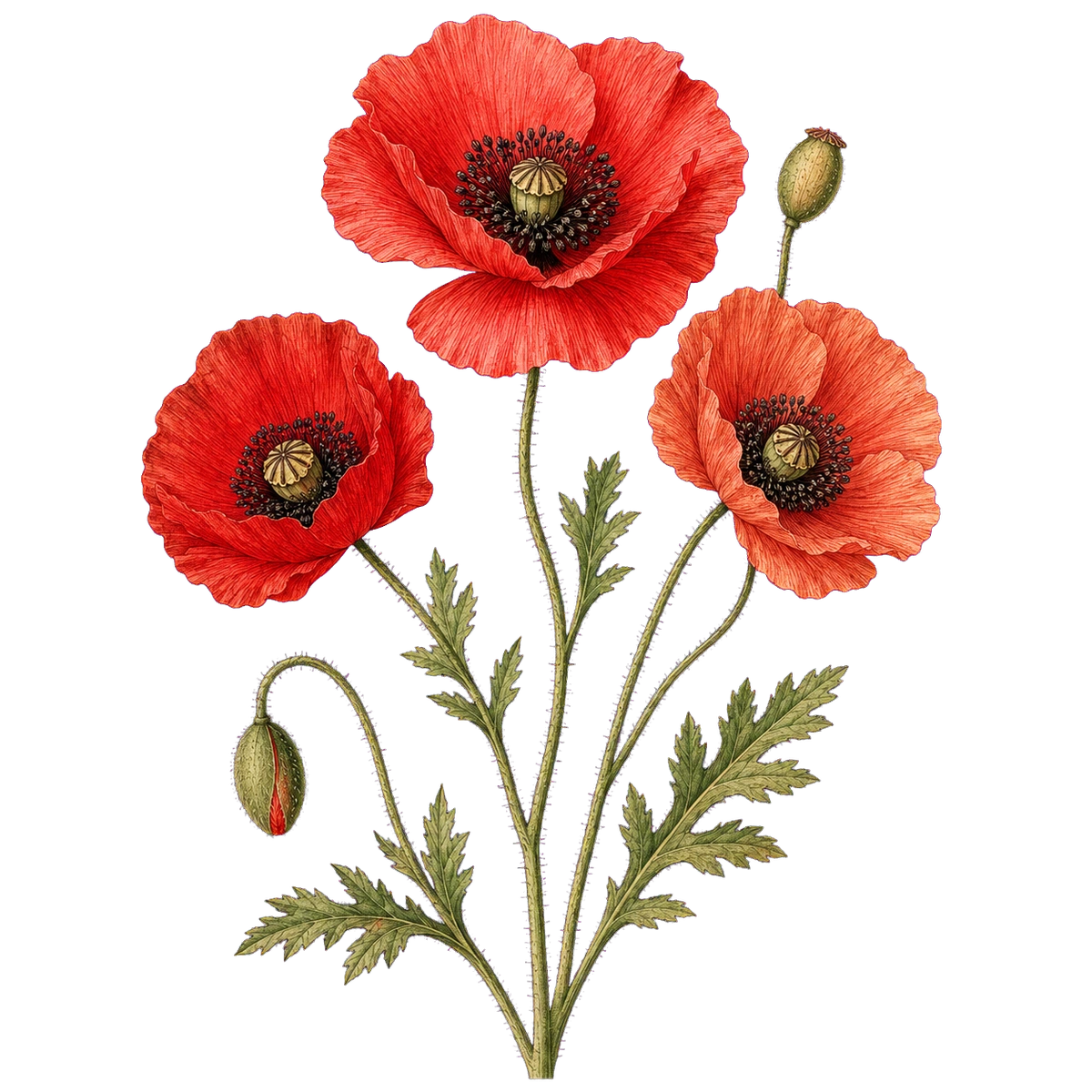
Botanical name
Kew accepts Papaver L. as a genus in Papaveraceae. The profile remains at genus rank, with Papaver rhoeas used as a named example. Kew Plants of the World Online: Papaver
Recognizing the plant
The common poppy, Papaver rhoeas, shows one distinctive version of this form: bristly stems, four scarlet petals and dark stamens surrounding the flower’s centre. After the petals fall, an urn-shaped capsule remains. Pores beneath its flat top release numerous tiny seeds when wind moves the stem. Kew Grow Wild: Common poppy, Papaver rhoeas
Seasonality across the genus
United Kingdom; Papaver rhoeas example
In the United Kingdom, common poppy colours disturbed farmland edges, road verges and recently turned ground in June and July. Kew Grow Wild: Common poppy, Papaver rhoeas
Native range
Kew places the genus’s native range in temperate and subtropical parts of the Northern Hemisphere and southern Africa. Its native-country list includes western North America, much of Europe, North Africa and western to southern Asian regions. Kew Plants of the World Online: Papaver
Ecological relationships
Common poppy offers pollen rather than nectar. Kew records bumblebees as its main visitors, with honeybees, solitary bees, hoverflies and beetles also collecting pollen. Kew Grow Wild: Common poppy, Papaver rhoeas
Botanical sources
- Kew Plants of the World Online: Papaver
- Flora of North America, volume 3: Papaver
- Kew Grow Wild: Common poppy, Papaver rhoeas
Reviewed 2026-10-11. Seasonal development varies with location and growing conditions.