redberry juniper
Juniperus arizonica (R.P.Adams) R.P.Adams
This evergreen juniper can sprout again from stumps after cutting or burning. Large shrubs and small trees typically reach 3–8 m. Some have one trunk, while others branch near ground level into an irregular or flattened, rounded crown. Adams 2008: Juniperus of Canada and the United States
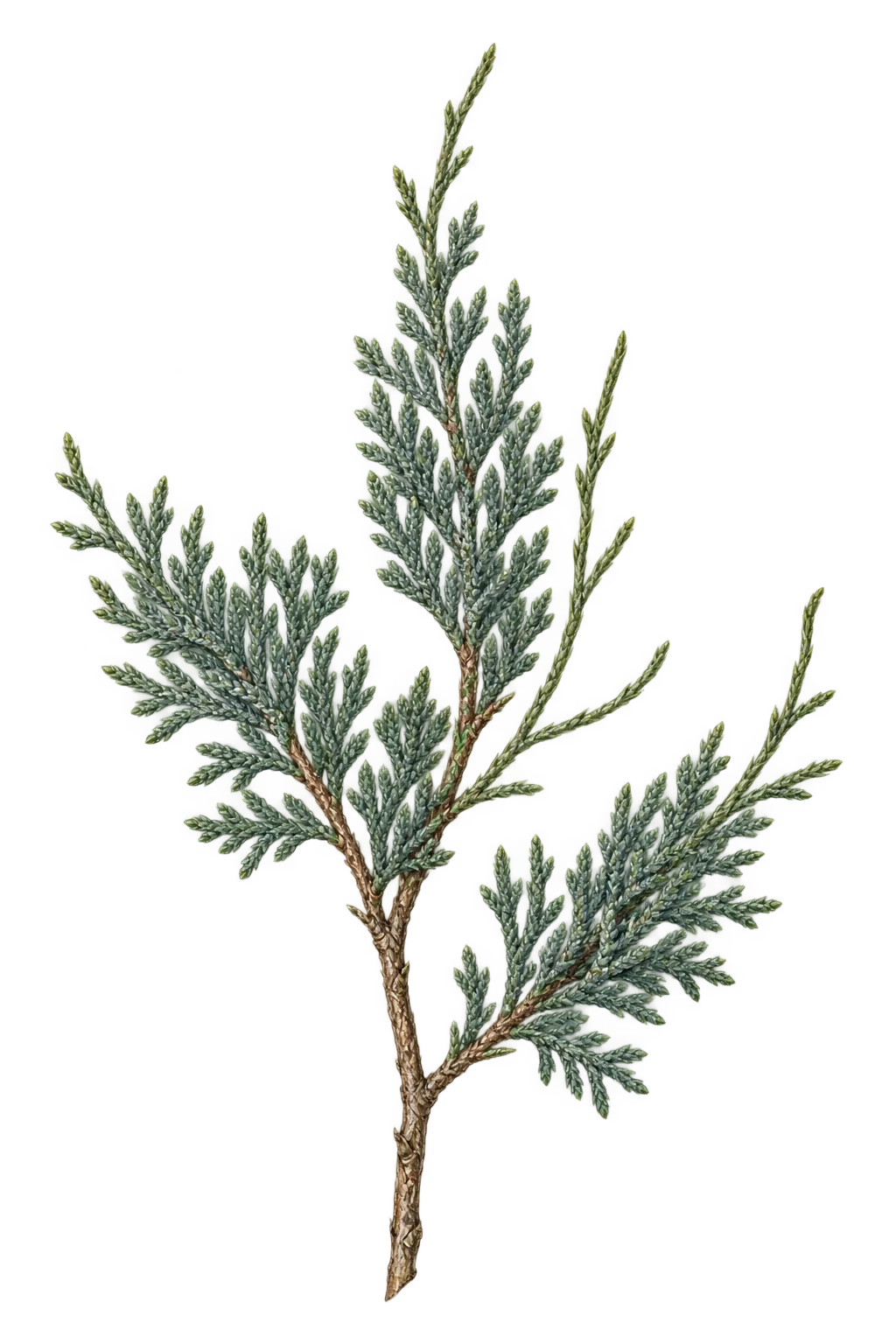
Botanical name
Juniperus arizonica is an accepted Cupressaceae species. Its earlier name, J. coahuilensis var. arizonica, is a homotypic synonym. Kew POWO: Juniperus arizonica
Recognizing the plant
Thin brown trunk bark peels in long, ragged strips; smaller branches have scaly, ash-grey bark. Foliage includes both scale leaves and longer, juvenile-looking whip leaves, with finely toothed margins visible under magnification. The berry-like seed cones are soft and juicy, usually containing one seed. Their surface bloom makes them look rose-pink, concealing yellow-orange to dark-red colour underneath. Individual cones measure about 6–7 mm across. Adams 2008: Juniperus of Canada and the United States
Cones and seasonal development
Southwestern United States, Adams’s regional treatment
Pollen is released in late autumn and early winter; the species bears pollen and seed cones on separate plants. Adams 2008: Juniperus of Canada and the United States
Native range
The native range extends from Arizona through southwestern New Mexico to southwestern Texas and northeastern Sonora, Mexico. Adams records it in grama-grass grasslands and neighbouring rocky slopes, mostly between 980 and 1,600 m elevation, occasionally higher. Kew POWO: Juniperus arizonicaAdams 2008: Juniperus of Canada and the United States
Botanical sources
Reviewed 2026-10-11. Seasonal development varies with location and growing conditions.