rose scented geranium
Pelargonium capitatum (L.) L'Hér.
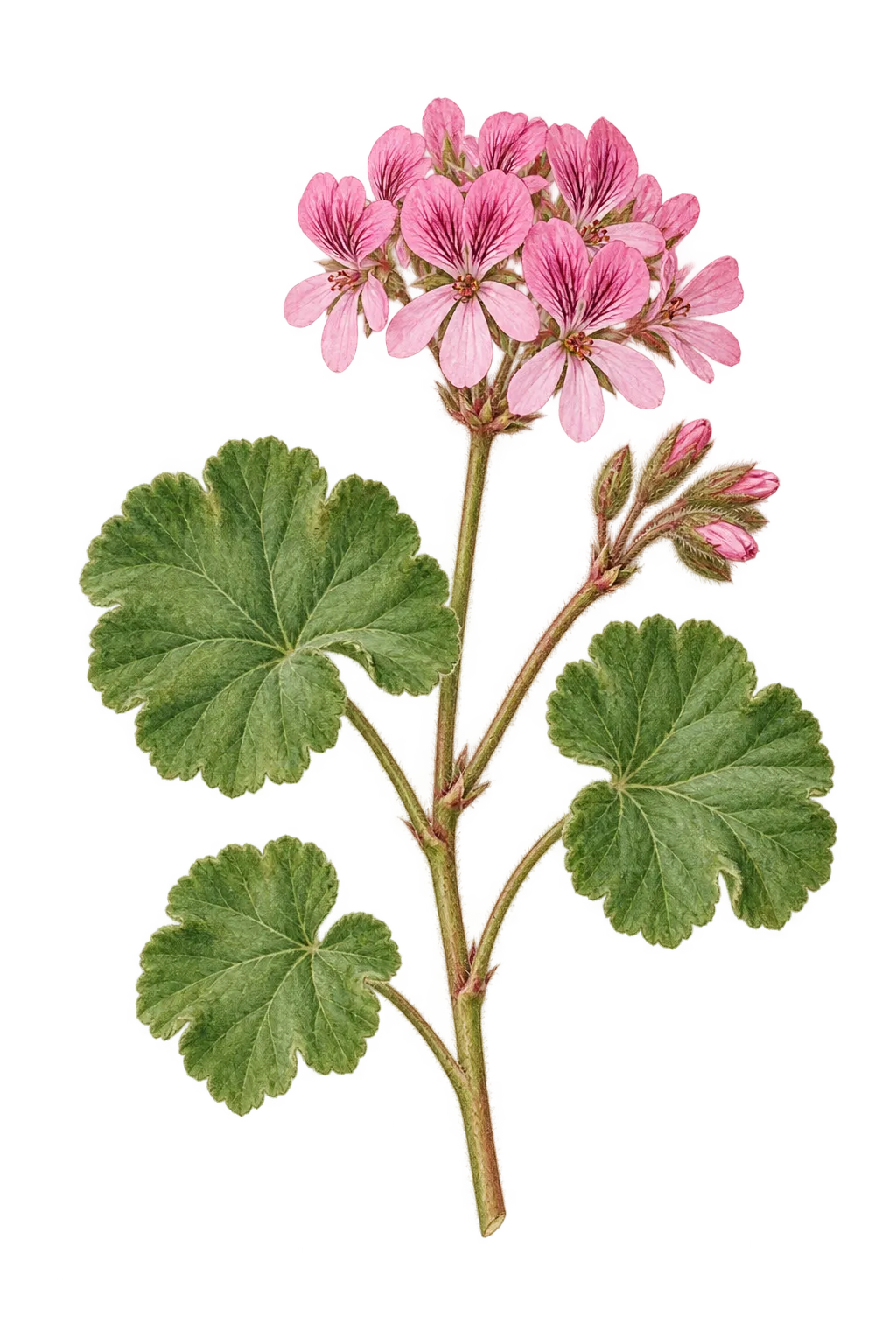
The fragrance of rose-scented pelargonium comes from its bruised leaves and stems. Its spreading growth can form a much wider plant than its modest height suggests. Soft, partly woody branches carry long hairs of variable density, giving the foliage a gentle, fuzzy surface. The species name refers to the compact, headlike flower clusters. SANBI PlantZAfrica: Pelargonium capitatum
Botanical name
Current floras use Pelargonium capitatum (L.) L'Hér. for the species published in Aiton’s Hortus Kewensis 2:425 in 1789; the database’s expanded author citation denotes the same taxon. Royal Botanic Gardens Victoria: Pelargonium capitatum
Recognizing the plant
Leaves are broadly oval to heart-shaped and divided into three to seven lobes. Their edges are bluntly toothed and can be wavy. Pink flowers gather in clusters of about seven to twelve on stalks above the leaves. The larger pair of petals bears darker crimson veins or blotches, distinguishing it from the smaller petals. Flowers usually contain seven fertile stamens. The long fruit separates into hairy, seed-bearing segments. Royal Botanic Gardens Victoria: Pelargonium capitatum
Bloom window
South Africa
SANBI records flowering in September and October, during the South African spring. SANBI PlantZAfrica: Pelargonium capitatum
Native range
Native populations follow South Africa’s coast from the Lamberts Bay area around the Cape and eastward to KwaZulu-Natal. Sand dunes, low coastal hillsides and disturbed ground provide characteristic habitat. Plants introduced to Australia have also been recorded on coastal dunes and cliffs. Royal Botanic Gardens Victoria: Pelargonium capitatumSANBI PlantZAfrica: Pelargonium capitatum
Botanical sources
Reviewed 2026-10-11. Seasonal development varies with location and growing conditions.