Skimmia
Skimmia Thunb.
A genus overview; characteristics vary between its species.
Skimmia includes evergreen shrubs and small trees with aromatic foliage. Many cultivated skimmias are valued for their fruits, but male and female flowers usually occur on separate plants. In species such as Skimmia japonica and Skimmia anquetilia, both sexes are needed for fruit production. International Dendrology Society, Trees and Shrubs Online: Skimmia
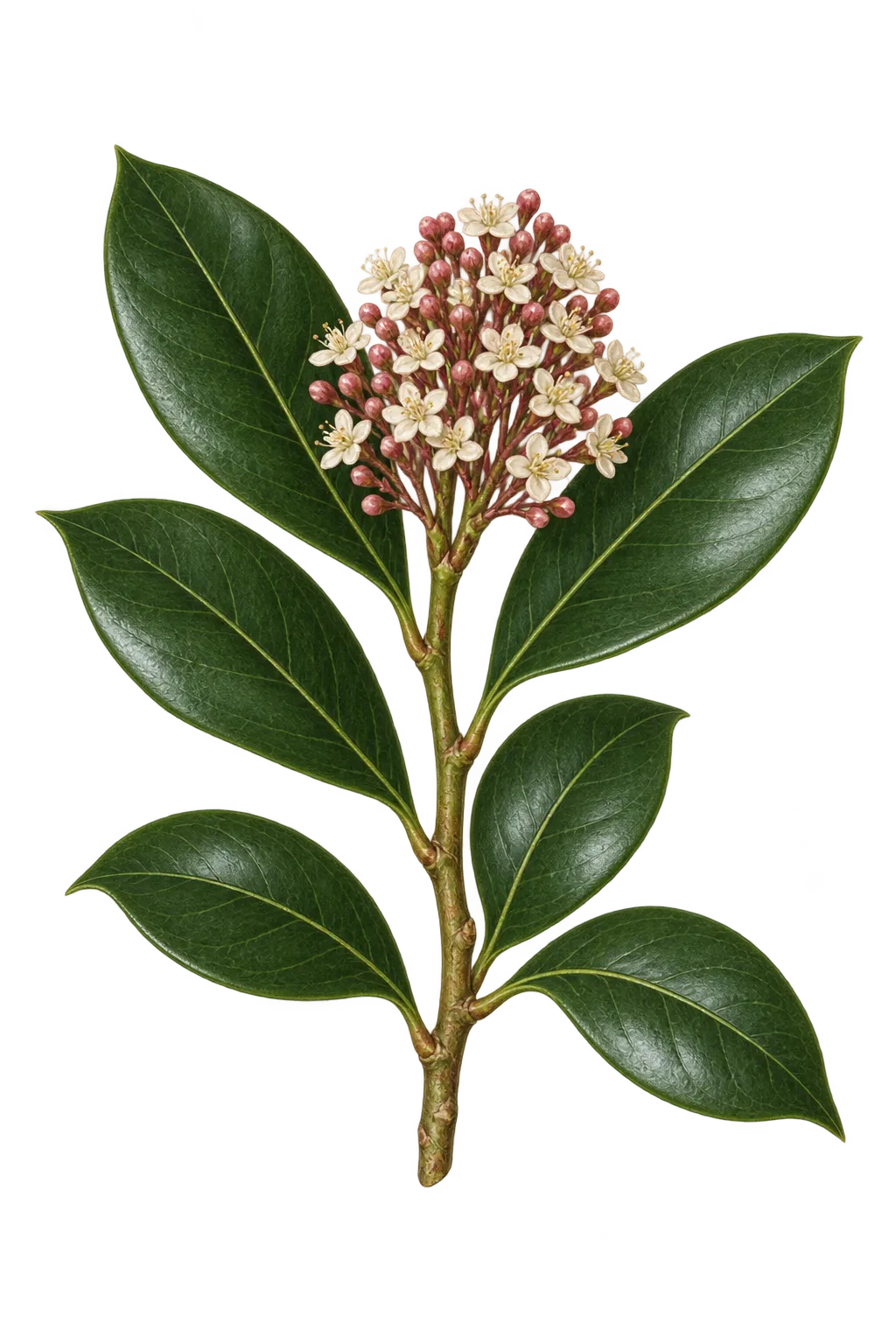
Botanical name
Skimmia Thunb. is an accepted genus in Rutaceae. Kew recognizes seven species; this record represents the genus rather than a single garden skimmia. Kew Plants of the World Online: Skimmia Thunb.
Recognizing the plant
The simple leaves alternate along the shoots, have smooth margins and contain translucent glands. Small white or yellow flowers, sometimes tinged pink, gather in branched clusters at the tips of shoots. The fruits are red or black drupes enclosing two to five hard stones. Flowers generally have four or five petals. International Dendrology Society, Trees and Shrubs Online: Skimmia
Seasonality across the genus
British gardens; Skimmia japonica example
In British gardens, Skimmia japonica flowers in spring, with white petals sometimes flushed pink or red. Its pollinated female flowers develop bright red fruits that can remain on the plant until flowering begins again the following spring. Royal Horticultural Society: Skimmia japonica
Native range
The genus is native across Asia, from Afghanistan through the Himalaya to temperate eastern Asia and Sakhalin, with a further presence in the Philippines. Kew also lists Japan, Taiwan, Myanmar, Laos, Thailand and Vietnam within its native distribution. Kew Plants of the World Online: Skimmia Thunb.
Botanical sources
- Kew Plants of the World Online: Skimmia Thunb.
- International Dendrology Society, Trees and Shrubs Online: Skimmia
- Royal Horticultural Society: Skimmia japonica
Reviewed 2026-10-11. Seasonal development varies with location and growing conditions.