Small's ragwort
Packera anonyma (Alph.Wood) W.A.Weber & Á.Löve
Small’s ragwort is a perennial wildflower of relatively dry eastern habitats, often flourishing where soils are wet in winter but dry in summer. In North Carolina it occurs across the state, and its early masses of yellow flowers provide a conspicuous spring display. North Carolina Extension Gardener Plant Toolbox: Packera anonyma
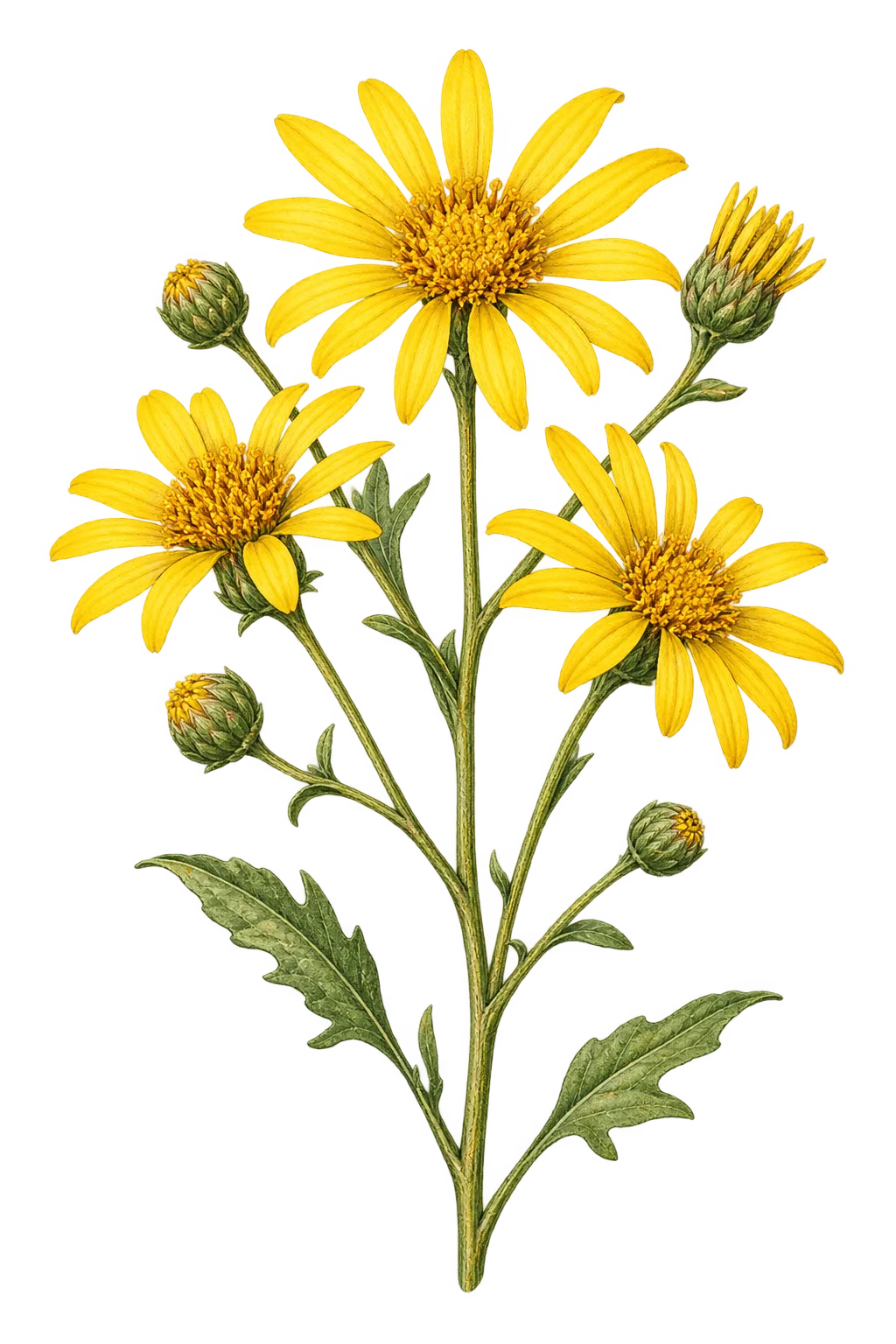
Botanical name
Kew accepts Packera anonyma in Asteraceae. Its author citation is the same as the stored name with spacing standardized; Senecio anonymus is its homotypic synonym. Kew Plants of the World Online: Packera anonyma
Recognizing the plant
Flowering stems usually stand 30–70 centimetres tall, sometimes higher. Narrow basal leaves taper into stalks and have toothed edges, while leaves higher on the stem become smaller and often deeply lobed. Numerous flower heads form a roughly flat-topped cluster; each combines ray florets around the outside with many disc florets in the centre. Flora of North America: Packera anonyma
Bloom window
Eastern United States
Flowering shifts with latitude: Flora of North America gives early April to late May in the south, and early June to mid-July in the north. Flora of North America: Packera anonyma
Native range
The species is native to the eastern United States, extending from the Gulf states north to Pennsylvania and New York, with occurrences westward in Arkansas and Ohio. Kew classifies it as a temperate perennial. Kew Plants of the World Online: Packera anonyma
Ecological relationships
Butterflies, bees, hoverflies and beetles visit the flowers, as recorded by North Carolina State Extension. North Carolina Extension Gardener Plant Toolbox: Packera anonyma
It is also a larval food plant for the gem moth, Orthonama obstipata. North Carolina Extension Gardener Plant Toolbox: Packera anonyma
Botanical sources
- Kew Plants of the World Online: Packera anonyma
- Flora of North America: Packera anonyma
- North Carolina Extension Gardener Plant Toolbox: Packera anonyma
Reviewed 2026-10-11. Seasonal development varies with location and growing conditions.