sourwood
Oxydendrum arboreum (L.) DC.
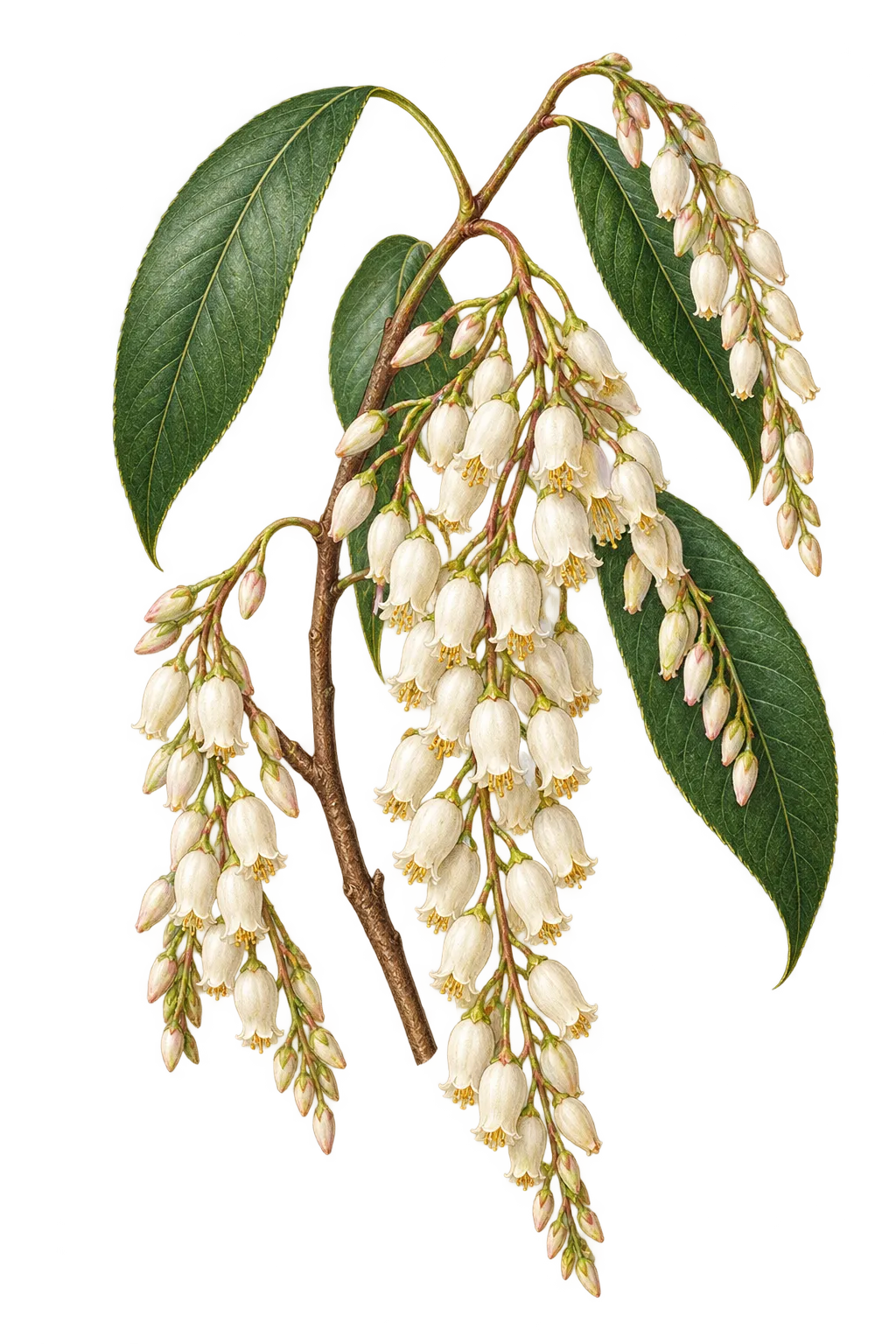
Sourwood’s slender hanging sprays carry white, urn-shaped blossoms, reflected in the name lily-of-the-valley tree. The branched stalks remain after flowering and later hold pale capsules. NC State Extension: Oxydendrum arboreum
Botanical name
Kew accepts Oxydendrum arboreum (L.) DC. in Ericaceae, matching the catalog. Andromeda arborea L. is its basionym. Kew POWO: Oxydendrum arboreum
Recognizing the plant
The leaves are simple and alternate, usually glossy green with fine teeth around their edges. In autumn they often turn crimson, sometimes with yellow or purple tones. Young shoots can be bright red; older bark develops deep fissures and ridges. The small dry capsules split into five valves and can remain visible after the leaves fall. NC State Extension: Oxydendrum arboreum
Seasonal development
North Carolina
The extension account records flowers in June and July and ripening capsules in September and October. NC State Extension: Oxydendrum arboreum
Native range
The species is native to the eastern United States, from the mid-Atlantic region south to Florida and west toward Louisiana and the Ohio Valley. In North Carolina it occurs throughout much of the state, less often on the low alluvial plain, and is familiar as an understorey tree. Kew POWO: Oxydendrum arboreumNC State Extension: Oxydendrum arboreum
Ecological relationships
Bees collect its floral nectar, the source of the highly valued sourwood honey. NC State Extension: Oxydendrum arboreum
Botanical sources
Reviewed 2026-10-11. Seasonal development varies with location and growing conditions.