spiderwort
Tradescantia Ruppius ex L.
A genus overview; characteristics vary between its species.
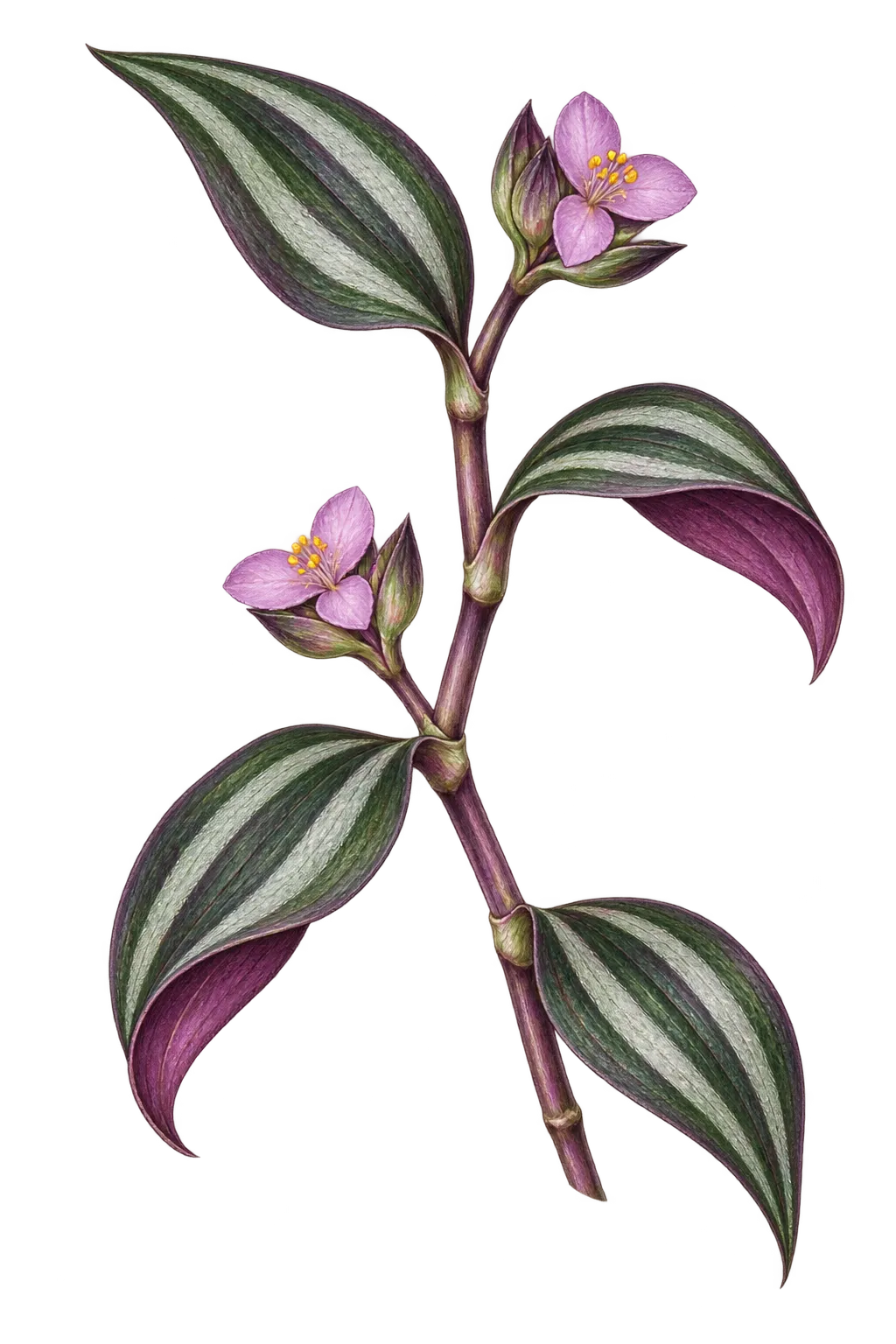
Spiderworts range from upright, clump-forming garden perennials to sprawling tropical plants with fleshy stems. Some shoots root where their nodes touch the ground. Leaves may be narrow or broad, green or purple, and cultivated forms can be striped. This variety explains why a hardy border spiderwort and a trailing houseplant can belong to the same genus. NC State Extension: Tradescantia
Botanical name
Tradescantia Ruppius ex L. is an accepted genus in Commelinaceae; the database’s abbreviated author citation refers to the same genus. Kew Plants of the World Online: Tradescantia
Recognizing the plant
The floral plan is more consistent than the foliage: three sepals surround three petals, with six fertile stamens in the center. Filaments can be smooth or conspicuously bearded. Flowers gather in compact, often paired clusters supported by leaflike bracts. After flowering, the three-chambered capsule opens into three valves. Roots vary from slender to thickened and tuberous. Flora of North America: Tradescantia
Seasonality across the genus
Chicago, Illinois; hardy garden taxa
In Chicago trials, hardy garden spiderworts flowered mainly in late spring and early summer, sometimes resuming later. Individual flowers usually lasted one day, closing sooner in hot afternoon conditions. Chicago Botanic Garden, Plant Evaluation Notes 34: Tradescantia
Native range
The genus is native to the Americas, extending from Canada through the Caribbean and Central America to Argentina. Kew Plants of the World Online: Tradescantia
Botanical sources
- Kew Plants of the World Online: Tradescantia
- NC State Extension: Tradescantia
- Flora of North America: Tradescantia
- Chicago Botanic Garden, Plant Evaluation Notes 34: Tradescantia
Reviewed 2026-10-11. Seasonal development varies with location and growing conditions.