squirrel corn
Dicentra canadensis (Goldie) Walp.
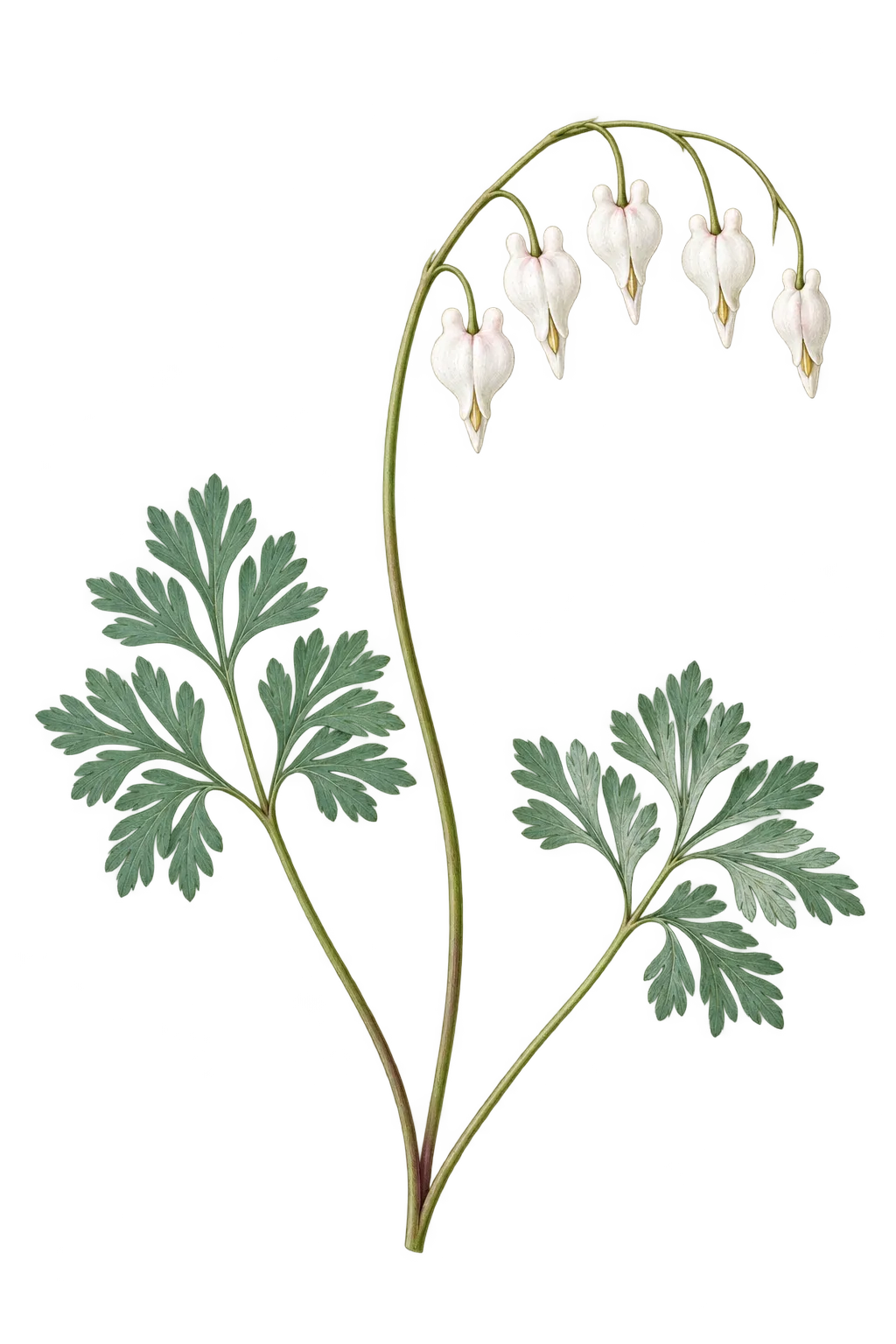
Squirrel corn makes a brief, finely textured appearance in spring woodland. Its deeply divided basal leaves spread beneath arching stalks of pale flowers, then the foliage retreats as the growing season advances. Underground, small yellow, rounded corms persist through the dormant period, giving this delicate-looking plant a perennial foundation. NC State Extension: Dicentra canadensisIllinois Wildflowers: Squirrel Corn
Botanical name
Kew accepts Dicentra canadensis in Papaveraceae. Its basionym is Corydalis canadensis Goldie. Kew Medicinal Plant Names Services: Dicentra canadensis
Recognizing the plant
The flowers hang from a loose raceme and are usually white, sometimes shaded with pale pink. Each has two short, rounded nectar spurs at its upper end. These rounded spurs are useful for distinguishing squirrel corn from Dutchman’s breeches, whose spurs are longer and narrower. The leaves have a pale, waxy underside and divide repeatedly into slender lobes. Flattened, drooping capsules follow successful flowering and split to release several small seeds. NC State Extension: Dicentra canadensisIllinois Wildflowers: Squirrel Corn
Bloom window
North Carolina and nearby eastern United States
NC State’s regional account places flowering in April and May, followed by summer dormancy. NC State Extension: Dicentra canadensis
Native range
Its native range extends from southeastern Canada into the north-central and eastern United States. Moist deciduous woods, shaded slopes and rocky woodland settings form its characteristic habitat. NC State Extension: Dicentra canadensis
Botanical sources
- Kew Medicinal Plant Names Services: Dicentra canadensis
- NC State Extension: Dicentra canadensis
- Illinois Wildflowers: Squirrel Corn
Reviewed 2026-10-11. Seasonal development varies with location and growing conditions.