strawberry
Fragaria L.
A genus overview; characteristics vary between its species.
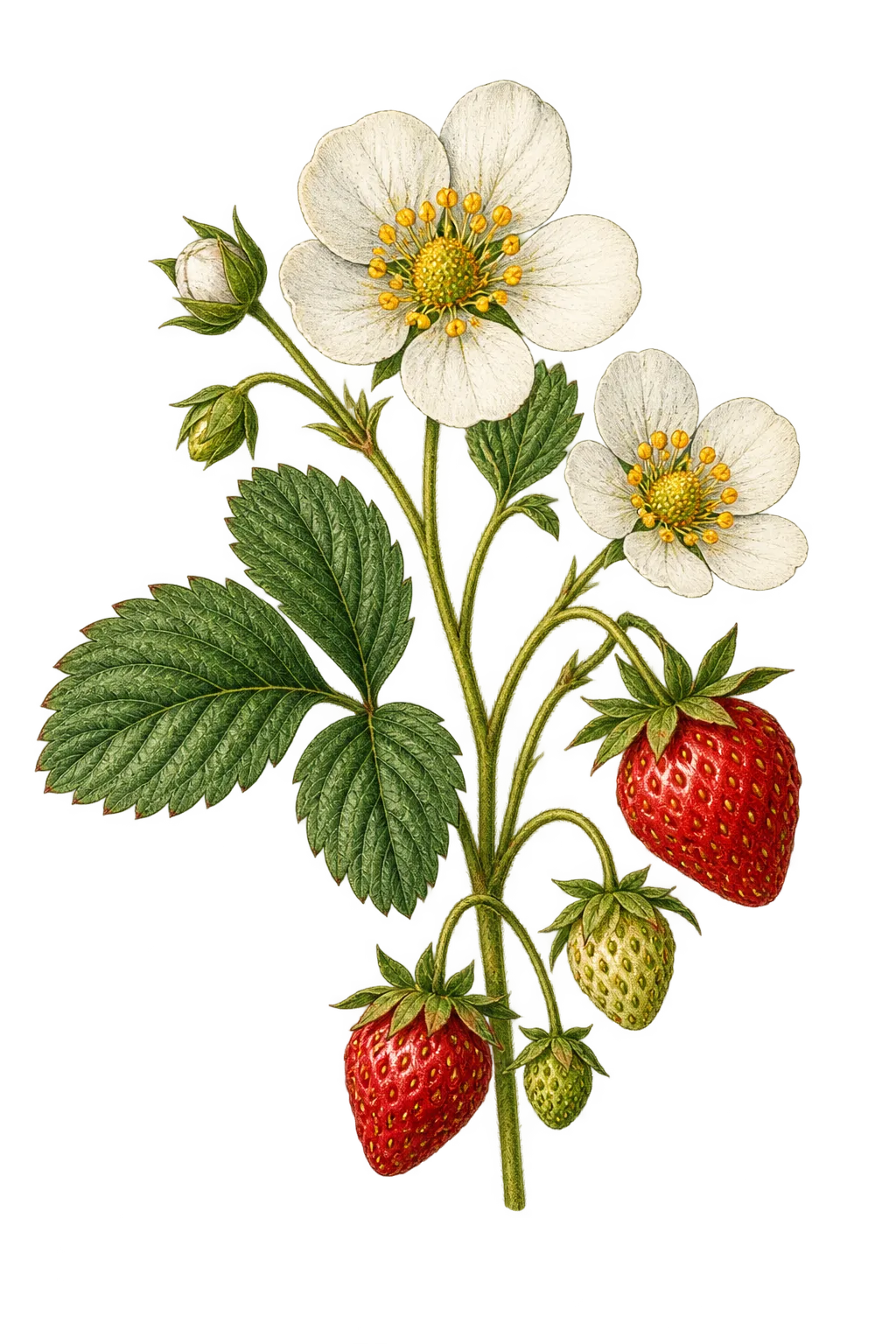
Strawberries turn a flower’s supporting tissue into the soft, fleshy structure familiar as a ripe strawberry. The tiny objects dotted across its surface are individual dry fruits, called achenes. Each develops from one of the many small, separate carpels crowded onto the flower’s central receptacle. Flora of China, volume 9, page 335: Fragaria
Botanical name
Fragaria L. is an accepted genus in Rosaceae. This profile covers strawberries collectively; Fragaria vesca is identified explicitly where used as an example. Kew Plants of the World Online: Fragaria
Recognizing the plant
Fragaria species are perennial herbs, commonly with spreading runners that root at their nodes and form new plantlets. Leaves usually divide into three leaflets, although some species have five. The flowers generally carry five white petals, numerous stamens, and an outer ring of small segments alternating with the five sepals. Flora of China, volume 9, page 335: Fragaria
Seasonality across the genus
Kew Gardens, London, United Kingdom; Fragaria vesca example
At Kew Gardens in London, wild strawberry, Fragaria vesca, flowers from April to June and bears fruit from June to August. Royal Botanic Gardens, Kew: Wild strawberry
Native range
The genus is native across the temperate Northern Hemisphere south to Mexico, as well as the Hawaiian Islands and southern South America. Kew Plants of the World Online: Fragaria
Ecological relationships
Wild strawberry, Fragaria vesca, also provides food for grizzled skipper butterfly larvae. Royal Botanic Gardens, Kew: Wild strawberry
Botanical sources
- Kew Plants of the World Online: Fragaria
- Flora of China, volume 9, page 335: Fragaria
- Royal Botanic Gardens, Kew: Wild strawberry
Reviewed 2026-10-11. Seasonal development varies with location and growing conditions.