sugar maple
Acer saccharum Marshall
Sugar maple is a substantial forest tree whose spring display consists of dangling flowers rather than large, showy petals. Mature trees may reach about 27–37 metres tall, and some survive for three or four centuries. US Forest Service FEIS: sugar maple
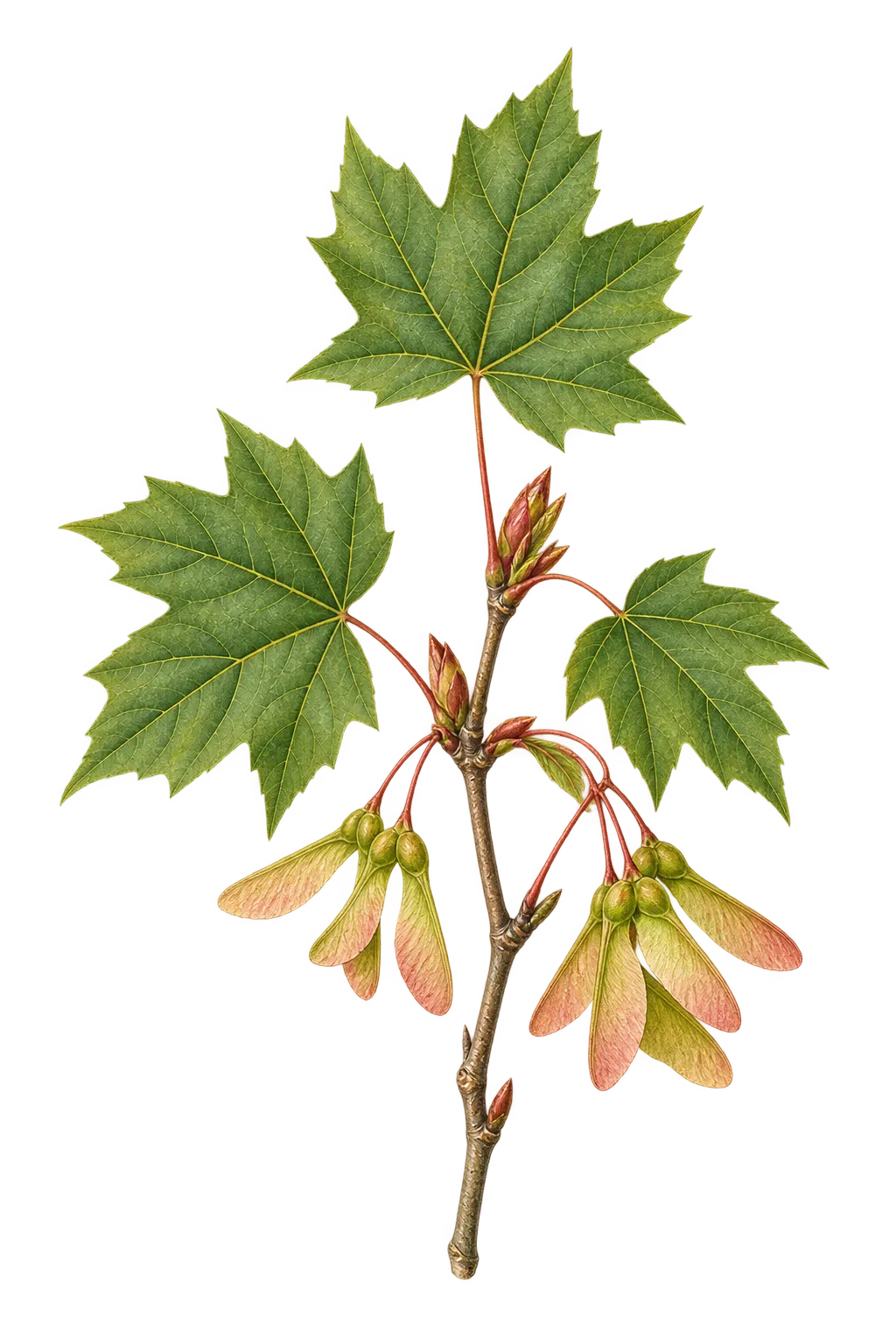
Botanical name
Kew accepts Acer saccharum Marshall as a species. Kew POWO: Acer saccharum
Recognizing the plant
Its small, greenish-yellow flowers hang in loose, tassel-like clusters, with eight to fourteen flowers in each cluster. The fruits are pairs of papery-winged samaras, averaging about 2.5 centimetres long. Mature specimens develop rough, deeply furrowed grey-brown bark. Beneath the canopy, relatively deep roots produce extensively branched laterals. US Forest Service FEIS: sugar maple
Seasonal development
Adirondack Mountains and eastern North America
In the Adirondack Mountains, the US Forest Service records flowering in May and fruiting in September and October. Populations farther south can begin flowering earlier. Fruits ripen about twelve to sixteen weeks after the flowers appear and begin falling roughly two weeks later. Yellow, orange and deep red may appear in the autumn foliage, and the leaves generally fall soon after the seeds. US Forest Service FEIS: sugar maple
Native range
Acer saccharum is native from eastern Canada into the central and eastern United States. It grows primarily in the temperate biome. Kew POWO: Acer saccharum
Botanical sources
Reviewed 2026-10-11. Seasonal development varies with location and growing conditions.