thyme
Thymus L.
A genus overview; characteristics vary between its species.
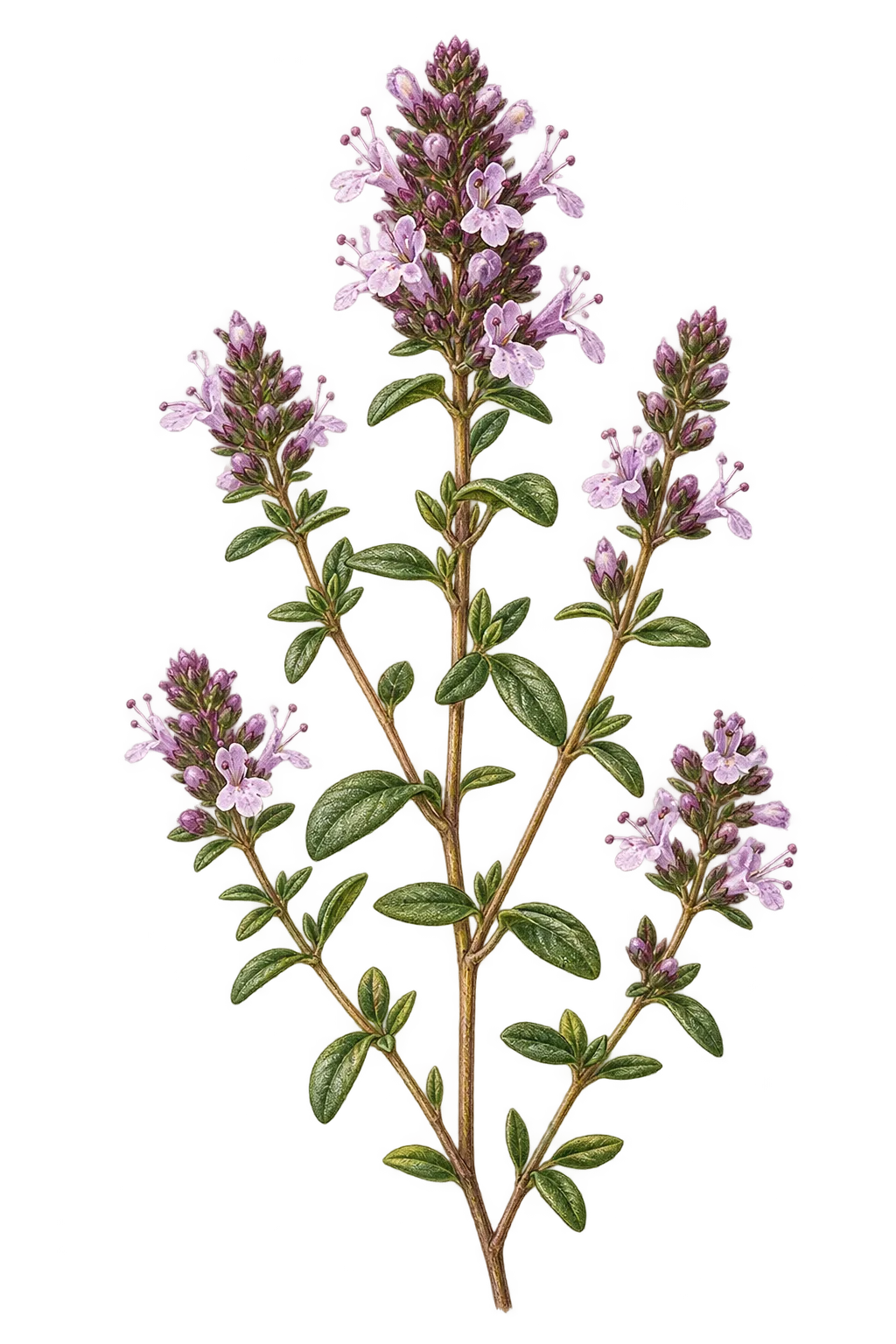
Thymes range from upright little shrubs to creeping mats. Their thin, wiry shoots arise from woody bases, and small aromatic leaves give them much of their familiar character. Common thyme, Thymus vulgaris, is a culinary species; other members, including creeping thymes, are grown chiefly for their spreading habit and ornamental foliage. NC State Extension: Thymus
Botanical name
Kew accepts Thymus as a genus in the mint family, Lamiaceae. The profile covers thymes collectively, with named examples kept distinct. Kew Plants of the World Online: Thymus
Recognizing the plant
The leaves occur in opposite pairs and vary from narrow to oval, with green, grayish or silvery tones among species and cultivated forms. Flowers gather in compact heads or elongated clusters. Each has a two-lipped calyx and corolla, with a spreading lower lip divided into three lobes. Four stamens and a forked style occupy the small flower. The mature fruit separates into smooth, oval to oblong nutlets. White, pink and purple are common flower colors. NC State Extension: ThymusFlora of China: Thymus
Native range
The genus is native to Greenland and a wide belt of temperate and subtropical Eurasia, extending into northeastern tropical Africa. Numerous species are cultivated beyond that native distribution. Kew Plants of the World Online: ThymusNC State Extension: Thymus
Ecological relationships
Thyme flowers offer nectar to visiting bees and butterflies. NC State Extension: Thymus
Botanical sources
Reviewed 2026-10-11. Seasonal development varies with location and growing conditions.