tulip
Tulipa L.
A genus overview; characteristics vary between its species.
Tulips survive unfavorable seasons inside bulbs, storing resources underground while their above-ground leaves disappear. Many species come from regions with very hot summers, where this dormant phase avoids the harshest conditions. The familiar spring flower is therefore one visible stage in a longer cycle of storage, growth and retreat. Cambridge University Botanic Garden: Tulips and seasonal rhythms
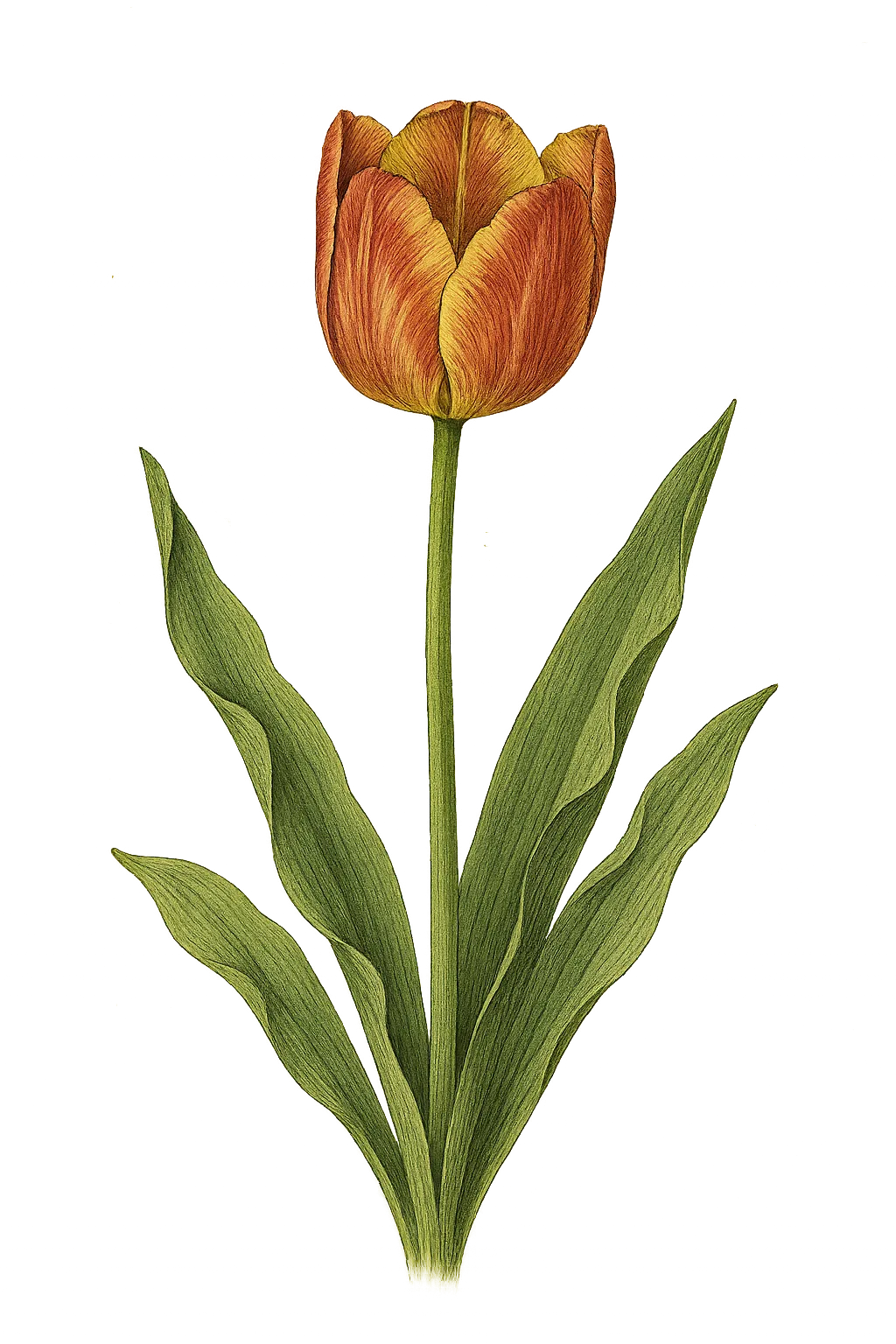
Botanical name
Tulipa L. is an accepted genus in Liliaceae. This account describes the genus rather than assigning the record to a garden hybrid or individual species. Kew Plants of the World Online: Tulipa
Recognizing the plant
Bulbs have a papery or leathery outer covering that may be hairy inside. Usually two to six fleshy leaves alternate along the stem, with the upper leaves smaller. Flowers are often solitary, although some species bear several. Six separate tepals form a cup or bell around six stamens and a three-lobed stigma. Contrasting patches can mark the tepal bases. The dry, three-chambered fruit opens to release numerous flattened seeds. Flora of North America: Tulipa
Seasonality across the genus
Spring-flowering species discussed by Cambridge University Botanic Garden
In the spring-flowering tulips discussed by Cambridge University Botanic Garden, leaves wither after flowering. Underground bulbs respond to seasonal temperature changes, including a period of winter cold, before renewed growth. Cambridge University Botanic Garden: Tulips and seasonal rhythms
Native range
The native genus extends from parts of southern and eastern Europe and North Africa through western and central Asia to Mongolia. Kew Plants of the World Online: Tulipa
Botanical sources
- Kew Plants of the World Online: Tulipa
- Flora of North America: Tulipa
- Cambridge University Botanic Garden: Tulips and seasonal rhythms
Reviewed 2026-10-11. Seasonal development varies with location and growing conditions.