Waldo rockcress
Arabis aculeolata Greene
Waldo rockcress is a perennial associated with serpentine landscapes. Its coarse-haired leaves and purple flowers give way to slender upward-pointing seed pods. The California Native Plant Society records threats from logging and mining, placing habitat conservation alongside the plant’s distinctive botanical features. Flora of North America: Arabis aculeolataCalifornia Native Plant Society Rare Plant Inventory: Arabis aculeolata
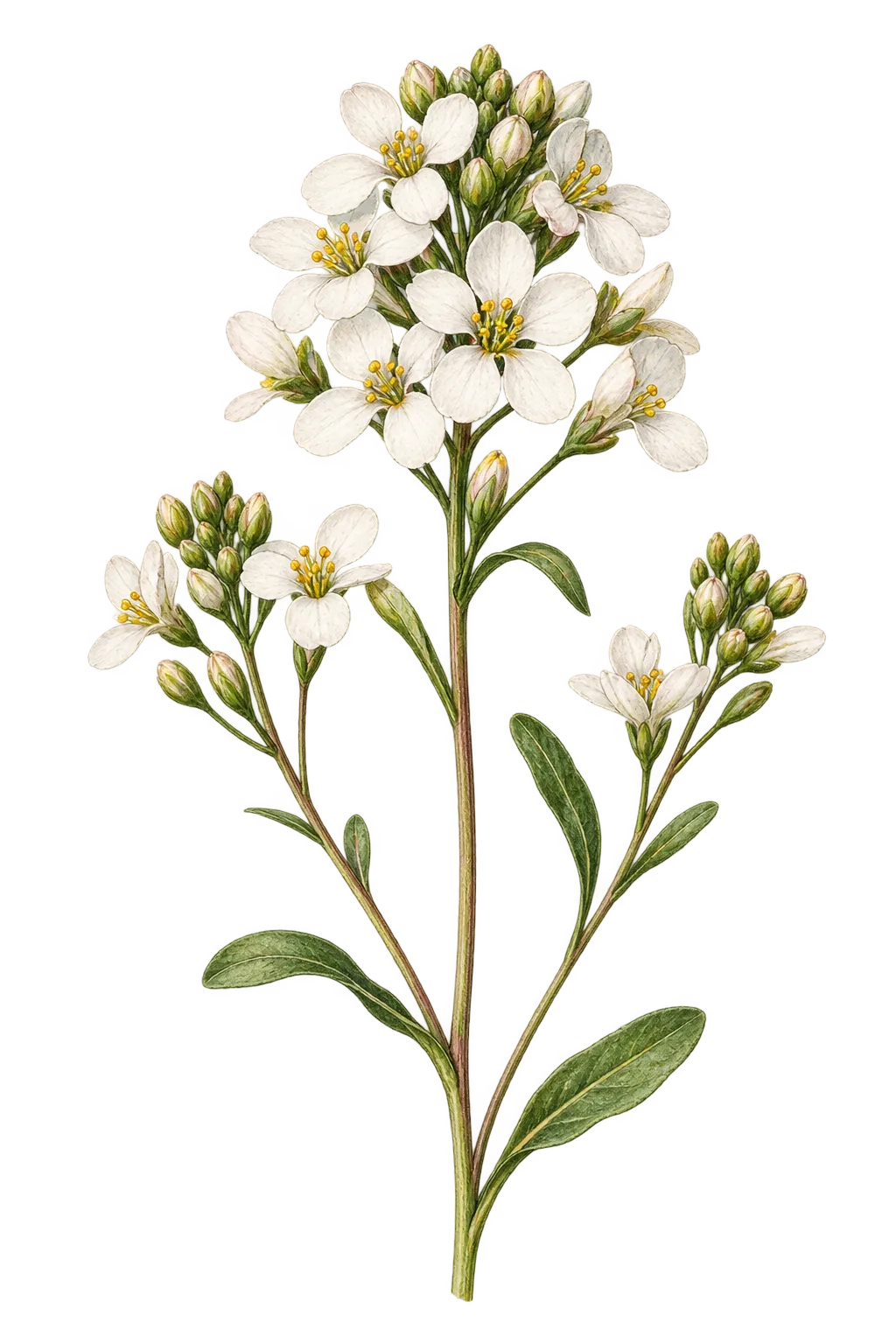
Botanical name
Arabis aculeolata Greene is retained as a distinct species in Flora of North America and the current California rare-plant inventory. Flora of North America: Arabis aculeolataCalifornia Native Plant Society Rare Plant Inventory: Arabis aculeolata
Recognizing the plant
The plant carries a small rosette of broad-tipped basal leaves and a few smaller leaves along upright flowering stems. Coarse hairs, often with swollen bases, contribute to its texture. Purple flowers gather in a simple cluster, their petals broadening toward rounded tips. After flowering, slender fruits point upward, holding narrowly winged seeds. Flora of North America: Arabis aculeolata
Bloom window
California and Oregon regional accounts
The California inventory records flowering from April to June. Flora of North America gives March to June for the Oregon plants covered by its account. Flora of North America: Arabis aculeolataCalifornia Native Plant Society Rare Plant Inventory: Arabis aculeolata
Native range
Waldo rockcress, Arabis aculeolata, is a perennial of rocky country in southwestern Oregon and northern California. Flora of North America describes it on serpentine slopes and rocky hillsides; California’s current rare-plant inventory also records it in upland and mountain forests on serpentine ground. Flora of North America: Arabis aculeolataCalifornia Native Plant Society Rare Plant Inventory: Arabis aculeolata
Botanical sources
- Flora of North America: Arabis aculeolata
- California Native Plant Society Rare Plant Inventory: Arabis aculeolata
Reviewed 2026-10-11. Seasonal development varies with location and growing conditions.