witchhazel
Hamamelis Gronov. ex L.
A genus overview; characteristics vary between its species.
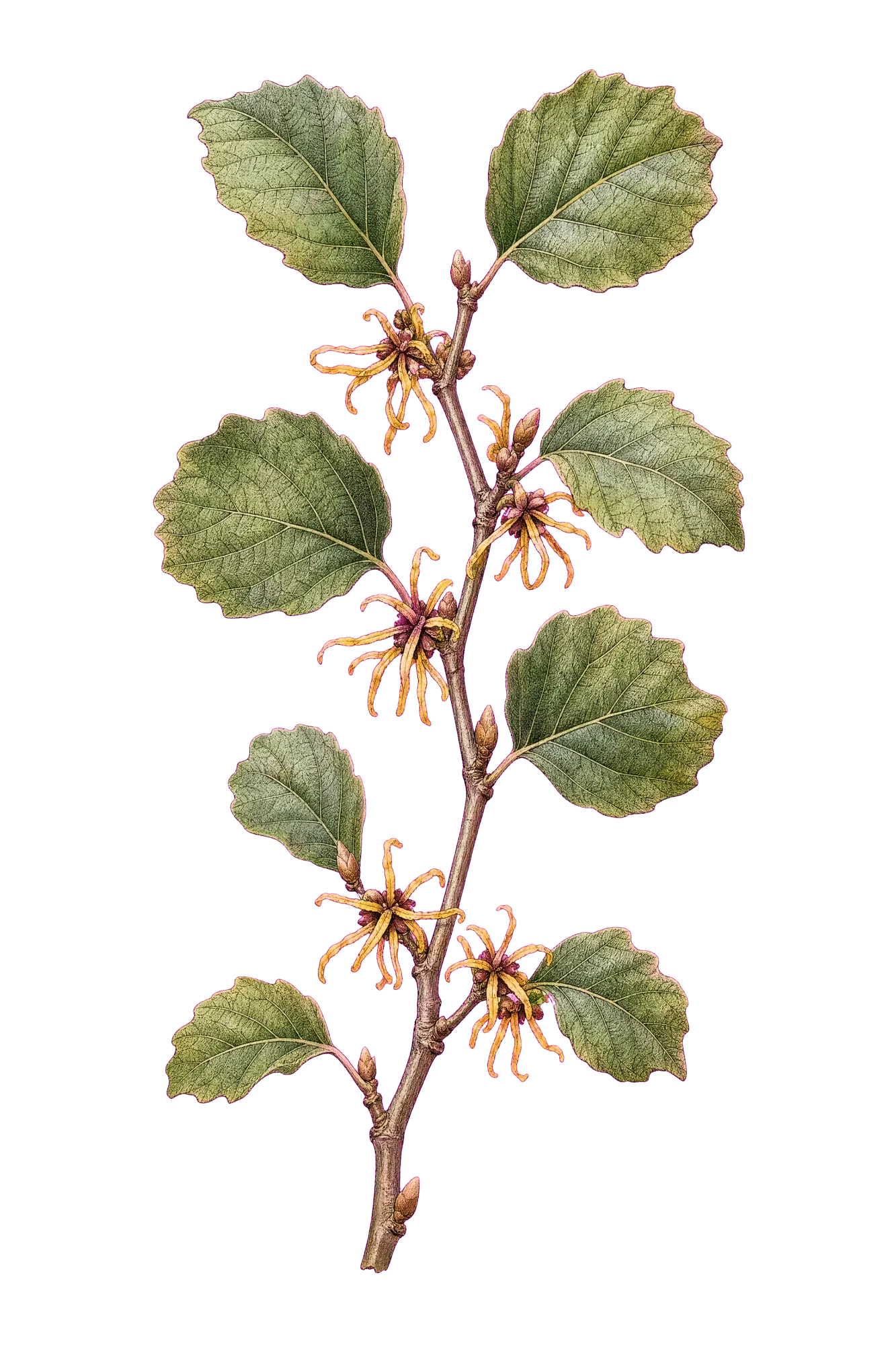
Witchhazels are deciduous shrubs or small trees whose flowers have an unusually spare construction: four long, narrow petals unroll from the bud. Young twigs, leaf buds and developing leaves often carry star-shaped hairs. Some species spread by suckers or underground runners, producing groups of stems rather than a single trunk. Flora of North America: HamamelisFlora of China: Hamamelis
Botanical name
Hamamelis Gronov. ex L. is accepted in Hamamelidaceae. The fuller citation identifies the same genus as the supplied Hamamelis L.; the record is not restricted to one witchhazel species. Kew Plants of the World Online: Hamamelis
Recognizing the plant
Leaves are stalked and commonly broad, with an uneven base and a wavy or toothed edge. The flower clusters arise from leaf axils and contain only a few blooms. Petal colors include yellow, orange and red, depending on the species. Inside are four short fertile stamens and four modified, nectar-producing structures. The fruits are woody capsules that split into valves, exposing the seeds. Bare, hairy winter buds provide another recognition feature after the foliage has fallen. Flora of North America: HamamelisFlora of China: Hamamelis
Seasonality across the genus
North America
Flowering differs among species. The North American flora distinguishes autumn-flowering H. virginiana from winter-flowering H. vernalis, so a single bloom season cannot represent the genus. Flora of North America: Hamamelis
Native range
The genus has a divided native distribution: central and southern China and Japan in eastern Asia, and eastern Canada south through the United States to northeastern Mexico in North America. Kew Plants of the World Online: Hamamelis
Botanical sources
Reviewed 2026-10-11. Seasonal development varies with location and growing conditions.