yarrow
Achillea ageratifolia (Sm.) Benth. & Hook.f.
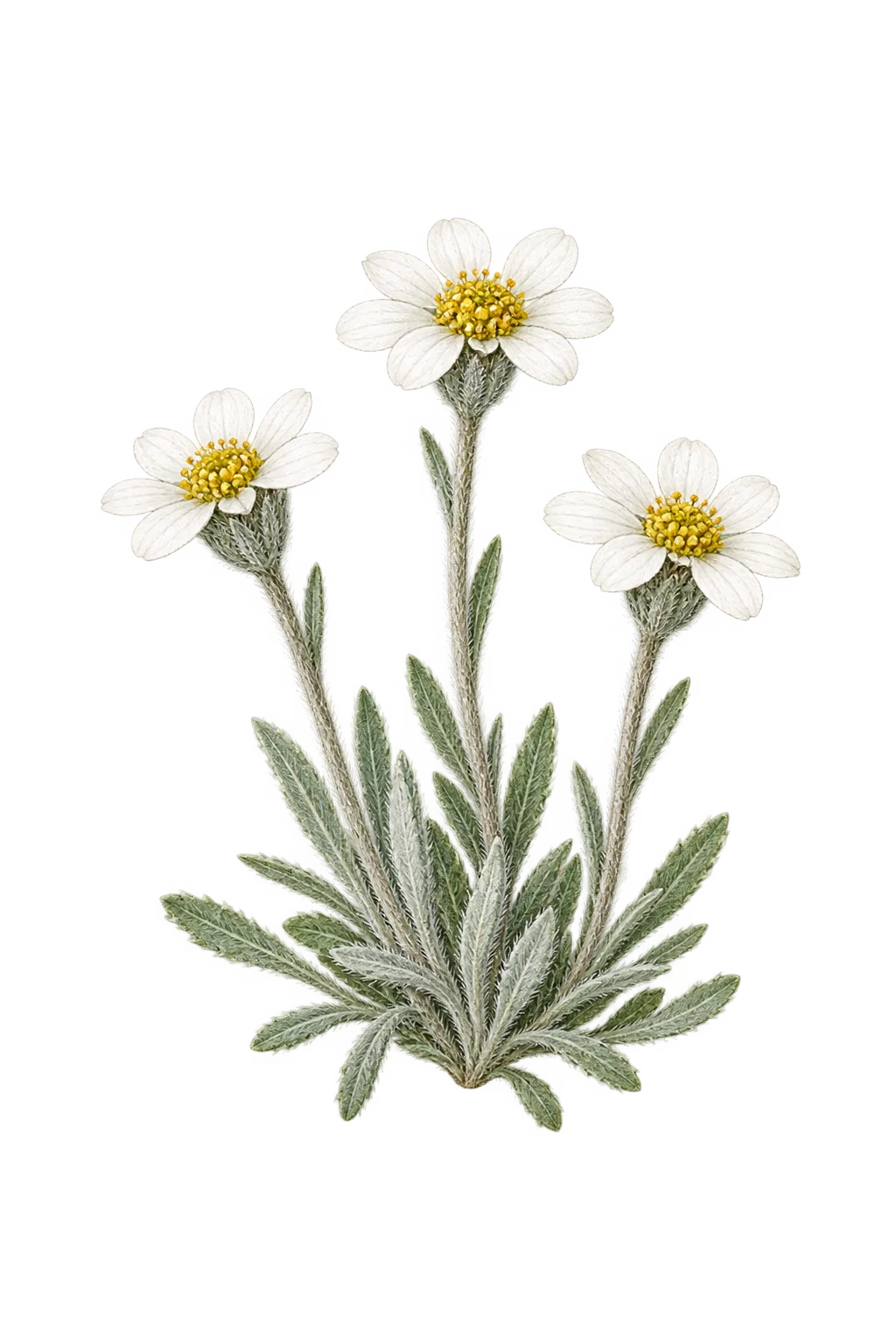
Greek yarrow is a low, mat-forming perennial in the daisy family. Its silver foliage stays close to the ground while white flower heads rise above it. Kew recognises three subspecies, reflecting variation within this Balkan plant. The specific epithet refers to leaves resembling those of Ageratum. Kew POWO: Achillea ageratifoliaMissouri Botanical Garden: Achillea ageratifolia
Botanical name
Kew accepts Achillea ageratifolia (Sm.) Benth. & Hook.f.; the catalog’s differing author citation refers to the same binomial and basionym. Kew POWO: Achillea ageratifolia
Recognizing the plant
Plants commonly reach only about ten to twenty centimetres high, spreading wider than they are tall. Narrow, hairy leaves are silvery-green and aromatic, often with toothed edges. They are not finely divided into feather-like segments. Bright white flower heads stand in compact clusters above this foliage. Individual heads measure roughly one to two-and-a-half centimetres across. The narrow leaves can reach about four centimetres long. Missouri Botanical Garden: Achillea ageratifolia
Bloom window
Missouri Botanical Garden regional cultivation account
The garden account gives May to June for the principal bloom. Leaves can remain evergreen where winters are mild. Missouri Botanical Garden: Achillea ageratifolia
Native range
Kew records the species in Albania, Bulgaria, Greece and the former Yugoslav region. Missouri Botanical Garden describes its native home as northern Greece and the Balkans, and records cultivation in rock gardens, small ground-cover plantings and pockets in stone walls. Kew POWO: Achillea ageratifoliaMissouri Botanical Garden: Achillea ageratifolia
Botanical sources
Reviewed 2026-10-11. Seasonal development varies with location and growing conditions.