yellow birch
Betula alleghaniensis Britton
Yellow birch seedlings often begin on surfaces very different from an intact forest floor. Decaying logs, moss-covered wood, rotten stumps and broken ground provide places where seeds can establish. A continuous layer of fallen hardwood leaves makes survival more difficult. Small disturbances and decomposing wood therefore help shape where the next generation of these forest trees appears. US Forest Service FEIS: Yellow birch
Botanical name
The cited taxonomic authority accepts Betula alleghaniensis Britton at species rank. Kew POWO: Betula alleghaniensis
Recognizing the plant
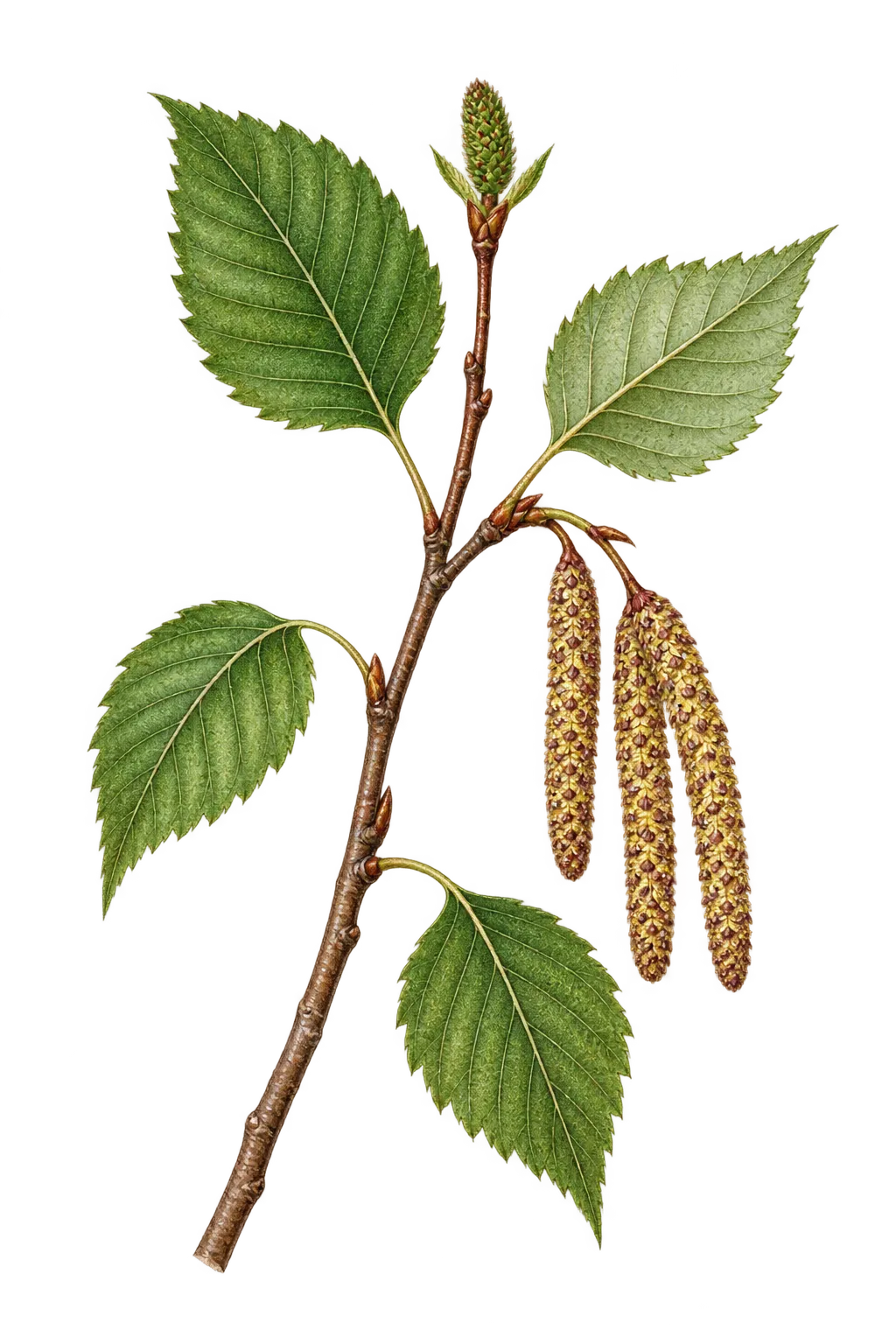
Younger trunks show a bronze or silvery-gold sheen, peeling into fine horizontal curls; older bark breaks into darker, scaly plates. Its alternate leaves have pointed tips and doubly toothed edges, turning yellow before they fall. Small winged fruits follow. The contrast between fine papery curls on younger bark and rough plates on older trunks can make different-aged trees look surprisingly unlike one another. NC State Extension: Betula alleghaniensisUS Forest Service Silvics: Betula alleghaniensis
Seasonal development
Northern Minnesota and North American range
In northern Minnesota, recorded flowering development falls in spring, while fruit maturation elsewhere in its North American range is described in late summer. US Forest Service FEIS: Yellow birch
Native range
The species is native to eastern Canada and the north-central and eastern United States. Kew POWO: Betula alleghaniensis
Ecological relationships
Yellow birch bears male and female catkins, with pollen carried by wind. NC State Extension: Betula alleghaniensis
Botanical sources
- Kew POWO: Betula alleghaniensis
- NC State Extension: Betula alleghaniensis
- US Forest Service FEIS: Yellow birch
- US Forest Service Silvics: Betula alleghaniensis
Reviewed 2026-10-11. Seasonal development varies with location and growing conditions.