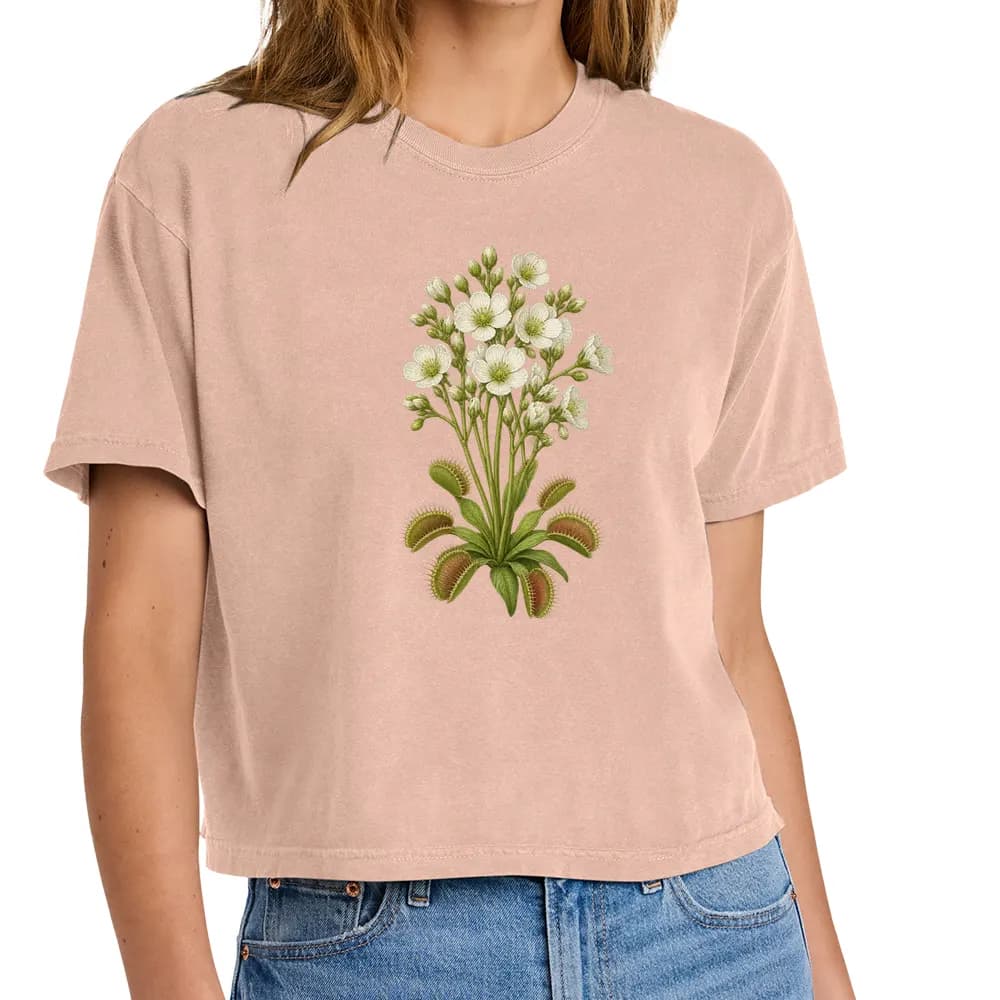
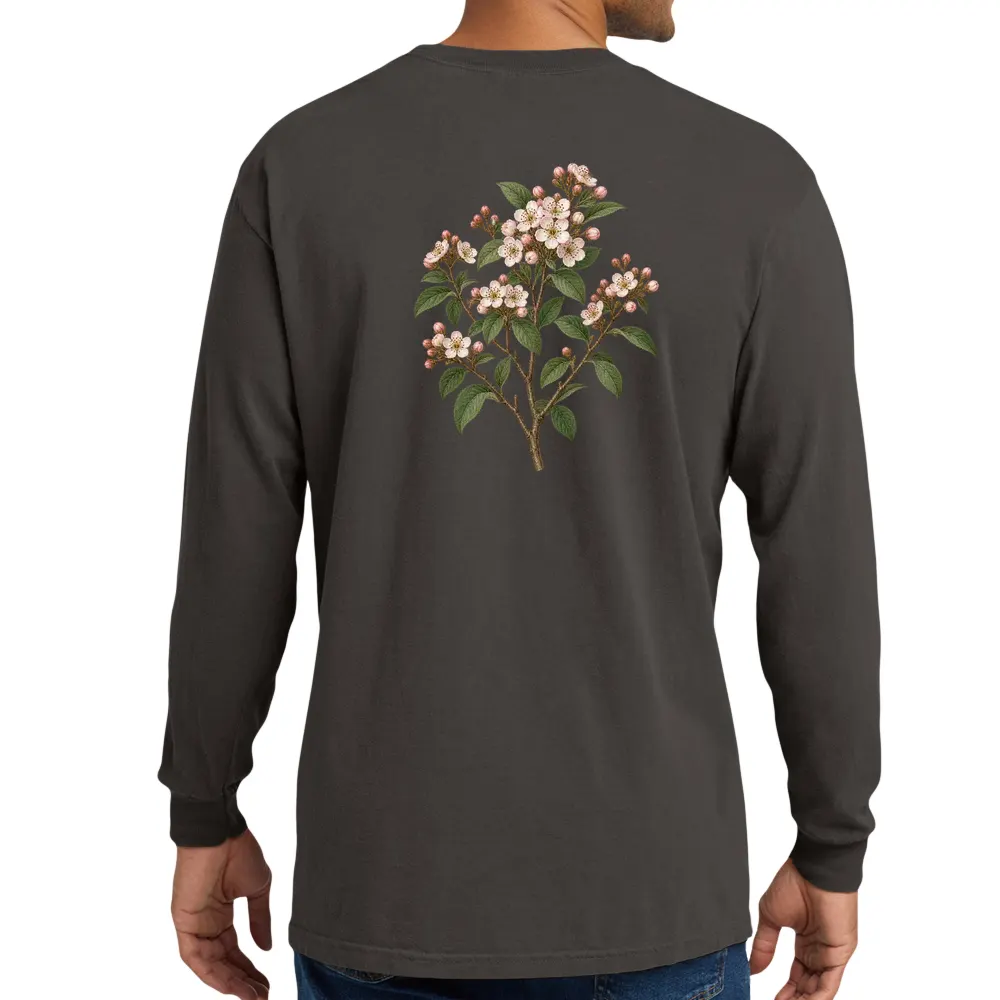
Alpine Meadow-rue
$40.00 USD
Created in the tradition of 19th-century botanical plates, then reviewed by hand before it goes anywhere near a shirt. Yours is printed fresh when you order it.
Style: Short Sleeve
Description
This women's tee is made from 6.1 oz 100% ring-spun US cotton in a boxy, slightly cropped mid-length cut. It features a topstitched ribbed collar, shoulder-to-shoulder twill tape, a seamless body, and a double-needle bottom hem. Dyed with OEKO-TEX certified low-impact dyes in a WRAP-certified facility, using a salt-free clean pigment process that uses about half the water of conventional pigment dyeing. Boxy fit, sizes S–2XL — it runs close to the body, so size up for a looser drape. Slight shade variation between garments is normal.
Size Chart
Garment measurements in inches, laid flat.
| Size | Body length | Body width |
|---|---|---|
| S | 20" | 18 1/4" |
| M | 21" | 20 1/4" |
| L | 22" | 22" |
| XL | 23" | 24" |
| 2XL | 24" | 26" |
The blank
Shipping
Returns
Meet alpine meadow-rue
Thalictrum alpinum L.
Alpine meadow-rue concentrates most of its foliage near the ground. Slender rhizomes support small shoots, while a nearly leafless stalk lifts a sparse line of flowers above the basal leaves. Plants usually stand about five to twenty centimeters, fitting among the short vegetation of northern meadows and mountain wetlands. Flora of North America: Thalictrum alpinum
Bloom window
North America
Flowering extends from June through August. Flora of North America: Thalictrum alpinum
Native range
The species occurs in subarctic and subalpine regions of the Northern Hemisphere. North American habitats include wet meadows, damp rocky ledges and cold bogs, frequently on calcareous ground, from sea level to roughly 3,800 m. Kew Plants of the World Online: Thalictrum alpinumFlora of North America: Thalictrum alpinum
Ecological relationships
The flowers show adaptations associated with wind pollination. The species is also self-compatible; research does not exclude an additional contribution from visiting insects. Steven and Waller (2004): Reproductive alternatives to insect pollination in four species of Thalictrum
Explore this plant's botanical story