alpine meadow-rue
Thalictrum alpinum L.
Alpine meadow-rue concentrates most of its foliage near the ground. Slender rhizomes support small shoots, while a nearly leafless stalk lifts a sparse line of flowers above the basal leaves. Plants usually stand about five to twenty centimeters, fitting among the short vegetation of northern meadows and mountain wetlands. Flora of North America: Thalictrum alpinum
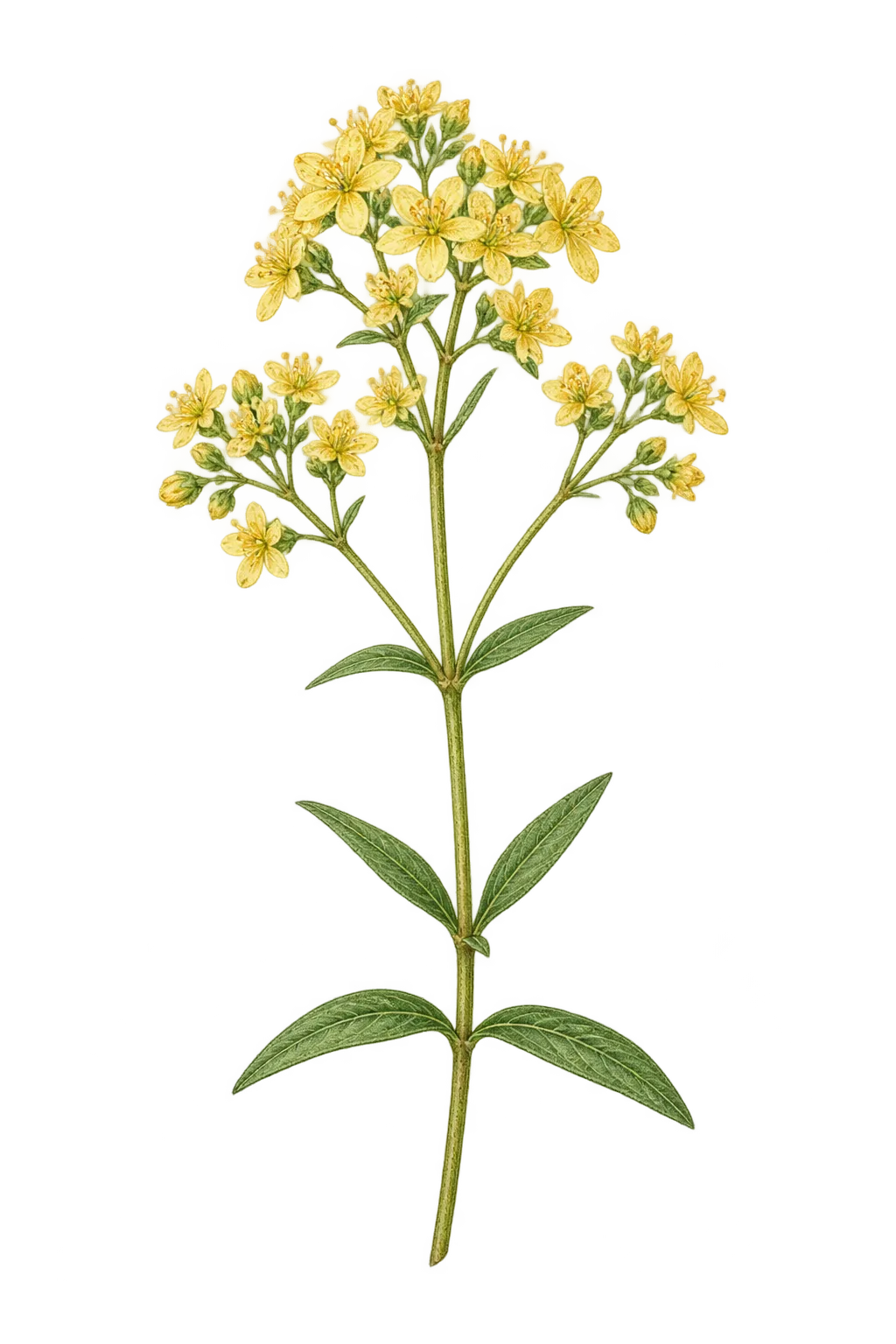
Botanical name
Kew accepts Thalictrum alpinum L., a perennial of northern and high-mountain regions. Kew Plants of the World Online: Thalictrum alpinum
Recognizing the plant
The leaves are twice divided, with small rounded to wedge-shaped leaflets that end in three to five lobes. Flower stalks bend backward as fruits develop. The tiny purplish sepals fall early, leaving the stamens particularly conspicuous: purple filaments hold bright yellow anthers. Each flower produces a few small, dry achenes with strongly marked veins. The smooth stems and leaves contrast with the finely divided outline of the foliage. Flora of North America: Thalictrum alpinum
Bloom window
North America
Flowering extends from June through August. Flora of North America: Thalictrum alpinum
Native range
The species occurs in subarctic and subalpine regions of the Northern Hemisphere. North American habitats include wet meadows, damp rocky ledges and cold bogs, frequently on calcareous ground, from sea level to roughly 3,800 m. Kew Plants of the World Online: Thalictrum alpinumFlora of North America: Thalictrum alpinum
Ecological relationships
The flowers show adaptations associated with wind pollination. The species is also self-compatible; research does not exclude an additional contribution from visiting insects. Steven and Waller (2004): Reproductive alternatives to insect pollination in four species of Thalictrum
Botanical sources
- Kew Plants of the World Online: Thalictrum alpinum
- Flora of North America: Thalictrum alpinum
- Steven and Waller (2004): Reproductive alternatives to insect pollination in four species of Thalictrum
Reviewed 2026-10-11. Seasonal development varies with location and growing conditions.