American White Waterlily
$40.00 USD
Created in the tradition of 19th-century botanical plates, then reviewed by hand before it goes anywhere near a shirt. Yours is printed fresh when you order it.
Style: Short Sleeve
Description
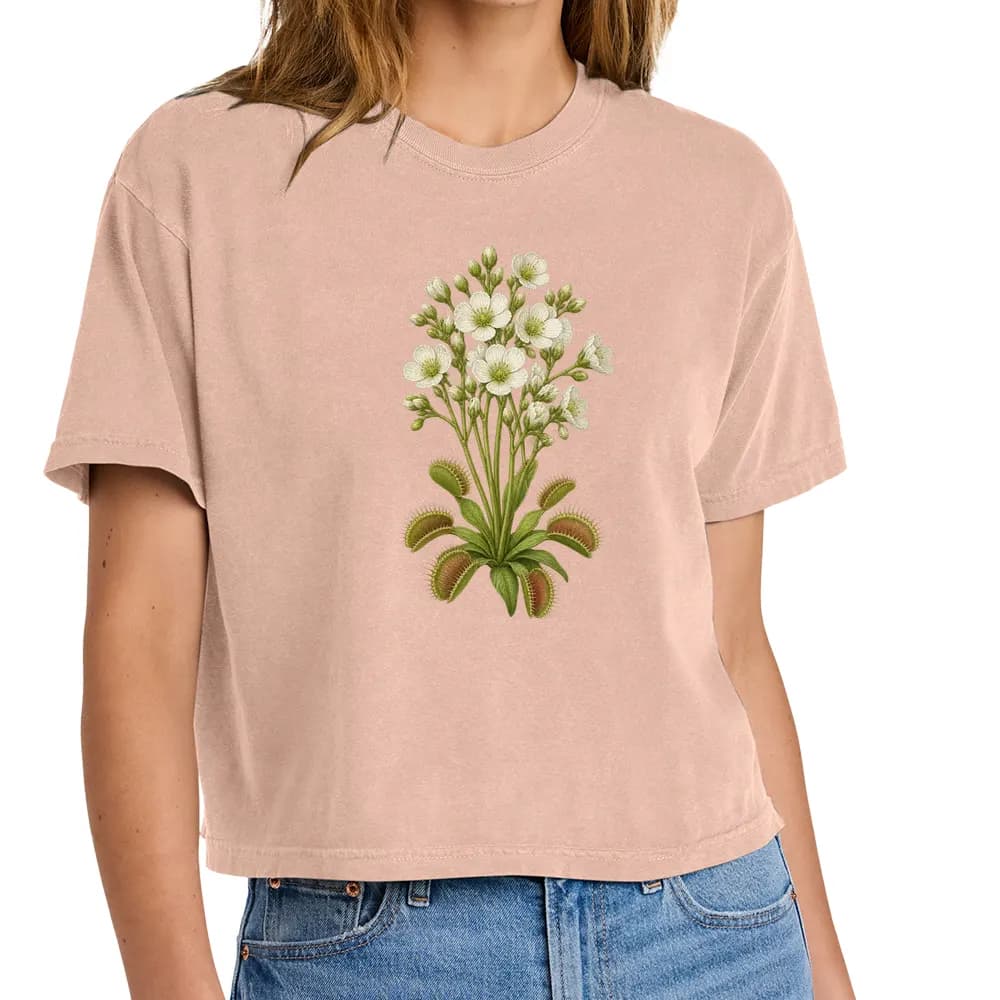
This women's tee is made from 6.1 oz 100% ring-spun US cotton in a boxy, slightly cropped mid-length cut. It features a topstitched ribbed collar, shoulder-to-shoulder twill tape, a seamless body, and a double-needle bottom hem. Dyed with OEKO-TEX certified low-impact dyes in a WRAP-certified facility, using a salt-free clean pigment process that uses about half the water of conventional pigment dyeing. Boxy fit, sizes S–2XL — it runs close to the body, so size up for a looser drape. Slight shade variation between garments is normal.
Size Chart
Garment measurements in inches, laid flat.
| Size | Body length | Body width |
|---|---|---|
| S | 20" | 18 1/4" |
| M | 21" | 20 1/4" |
| L | 22" | 22" |
| XL | 23" | 24" |
| 2XL | 24" | 26" |
The blank
Shipping
Returns
Meet American white waterlily
Nymphaea odorata Aiton
American white waterlily connects two different worlds: thick rhizomes lie below the water, while long stalks bring leaves and flowers to the surface. Its fragrant blossoms open in the morning and close again later in the day. A flowering plant can therefore change its appearance over the course of a single afternoon. University of Washington Burke Herbarium: Nymphaea odorata
Bloom window
Washington
The Burke Herbarium records flowers from June through October. University of Washington Burke Herbarium: Nymphaea odorata
Native range
Its native range extends from central and eastern Canada south to Nicaragua, including the Bahamas and Cuba. It lives in ponds, lakes and slow waterways; populations in Washington are introduced. Kew POWO: Nymphaea odorataUS Geological Survey: American white waterlily species profileUniversity of Washington Burke Herbarium: Nymphaea odorata
Ecological relationships
Flowers receive pollen before releasing their own. The USGS account identifies halictid bees and flies as frequent pollinators. US Geological Survey: American white waterlily species profile
Explore this plant's botanical story