American white waterlily
Nymphaea odorata Aiton
American white waterlily connects two different worlds: thick rhizomes lie below the water, while long stalks bring leaves and flowers to the surface. Its fragrant blossoms open in the morning and close again later in the day. A flowering plant can therefore change its appearance over the course of a single afternoon. University of Washington Burke Herbarium: Nymphaea odorata
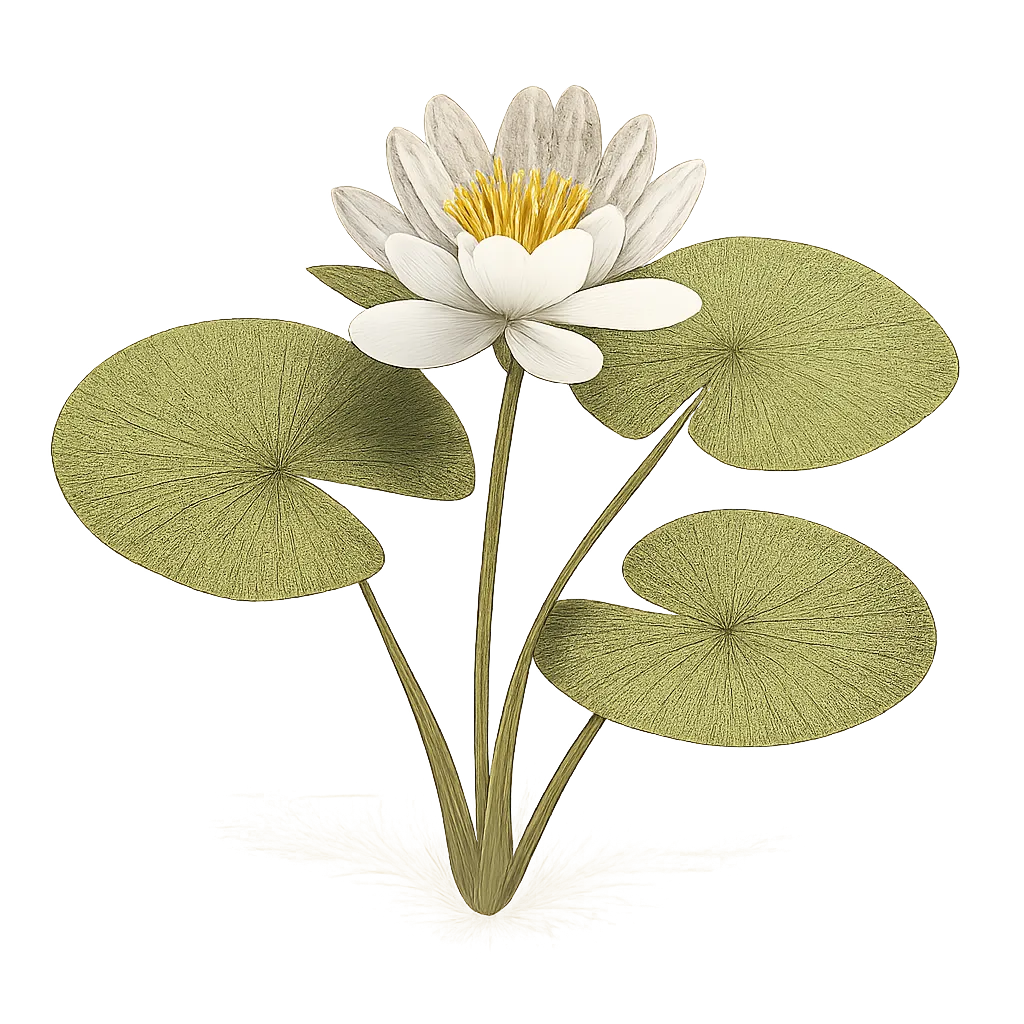
Botanical name
Nymphaea odorata Aiton is accepted by Kew, matching the catalog species. Kew POWO: Nymphaea odorata
Recognizing the plant
The floating leaves are nearly round with a deep notch at the base and smooth margins. Their upper surfaces are green, while the undersides can be green or purple. Large solitary flowers carry many white petals, occasionally pink, around numerous yellow stamens. After flowering, berry-like capsules develop. The US Geological Survey account notes that released seeds can float before eventually sinking to the bottom. University of Washington Burke Herbarium: Nymphaea odorataUS Geological Survey: American white waterlily species profile
Bloom window
Washington
The Burke Herbarium records flowers from June through October. University of Washington Burke Herbarium: Nymphaea odorata
Native range
Its native range extends from central and eastern Canada south to Nicaragua, including the Bahamas and Cuba. It lives in ponds, lakes and slow waterways; populations in Washington are introduced. Kew POWO: Nymphaea odorataUS Geological Survey: American white waterlily species profileUniversity of Washington Burke Herbarium: Nymphaea odorata
Ecological relationships
Flowers receive pollen before releasing their own. The USGS account identifies halictid bees and flies as frequent pollinators. US Geological Survey: American white waterlily species profile
Botanical sources
- Kew POWO: Nymphaea odorata
- University of Washington Burke Herbarium: Nymphaea odorata
- US Geological Survey: American white waterlily species profile
Reviewed 2026-10-11. Seasonal development varies with location and growing conditions.