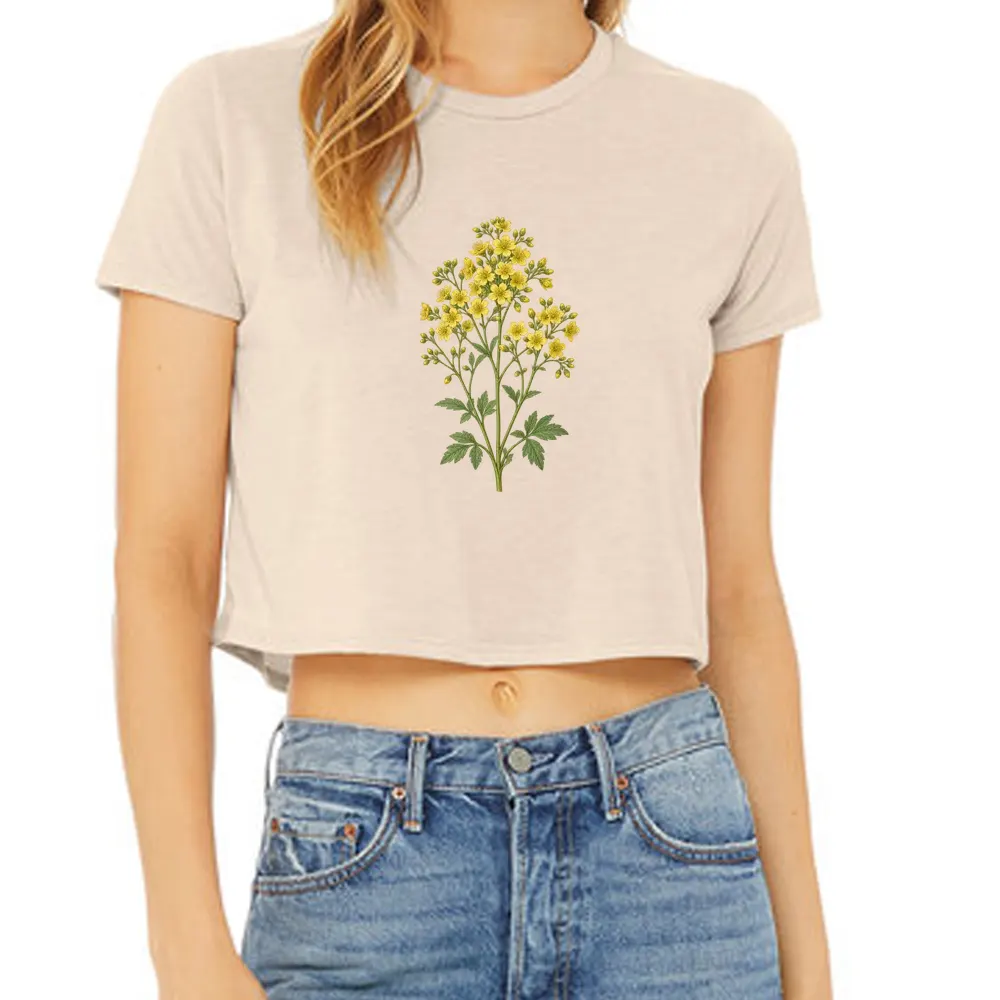
Angled Pea
$40.00 USD
Created in the tradition of 19th-century botanical plates, then reviewed by hand before it goes anywhere near a shirt. Yours is printed fresh when you order it.
Style: Short Sleeve
Description
This women's tee is made from 6.1 oz 100% ring-spun US cotton in a boxy, slightly cropped mid-length cut. It features a topstitched ribbed collar, shoulder-to-shoulder twill tape, a seamless body, and a double-needle bottom hem. Dyed with OEKO-TEX certified low-impact dyes in a WRAP-certified facility, using a salt-free clean pigment process that uses about half the water of conventional pigment dyeing. Boxy fit, sizes S–2XL — it runs close to the body, so size up for a looser drape. Slight shade variation between garments is normal.
Size Chart
Garment measurements in inches, laid flat.
| Size | Body length | Body width |
|---|---|---|
| S | 20" | 18 1/4" |
| M | 21" | 20 1/4" |
| L | 22" | 22" |
| XL | 23" | 24" |
| 2XL | 24" | 26" |
The blank
Shipping
Returns
Meet angled pea
Lathyrus angulatus L.
Angled pea is a fine-stemmed annual that may lie along the ground or climb through nearby vegetation. Its tendrils are reduced to bristles on the lower leaves but become better developed farther up the plant. The stems are hairless and angular, and branching begins near the base, creating a loose, light-looking plant rather than a dense bush. Burke Herbarium: Lathyrus angulatus
Bloom window
New South Wales, Australia, introduced populations
In New South Wales, flowering occurs in spring. NSW Flora Online: Lathyrus angulatus
Native range
It is native to the Mediterranean region and Europe. The western Mediterranean university flora records it in annual grassland, woodland openings and forest margins on siliceous ground. Introduced populations also occur elsewhere, including southeastern Australia and the western United States. Burke Herbarium: Lathyrus angulatusNSW Flora Online: Lathyrus angulatusUniversity of the Balearic Islands: Lathyrus angulatus
Ecological relationships
The Burke Herbarium lists bees, including bumblebees, and butterflies as pollinators. Burke Herbarium: Lathyrus angulatus
Explore this plant's botanical story