angled pea
Lathyrus angulatus L.
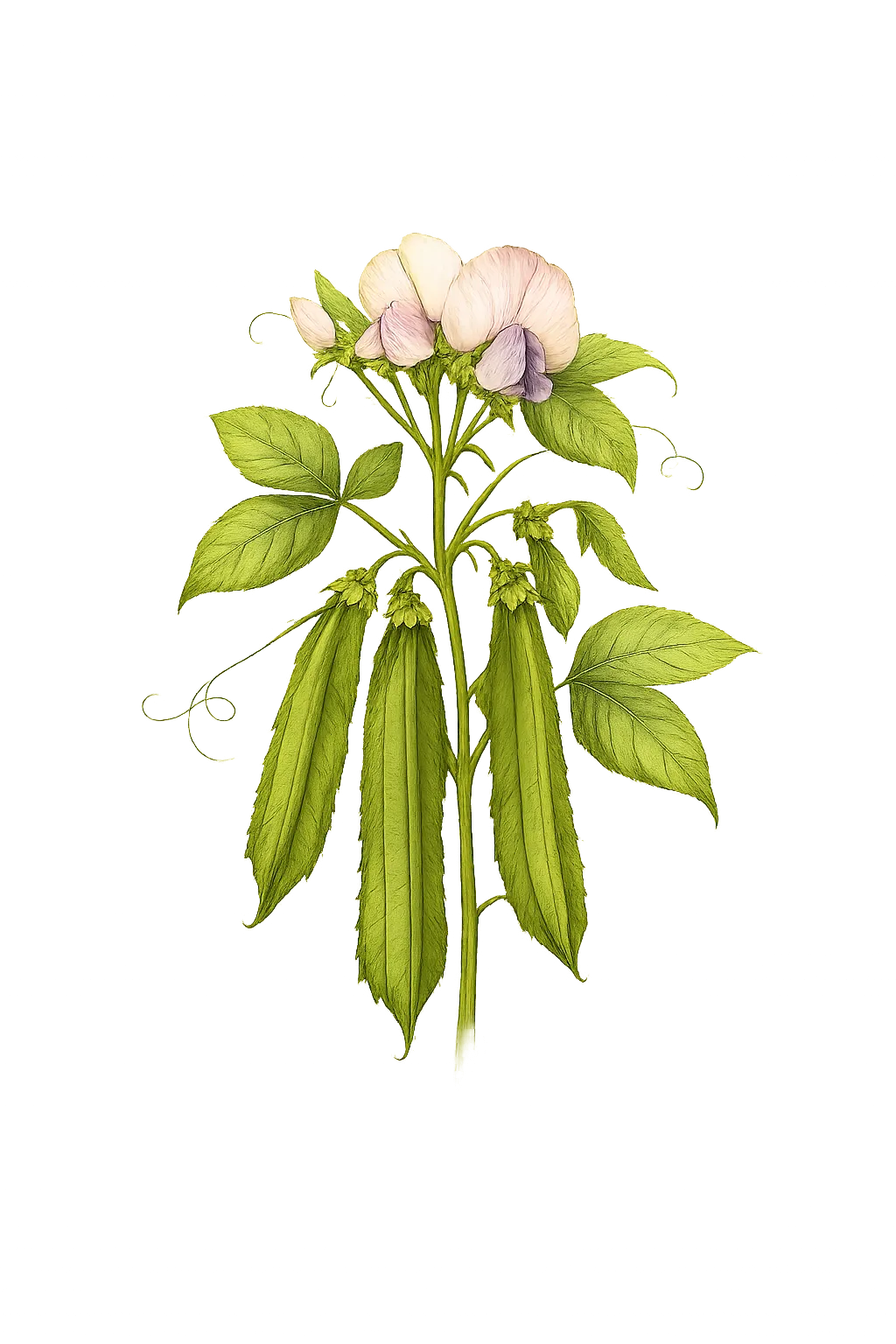
Angled pea is a fine-stemmed annual that may lie along the ground or climb through nearby vegetation. Its tendrils are reduced to bristles on the lower leaves but become better developed farther up the plant. The stems are hairless and angular, and branching begins near the base, creating a loose, light-looking plant rather than a dense bush. Burke Herbarium: Lathyrus angulatus
Botanical name
Lathyrus angulatus is recognized under the supplied Linnaean name in authoritative floras and USDA GRIN; it belongs to Fabaceae. USDA GRIN: Lathyrus angulatus
Recognizing the plant
Each leaf carries a single pair of narrow leaflets, with lance-shaped stipules beside the leaf stalk. Flowers usually occur singly, occasionally in pairs, on slender stalks several centimetres long. The pea-shaped corolla is purple to pale blue and about 8 mm long in the New South Wales treatment. Flat, linear pods develop afterward, measuring about 2–5 cm long and containing several roughened or wrinkled seeds. NSW Flora Online: Lathyrus angulatus
Bloom window
New South Wales, Australia, introduced populations
In New South Wales, flowering occurs in spring. NSW Flora Online: Lathyrus angulatus
Native range
It is native to the Mediterranean region and Europe. The western Mediterranean university flora records it in annual grassland, woodland openings and forest margins on siliceous ground. Introduced populations also occur elsewhere, including southeastern Australia and the western United States. Burke Herbarium: Lathyrus angulatusNSW Flora Online: Lathyrus angulatusUniversity of the Balearic Islands: Lathyrus angulatus
Ecological relationships
The Burke Herbarium lists bees, including bumblebees, and butterflies as pollinators. Burke Herbarium: Lathyrus angulatus
Botanical sources
- USDA GRIN: Lathyrus angulatus
- Burke Herbarium: Lathyrus angulatus
- NSW Flora Online: Lathyrus angulatus
- University of the Balearic Islands: Lathyrus angulatus
Reviewed 2026-10-11. Seasonal development varies with location and growing conditions.