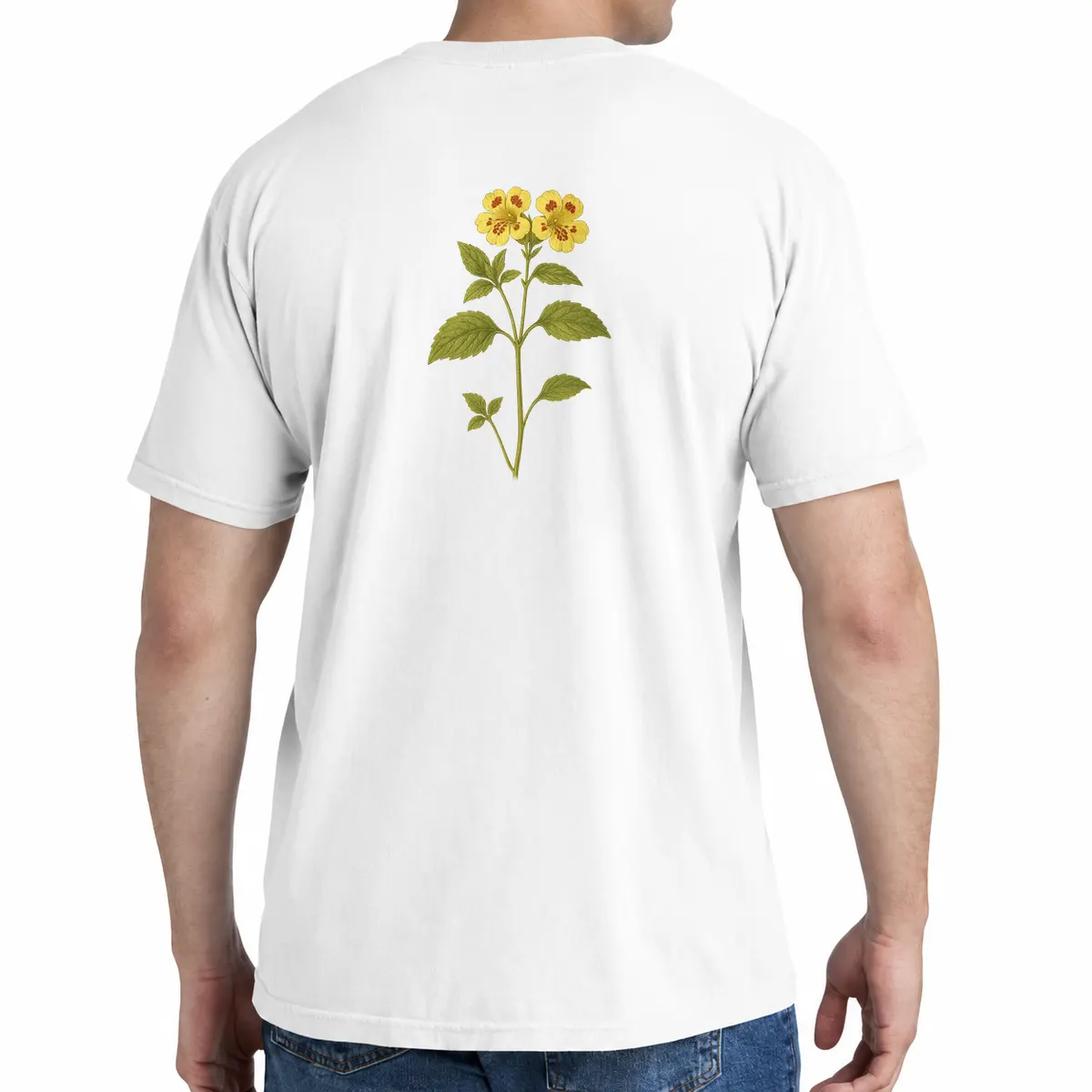
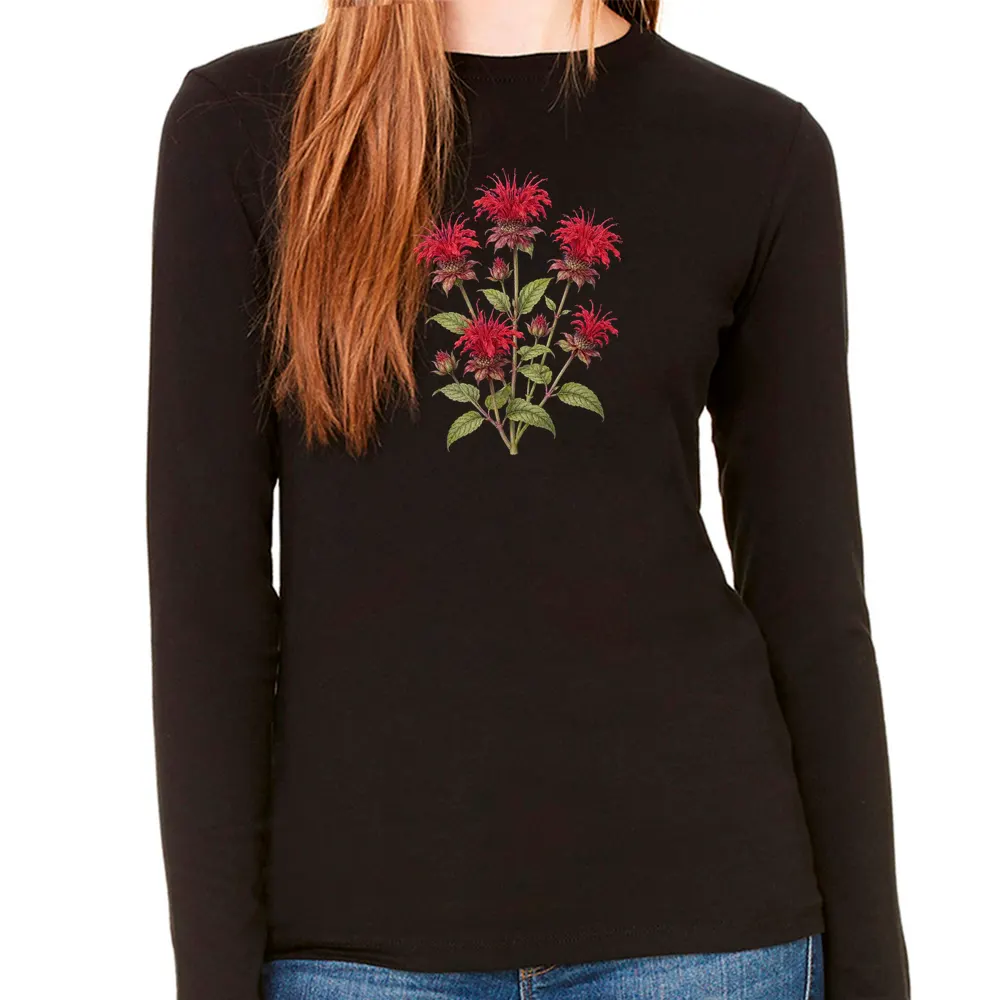
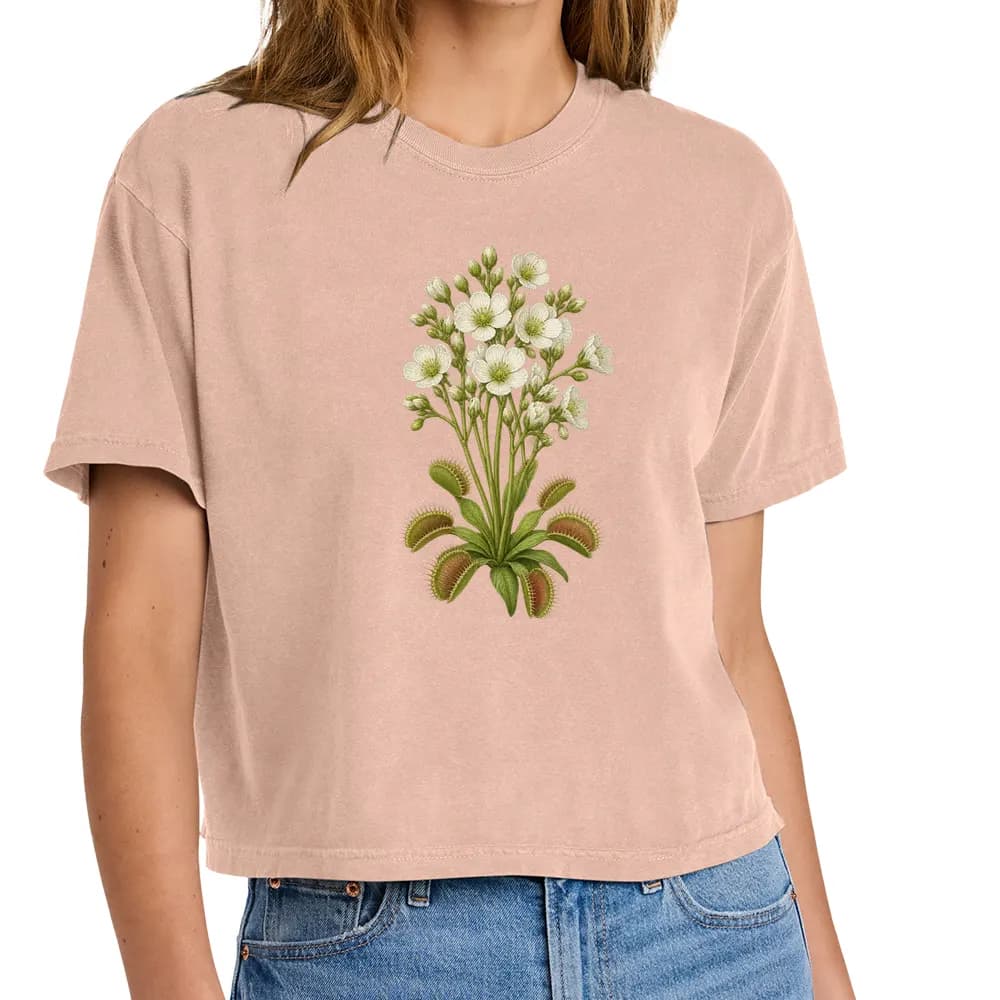
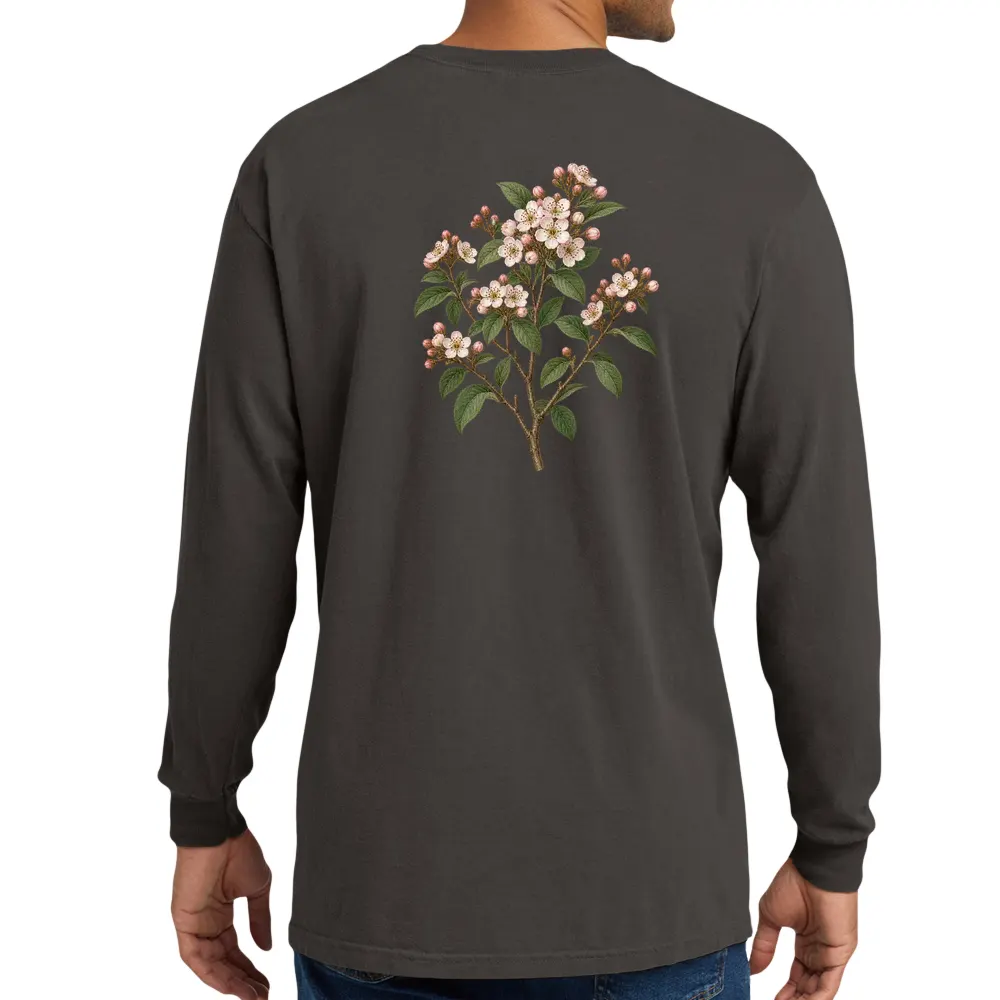
Auwahi Melicope
$40.00 USD
Created in the tradition of 19th-century botanical plates, then reviewed by hand before it goes anywhere near a shirt. Yours is printed fresh when you order it.
Style: Short Sleeve
Description
This women's tee is made from 6.1 oz 100% ring-spun US cotton in a boxy, slightly cropped mid-length cut. It features a topstitched ribbed collar, shoulder-to-shoulder twill tape, a seamless body, and a double-needle bottom hem. Dyed with OEKO-TEX certified low-impact dyes in a WRAP-certified facility, using a salt-free clean pigment process that uses about half the water of conventional pigment dyeing. Boxy fit, sizes S–2XL — it runs close to the body, so size up for a looser drape. Slight shade variation between garments is normal.
Size Chart
Garment measurements in inches, laid flat.
| Size | Body length | Body width |
|---|---|---|
| S | 20" | 18 1/4" |
| M | 21" | 20 1/4" |
| L | 22" | 22" |
| XL | 23" | 24" |
| 2XL | 24" | 26" |
The blank
Shipping
Returns
Meet auwahi melicope
Melicope adscendens (H.St.John & E.P.Hume) T.G.Hartley & B.C.Stone
Auwahi melicope is a long-lived shrub of Maui’s forests, with slender, sprawling branches. Its young branches carry grey hairs that disappear with age. Separate fruit compartments and persistent sepals and petals help distinguish it from other melicopes. U.S. Fish and Wildlife Service: Maui and Kahoolawe critical habitat final rule, 14 May 2003
Native range
This Hawaiian endemic is known from the southwestern slopes of Haleakalā on Maui. It grows in lowland mesic forest and open dry forest, often in pockets of soil among rough lava, at roughly 760–1,210 metres elevation. U.S. Fish and Wildlife Service: Maui and Kahoolawe critical habitat final rule, 14 May 2003
Ecological relationships
Forest associates include olopua, hala pepe and a‘ali‘i. Cattle trampling damages its habitat, while introduced lantana and kikuyu grass compete with the native vegetation where this shrub survives. U.S. Fish and Wildlife Service: Maui and Kahoolawe critical habitat final rule, 14 May 2003
Explore this plant's botanical story