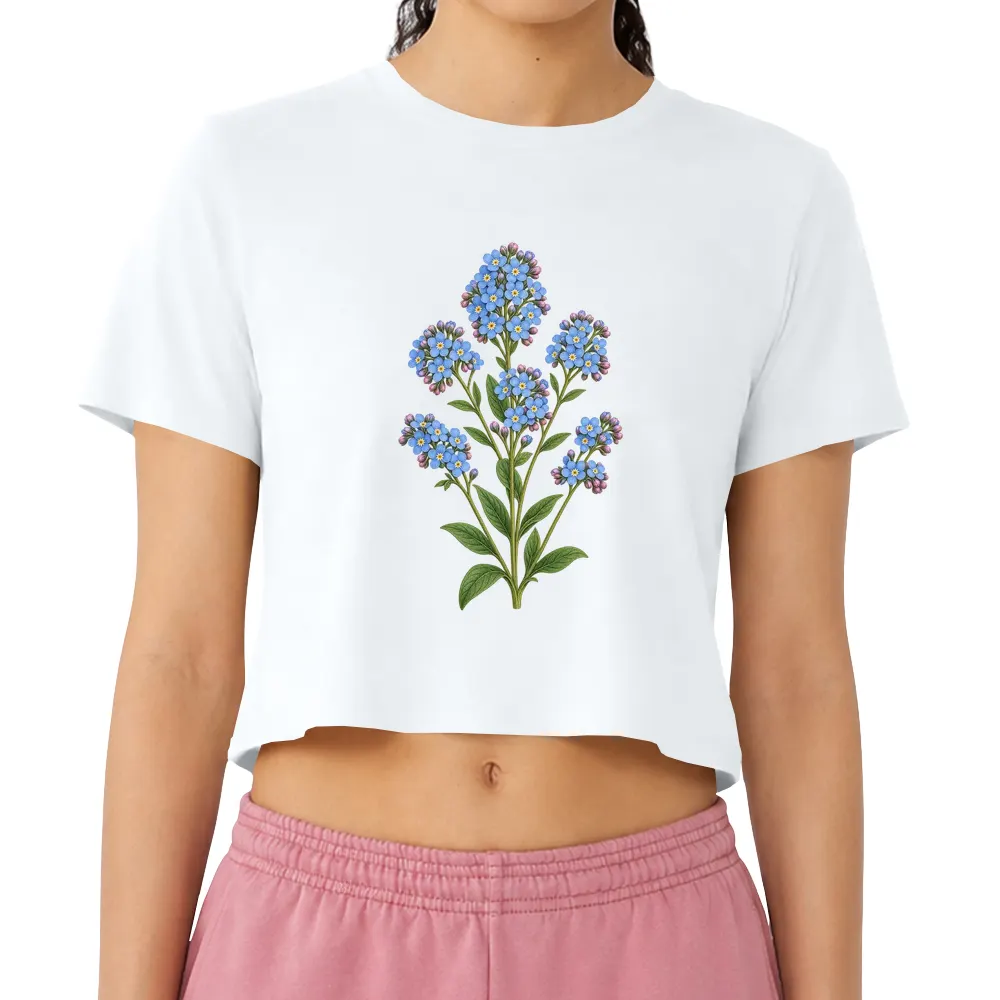
Blue Giant Hyssop
$40.00 USD
Created in the tradition of 19th-century botanical plates, then reviewed by hand before it goes anywhere near a shirt. Yours is printed fresh when you order it.
Style: Short Sleeve
Description
This women's tee is made from 6.1 oz 100% ring-spun US cotton in a boxy, slightly cropped mid-length cut. It features a topstitched ribbed collar, shoulder-to-shoulder twill tape, a seamless body, and a double-needle bottom hem. Dyed with OEKO-TEX certified low-impact dyes in a WRAP-certified facility, using a salt-free clean pigment process that uses about half the water of conventional pigment dyeing. Boxy fit, sizes S–2XL — it runs close to the body, so size up for a looser drape. Slight shade variation between garments is normal.
Size Chart
Garment measurements in inches, laid flat.
| Size | Body length | Body width |
|---|---|---|
| S | 20" | 18 1/4" |
| M | 21" | 20 1/4" |
| L | 22" | 22" |
| XL | 23" | 24" |
| 2XL | 24" | 26" |
The blank
Shipping
Returns
Meet blue giant hyssop
Agastache foeniculum (Pursh) Kuntze
Blue giant hyssop builds its summer display from hundreds of small flowers. Each lavender-purple tube has two lips, and crowded whorls stack into upright spikes above toothed leaves and square stems. The leaves carry the familiar anise scent; the individual flowers themselves are not fragrant. This separation of scent and colour is a useful detail to notice when looking closely at the plant. Missouri Botanical Garden: Agastache foeniculum
Bloom window
Missouri, United States
In Missouri garden conditions, its flowering season is recorded from June through September, with the main display in mid to late summer. Missouri Botanical Garden: Agastache foeniculum
Native range
Agastache foeniculum is a perennial mint native across parts of Canada and the northwestern and north-central United States. Prairies, plains, fields and dry upland woodland are among its habitats. Missouri Botanical Garden: Agastache foeniculumKew Plants of the World Online: Agastache foeniculum
Ecological relationships
Its nectar-bearing flowers attract bees, butterflies and hummingbirds. Missouri Botanical Garden: Agastache foeniculum
Explore this plant's botanical story