blue giant hyssop
Agastache foeniculum (Pursh) Kuntze
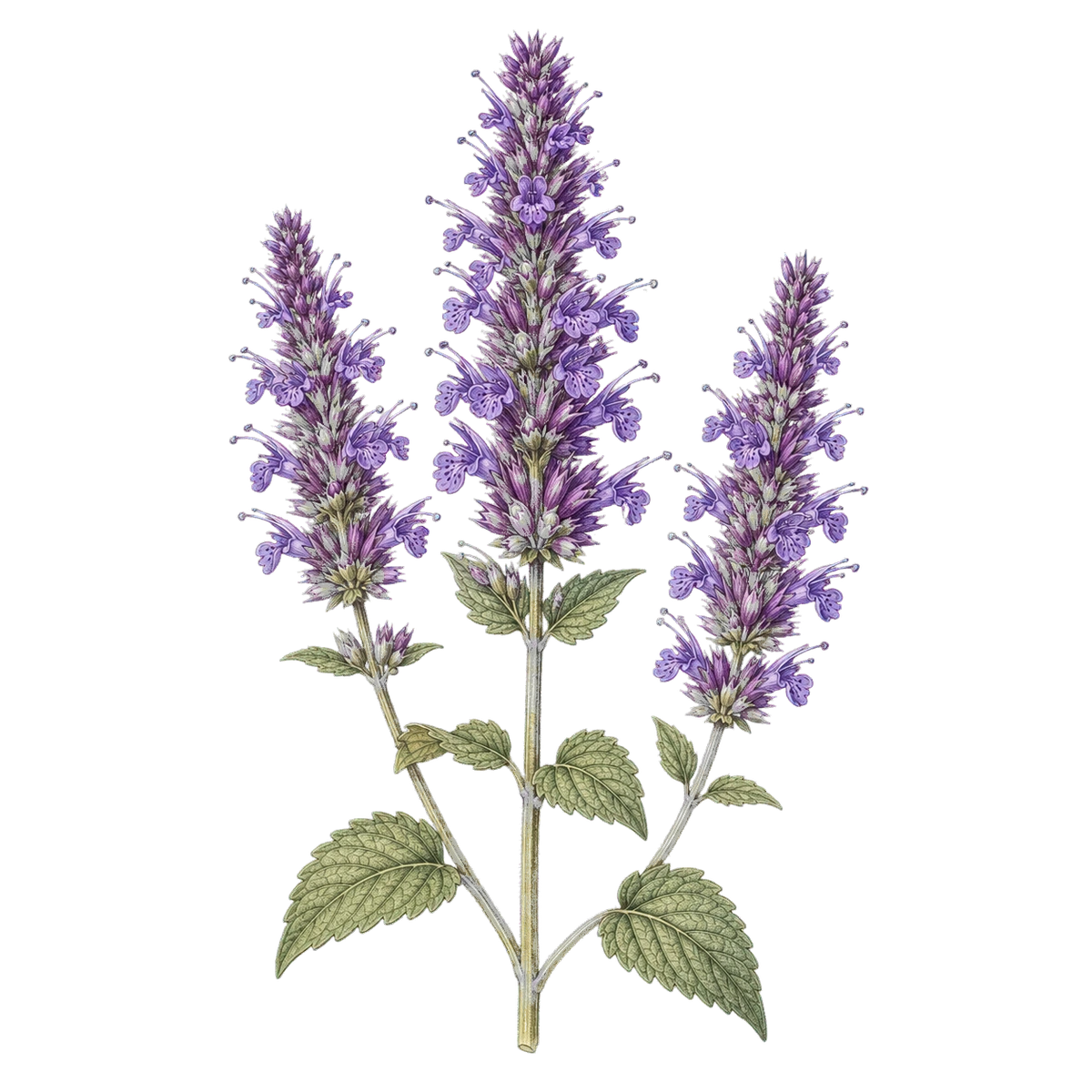
Blue giant hyssop builds its summer display from hundreds of small flowers. Each lavender-purple tube has two lips, and crowded whorls stack into upright spikes above toothed leaves and square stems. The leaves carry the familiar anise scent; the individual flowers themselves are not fragrant. This separation of scent and colour is a useful detail to notice when looking closely at the plant. Missouri Botanical Garden: Agastache foeniculum
Botanical name
Agastache foeniculum (Pursh) Kuntze is accepted in the cited taxonomic treatment. The supplied database name identifies the same species. Kew Plants of the World Online: Agastache foeniculum
Recognizing the plant
An established clump can expand through underground rhizomes, while seed may establish new plants nearby. Its upright stems commonly reach two to four feet. The square stems and opposite, toothed leaves supply recognition features below the densely crowded spikes. The leaf blades are pointed, with pale undersides, adding another visible contrast to the purple flowers. Missouri Botanical Garden: Agastache foeniculumUniversity of Wisconsin–Eau Claire: Agastache foeniculum
Bloom window
Missouri, United States
In Missouri garden conditions, its flowering season is recorded from June through September, with the main display in mid to late summer. Missouri Botanical Garden: Agastache foeniculum
Native range
Agastache foeniculum is a perennial mint native across parts of Canada and the northwestern and north-central United States. Prairies, plains, fields and dry upland woodland are among its habitats. Missouri Botanical Garden: Agastache foeniculumKew Plants of the World Online: Agastache foeniculum
Ecological relationships
Its nectar-bearing flowers attract bees, butterflies and hummingbirds. Missouri Botanical Garden: Agastache foeniculum
Botanical sources
- Missouri Botanical Garden: Agastache foeniculum
- Kew Plants of the World Online: Agastache foeniculum
- University of Wisconsin–Eau Claire: Agastache foeniculum
Reviewed 2026-10-11. Seasonal development varies with location and growing conditions.