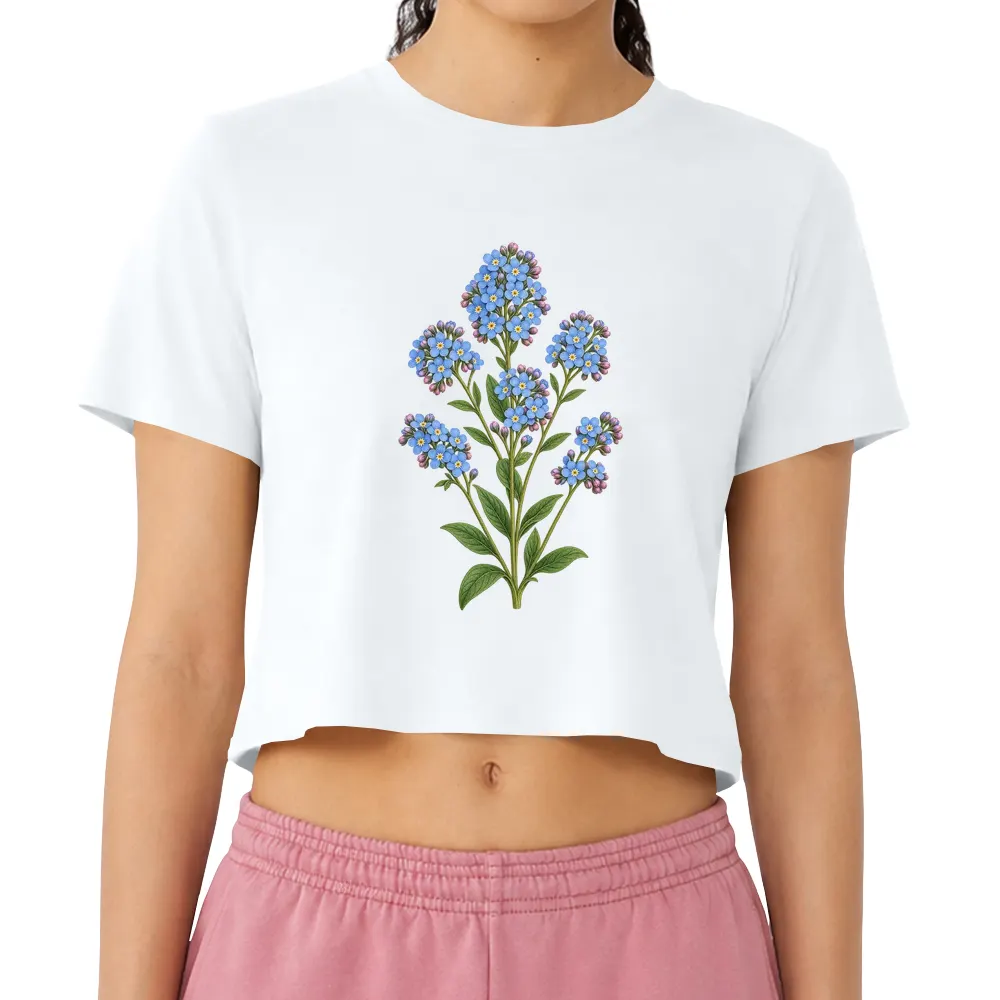
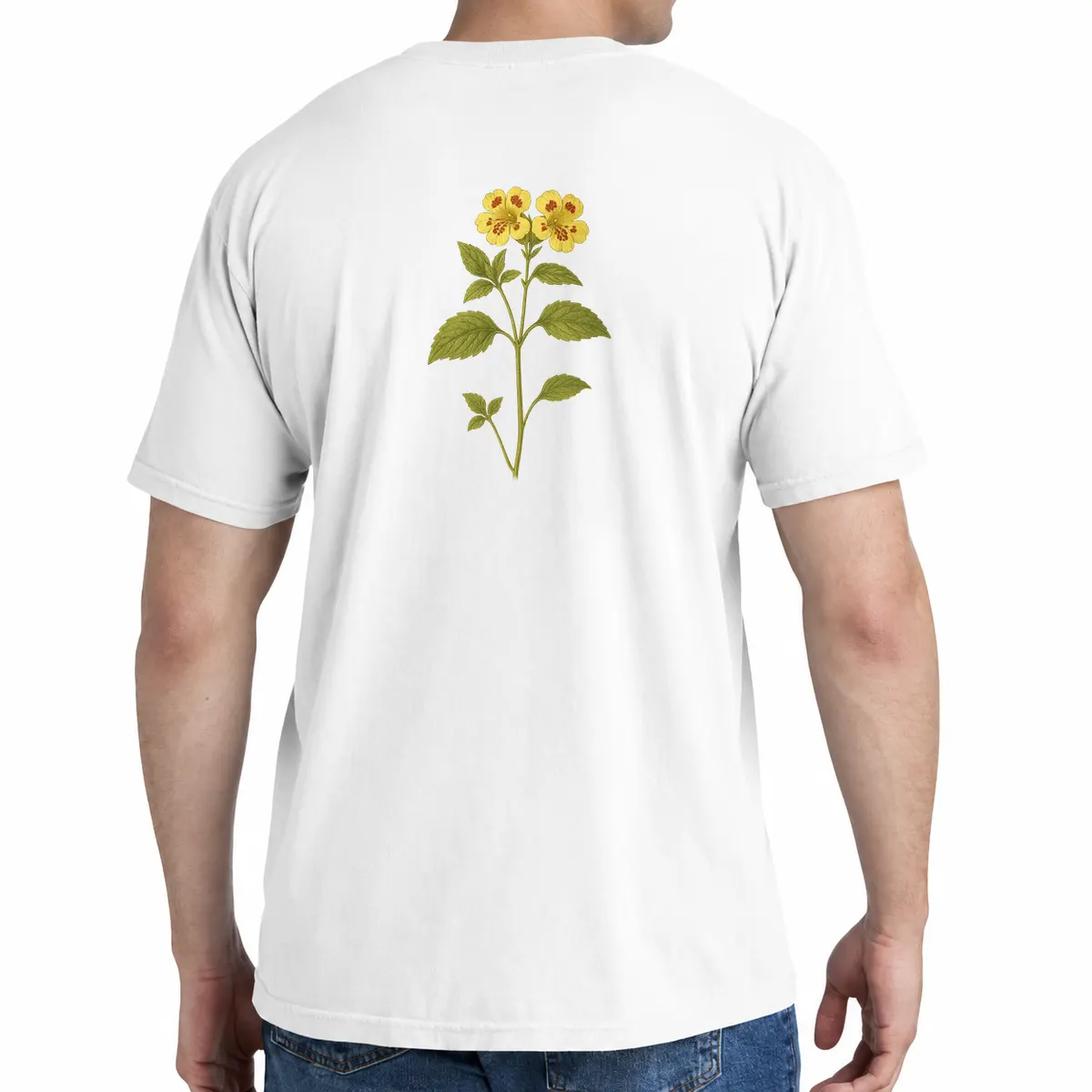
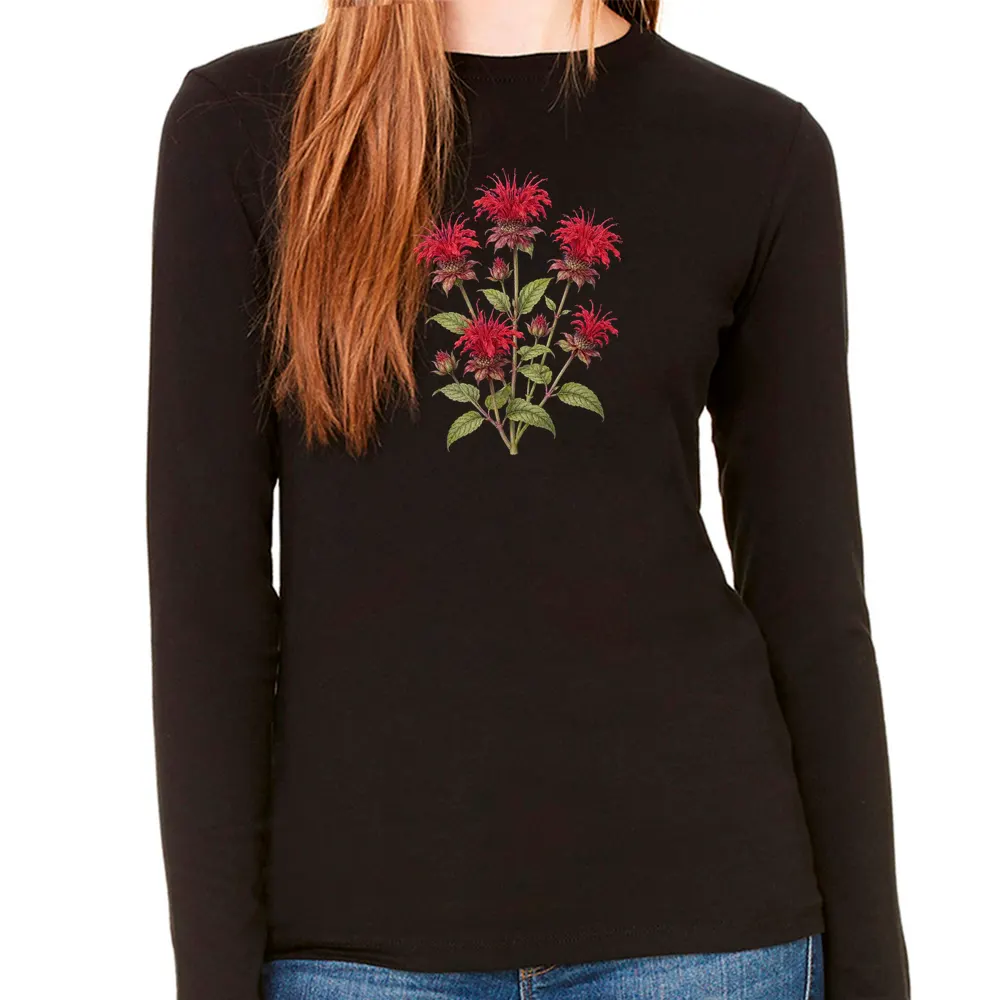
Coco Yam
$40.00 USD
Created in the tradition of 19th-century botanical plates, then reviewed by hand before it goes anywhere near a shirt. Yours is printed fresh when you order it.
Style: Short Sleeve
Description
This women's tee is made from 6.1 oz 100% ring-spun US cotton in a boxy, slightly cropped mid-length cut. It features a topstitched ribbed collar, shoulder-to-shoulder twill tape, a seamless body, and a double-needle bottom hem. Dyed with OEKO-TEX certified low-impact dyes in a WRAP-certified facility, using a salt-free clean pigment process that uses about half the water of conventional pigment dyeing. Boxy fit, sizes S–2XL — it runs close to the body, so size up for a looser drape. Slight shade variation between garments is normal.
Size Chart
Garment measurements in inches, laid flat.
| Size | Body length | Body width |
|---|---|---|
| S | 20" | 18 1/4" |
| M | 21" | 20 1/4" |
| L | 22" | 22" |
| XL | 23" | 24" |
| 2XL | 24" | 26" |
The blank
Shipping
Returns
Meet coco yam
Colocasia esculenta (L.) Schott
A taro leaf is attached like a shield: its stalk joins the underside inside the blade rather than simply meeting the edge. The broad, arrow-shaped blade usually droops, and its waxy surface sheds water. Together with long, substantial stalks, these leaves create the familiar elephant-ear outline. Below ground, the plant forms a swollen storage stem and, in some forms, spreading stolons. Kew CATE Araceae: Colocasia esculenta
Bloom window
Yunnan and Qin Ling area, China
The cited Chinese regional account records flowering in February–April in Yunnan and August–September in the Qin Ling area. Kew CATE Araceae: Colocasia esculenta
Native range
Kew currently places the native range from India to southern China and Sumatra. Its specialist account cautions that ancient transport and cultivation obscure the original distribution; the species is now cultivated widely through the tropics. Kew POWO: Colocasia esculentaKew CATE Araceae: Colocasia esculenta
Explore this plant's botanical story