Corn
$40.00 USD
Created in the tradition of 19th-century botanical plates, then reviewed by hand before it goes anywhere near a shirt. Yours is printed fresh when you order it.
Style: Short Sleeve
Description
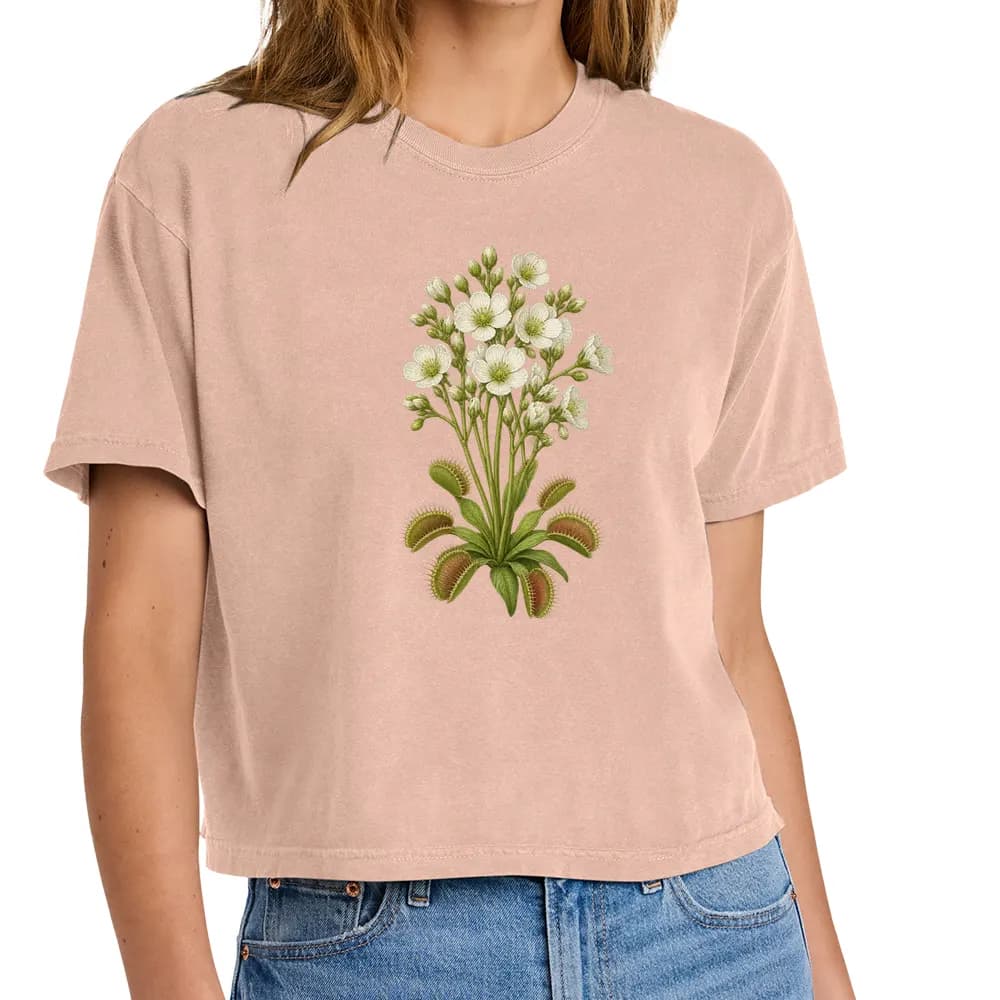
This women's tee is made from 6.1 oz 100% ring-spun US cotton in a boxy, slightly cropped mid-length cut. It features a topstitched ribbed collar, shoulder-to-shoulder twill tape, a seamless body, and a double-needle bottom hem. Dyed with OEKO-TEX certified low-impact dyes in a WRAP-certified facility, using a salt-free clean pigment process that uses about half the water of conventional pigment dyeing. Boxy fit, sizes S–2XL — it runs close to the body, so size up for a looser drape. Slight shade variation between garments is normal.
Size Chart
Garment measurements in inches, laid flat.
| Size | Body length | Body width |
|---|---|---|
| S | 20" | 18 1/4" |
| M | 21" | 20 1/4" |
| L | 22" | 22" |
| XL | 23" | 24" |
| 2XL | 24" | 26" |
The blank
Shipping
Returns
Meet corn
Zea L.
Zea includes cultivated maize and the wild grasses known as teosintes. Some members are annuals, while others are perennial. Mexico’s biodiversity commission describes teosintes as the wild relatives from which ancient Mesoamerican peoples developed maize, making the genus a meeting point between wild grass diversity and the history of agriculture. CONABIO: Teocintles
Native range
The genus is native from Mexico into Central America. Teosinte diversity is greatest in Mexico, where its perennial species occur naturally. Cultivated maize has carried the genus far beyond that original Mesoamerican range. Kew POWO: ZeaCONABIO: Teocintles
Ecological relationships
In cultivated sweet corn, a familiar member of the genus, wind carries the pollen needed for kernel development. University of Maryland Extension: Growing Sweet Corn in a Home Garden
Explore this plant's botanical story