corn
Zea L.
A genus overview; characteristics vary between its species.
Zea includes cultivated maize and the wild grasses known as teosintes. Some members are annuals, while others are perennial. Mexico’s biodiversity commission describes teosintes as the wild relatives from which ancient Mesoamerican peoples developed maize, making the genus a meeting point between wild grass diversity and the history of agriculture. CONABIO: Teocintles
Botanical name
Kew accepts Zea L. in Poaceae. The catalog’s genus rank is retained; this profile includes both domesticated maize and its wild relatives. Kew POWO: Zea
Recognizing the plant
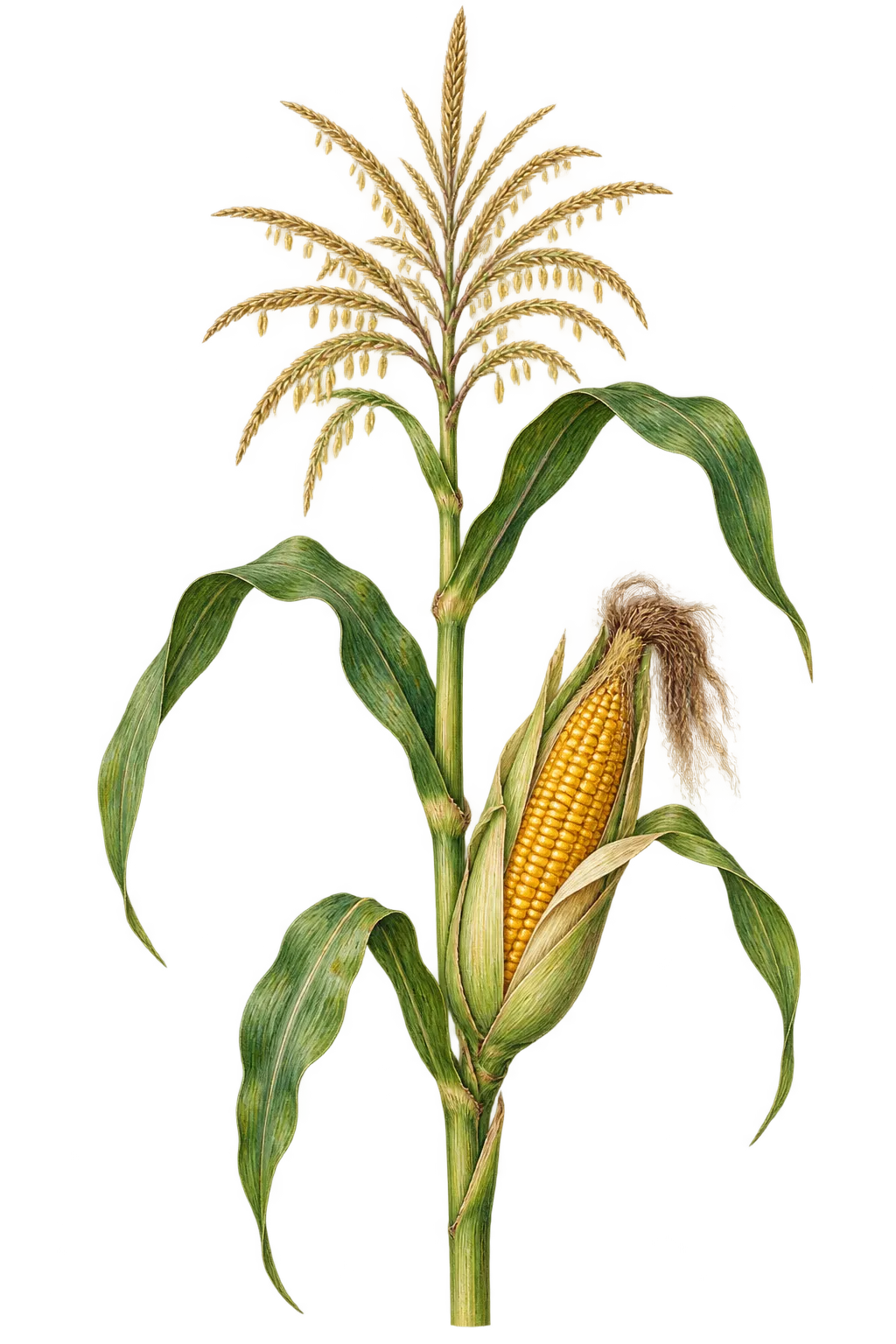
The stems have solid, pith-filled internodes and may develop supporting roots from their lower nodes. Flat leaves stand in two ranks. Male flowers gather in branched tassels, while female flowers occur in ears on side branches. Wild teosinte ears have two rows of grains enclosed in hard fruitcases that separate at maturity. Domesticated maize instead bears enlarged ears with many rows of grains that remain attached. Hugh H. Iltis, Flora of North America: Zea, via SEINet
Native range
The genus is native from Mexico into Central America. Teosinte diversity is greatest in Mexico, where its perennial species occur naturally. Cultivated maize has carried the genus far beyond that original Mesoamerican range. Kew POWO: ZeaCONABIO: Teocintles
Ecological relationships
In cultivated sweet corn, a familiar member of the genus, wind carries the pollen needed for kernel development. University of Maryland Extension: Growing Sweet Corn in a Home Garden
Botanical sources
- Kew POWO: Zea
- CONABIO: Teocintles
- Hugh H. Iltis, Flora of North America: Zea, via SEINet
- University of Maryland Extension: Growing Sweet Corn in a Home Garden
Reviewed 2026-10-11. Seasonal development varies with location and growing conditions.