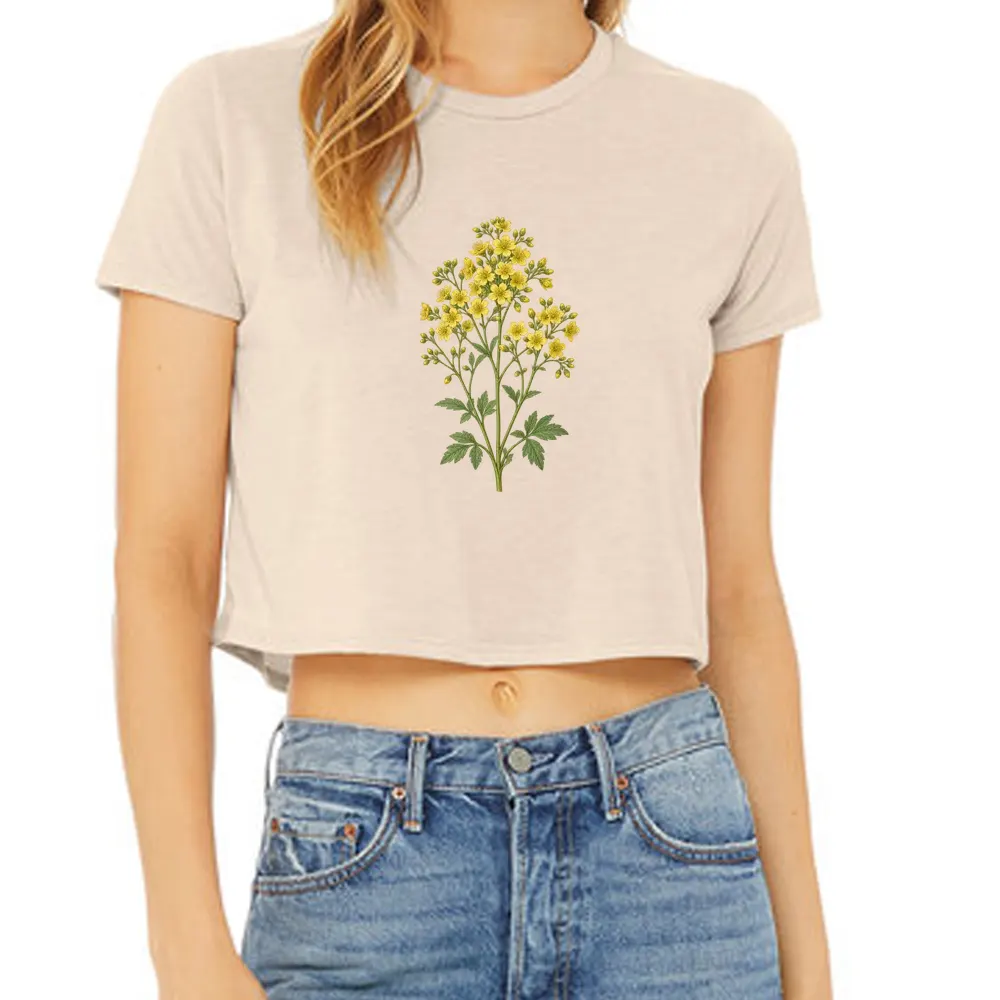
Dwarf Witchalder
$40.00 USD
Created in the tradition of 19th-century botanical plates, then reviewed by hand before it goes anywhere near a shirt. Yours is printed fresh when you order it.
Style: Short Sleeve
Description
This women's tee is made from 6.1 oz 100% ring-spun US cotton in a boxy, slightly cropped mid-length cut. It features a topstitched ribbed collar, shoulder-to-shoulder twill tape, a seamless body, and a double-needle bottom hem. Dyed with OEKO-TEX certified low-impact dyes in a WRAP-certified facility, using a salt-free clean pigment process that uses about half the water of conventional pigment dyeing. Boxy fit, sizes S–2XL — it runs close to the body, so size up for a looser drape. Slight shade variation between garments is normal.
Size Chart
Garment measurements in inches, laid flat.
| Size | Body length | Body width |
|---|---|---|
| S | 20" | 18 1/4" |
| M | 21" | 20 1/4" |
| L | 22" | 22" |
| XL | 23" | 24" |
| 2XL | 24" | 26" |
The blank
Shipping
Returns
Meet dwarf witchalder
Fothergilla gardenii L.
Dwarf witchalder is a deciduous member of the witch-hazel family with a rounded, spreading form. It can extend into small colonies through suckers, giving a planting a gradually widening presence rather than remaining a single, fixed clump. NC State Extension Gardener Plant Toolbox: Fothergilla gardenii
Seasonal development
North Carolina, United States
In North Carolina, flowering occurs in April and May as the leaves begin to unfold. Fruits mature in September and October, extending the plant’s reproductive season well beyond its conspicuous spring display. Vascular Plants of North Carolina: Dwarf Witch-alder
Native range
The current native range runs from North Carolina through South Carolina to Georgia. In North Carolina it occupies damp, acidic pocosins, especially streamheads and the margins of Carolina bays, as well as savannas and flatwoods. It often grows in small groups among taller shrubs. Kew Plants of the World Online: Fothergilla gardenii L.Vascular Plants of North Carolina: Dwarf Witch-alder
Ecological relationships
Bees and other flower-visiting insects take nectar from the fragrant blooms, making the spring clusters a feeding resource as well as a visual display. NC State Extension Gardener Plant Toolbox: Fothergilla gardenii
Explore this plant's botanical story