dwarf witchalder
Fothergilla gardenii L.
Dwarf witchalder is a deciduous member of the witch-hazel family with a rounded, spreading form. It can extend into small colonies through suckers, giving a planting a gradually widening presence rather than remaining a single, fixed clump. NC State Extension Gardener Plant Toolbox: Fothergilla gardenii
Botanical name
Kew accepts Fothergilla gardenii L. The North Carolina flora notes recent splitting of the older, broader species concept, while retaining North Carolina plants within F. gardenii. Kew Plants of the World Online: Fothergilla gardenii L.Vascular Plants of North Carolina: Dwarf Witch-alder
Recognizing the plant
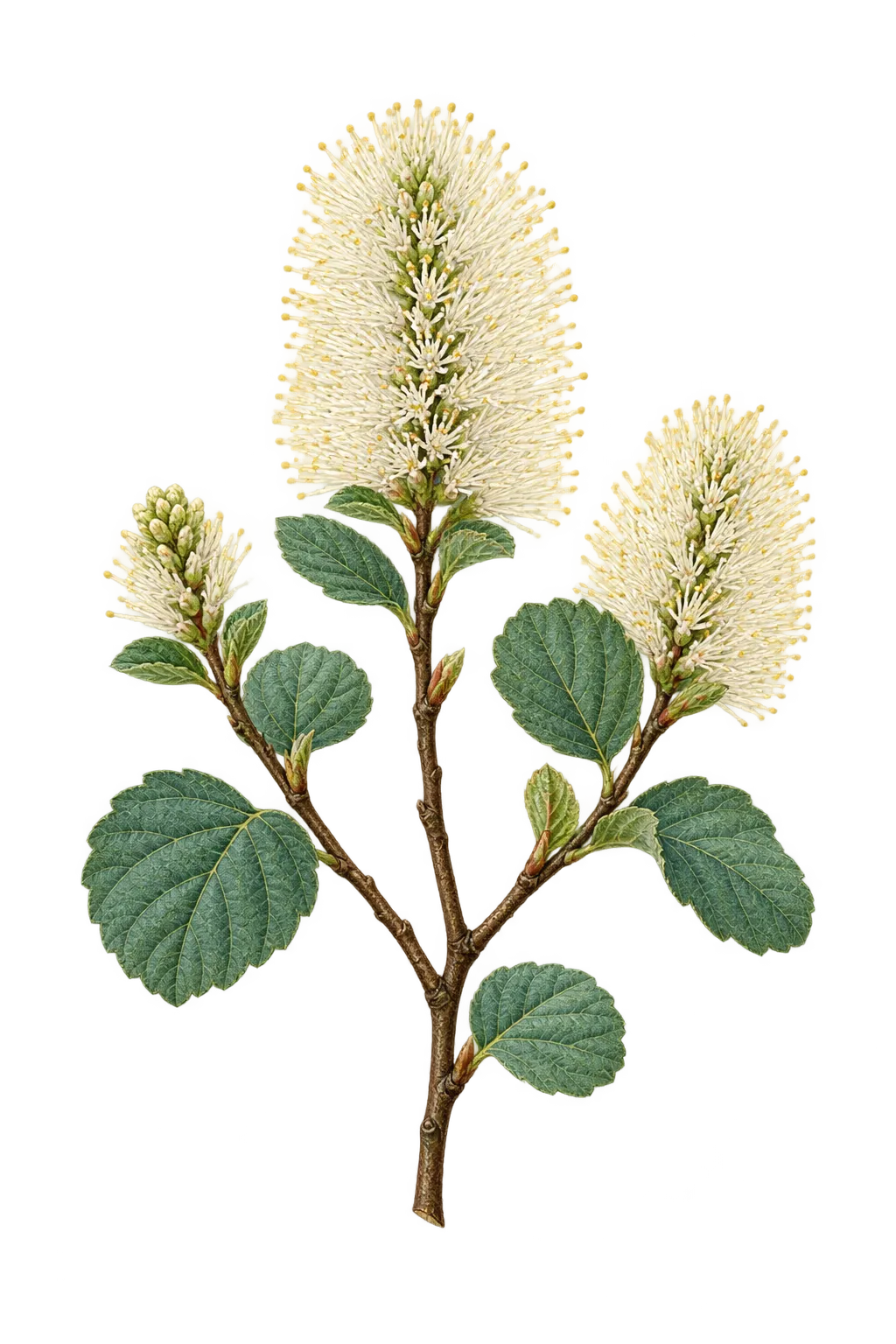
Its bottlebrush-like flower clusters owe their showiness to long stamens rather than petals. The simple leaves alternate along the stems and feel leathery, with a blue-green to dark-green surface. Their upper edges are toothed while the lower portion is smoother; fine hairs and a slightly quilted appearance add texture. NC State Extension Gardener Plant Toolbox: Fothergilla gardenii
Seasonal development
North Carolina, United States
In North Carolina, flowering occurs in April and May as the leaves begin to unfold. Fruits mature in September and October, extending the plant’s reproductive season well beyond its conspicuous spring display. Vascular Plants of North Carolina: Dwarf Witch-alder
Native range
The current native range runs from North Carolina through South Carolina to Georgia. In North Carolina it occupies damp, acidic pocosins, especially streamheads and the margins of Carolina bays, as well as savannas and flatwoods. It often grows in small groups among taller shrubs. Kew Plants of the World Online: Fothergilla gardenii L.Vascular Plants of North Carolina: Dwarf Witch-alder
Ecological relationships
Bees and other flower-visiting insects take nectar from the fragrant blooms, making the spring clusters a feeding resource as well as a visual display. NC State Extension Gardener Plant Toolbox: Fothergilla gardenii
Botanical sources
- Kew Plants of the World Online: Fothergilla gardenii L.
- Vascular Plants of North Carolina: Dwarf Witch-alder
- NC State Extension Gardener Plant Toolbox: Fothergilla gardenii
Reviewed 2026-10-11. Seasonal development varies with location and growing conditions.